



| HEADLINE |

|
Public money must not fund character assassination: Opposition Leader
Published : Monday, 29 June, 2026 at 3:59 PM
Observer Online Report


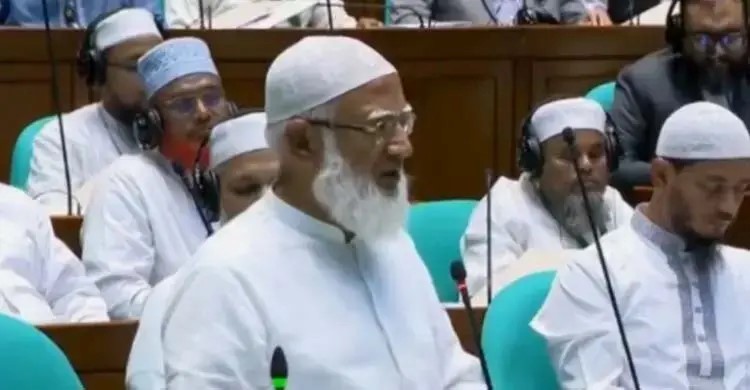
Bangladesh Jamaat-e-Islami Ameer and Opposition Leader Dr Shafiqur Rahman on Monday said taxpayers’ money should not be spent on character assassination in Parliament, calling for an end to what he described as the “bad culture” of using the House to flatter individuals or malign political opponents.
Taking part in the general discussion on the proposed 2026-27 national budget in the Jatiya Sangsad, he urged the Speaker to ensure that Parliament remained a forum for discharging constitutional responsibilities rather than personal praise or character assassination.
“Parliament is not a place for flattery. Taxpayers’ money should not be spent on character assassination inside this House,” he said.
Dr Shafiqur said the treasury and opposition benches were expected to hold differing views, arguing that democracy could not function without constructive debate.
“The government and the opposition cannot think alike. If everyone agreed on everything, there would be little need for parliamentary debate,” he said, adding that lawmakers were accountable to their conscience, the Almighty and the people.
He paid tribute to Shaheed President Ziaur Rahman, Maulana Abdul Hamid Khan Bhashani, General MAG Osmani and ASM Abdur Rab, and also remembered those killed in the 1990 Mass Uprising, the 2009 Pilkhana carnage and the July 2024 Mass Uprising.
Describing the current Parliament as a “Parliament of the oppressed”, the Opposition Leader said the House should avoid actions that alienate the public and instead work to unite the nation.
Comparing Parliament to a vehicle running on two wheels, the government and the opposition, he said democracy could function properly only when both sides were allowed to play their respective roles.
He said the Opposition would neither support every government decision unconditionally nor oppose every initiative merely for the sake of Opposition.
Calling the proposed budget a roadmap for national recovery, Dr Shafiqur thanked the finance minister for preparing it within a short time after the formation of the new government and expressed hope that logical recommendations from the opposition would be incorporated.
He also proposed shifting Bangladesh’s fiscal year from the current July-June cycle to a January-December calendar year, arguing that the existing system encouraged rushed spending during the monsoon season, resulting in waste and corruption.
He said such a change would improve budget implementation and reduce financial losses.
Loading...
Loading...
Also read



Editor : Iqbal Sobhan Chowdhury
Published by the Editor on behalf of the Observer Ltd. from Globe Printers, 24/A, New Eskaton Road, Ramna, Dhaka.
Editorial, News and Commercial Offices : Aziz Bhaban (2nd floor), 93, Motijheel C/A, Dhaka-1000.
Phone: PABX- 41053001-06; Advertisement: 41053012; 01793317829, 01550707291, E-mail: [email protected], [email protected] Online: email: [email protected] 41053014; 01550707297 Advertisement: 01550707296
Published by the Editor on behalf of the Observer Ltd. from Globe Printers, 24/A, New Eskaton Road, Ramna, Dhaka.
Editorial, News and Commercial Offices : Aziz Bhaban (2nd floor), 93, Motijheel C/A, Dhaka-1000.
Phone: PABX- 41053001-06; Advertisement: 41053012; 01793317829, 01550707291, E-mail: [email protected], [email protected] Online: email: [email protected] 41053014; 01550707297 Advertisement: 01550707296


