



| HEADLINE |

|
Visitors flock to Naogaon’s Kusumba Mosque featured on Tk 5 note
Published : Saturday, 4 July, 2026 at 12:00 AM
Our Correspondent


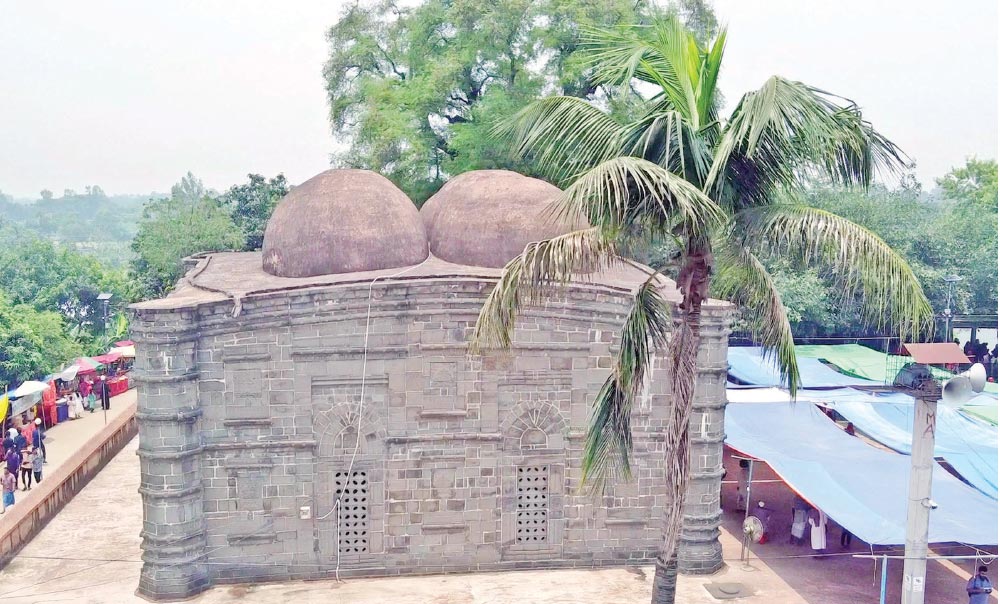 NAOGAON, July 3: The historic Kusumba Mosque in Manda Upazila of Naogaon, featured on Bangladesh’s Tk 5 currency note, continues to draw hundreds of visitors every day, blending centuries-old heritage with architectural excellence and religious significance.
Located in Kusumba Village under Kusumba Union, about 35 kilometres from Naogaon District town, the mosque stands as one of the most important surviving examples of Sultanate-era architecture in Bangladesh. Situated just north of the Rajshahi�"Naogaon highway near Manda Bridge, the mosque remains a living testimony to the region’s rich history.
Surrounded by vast paddy fields and natural beauty of the Barind region, the mosque attracts not only worshippers but also tourists and heritage enthusiasts from across the country.
Locals said the site remains busy throughout the day, with students, travellers and devotees visiting regularly. The mosque’s presence on the national currency has further increased public interest, turning it into a prominent heritage destination.
The mosque is also known for its large adjacent water reservoir, which stretches over an area of nearly 100 bighas. Measuring approximately 1,200 feet in length and 900 feet in width, the tank was historically used for ablution, bathing and drinking purposes. Today, it adds to the scenic beauty of the site and remains an integral part of the mosque complex.
Architecturally, the Kusumba Mosque reflects remarkable craftsmanship. It measures around 58 feet in length and 42 feet in width, with walls nearly six feet thick, showcasing the strength and durability of its construction. The exterior is entirely covered with stone, a rare feature in regional mosque architecture.
The mosque has three arched entrance gateways on its eastern side�"two large and one smaller�"each designed with intricate Mughal-style arches. The structure is supported by four octagonal corner towers, enhancing both stability and aesthetic appeal.
On the roof, six domes are arranged in two rows, with the second row featuring comparatively smaller domes. Historical accounts suggest that three of the domes were damaged in the devastating 1897 earthquake and were later restored by the Department of Archaeology, preserving the mosque’s original charm.
Inside, the mosque features two massive central stone pillars that support the roof structure. The western wall contains three mihrabs, decorated with delicate floral and vine motifs carved into stone. These artistic details are considered excellent examples of Sultanate-era craftsmanship.
In front of the mosque lies an open courtyard with stone steps leading down towards the large pond, further enhancing the site’s visual appeal. A black stone structure near the entrance is locally believed by some to be a tomb, although its historical authenticity remains uncertain.
There is some disagreement among historians regarding the exact construction period of the mosque. One inscription suggests it was built in 1558 AD during the reign of Afghan Sultan Ghiyasuddin Bahadur Shah. This places the mosque at approximately 468 years old.
However, another inscription indicates that the foundation may have been laid earlier, in 1498 AD, during the rule of Sultan Alauddin Hussain Shah, by one of his officials. If this version is considered, the mosque would be over 500 years old.
The origin of the name “Kusumba” is also surrounded by local legends. According to popular belief, the village was named after Begum Kusum Bibi, who is said to have lived in the area during the reign of Sultan Alauddin Hussain Shah. However, historians note that there is no strong documentary evidence supporting this claim.
Visitors expressed admiration for the site’s beauty and historical value. A seventh-grade student, Fariha Hossain Kripa from Naogaon, said she had long wished to visit the mosque after seeing it on the currency note. “The environment here is very beautiful. I feel very happy to finally visit this place,” she said, adding that better visitor facilities such as a rest house would improve the experience for tourists.
Another visitor, Erin Jaman Katha, a student of Fine Arts at Rajshahi University, said she was deeply impressed by the mosque’s architectural beauty. “I had seen it in pictures before, but seeing it in person is completely different. The combination of the pond, surroundings and architecture is truly mesmerizing,” she said.
Locals said the mosque remains active for daily prayers, with worshippers arriving from nearby and distant areas. Friday congregational prayers draw particularly large crowds.
The mosque’s khatib, Maulana Mostafa Al-Amin, said the mosque can accommodate around 80 worshippers inside, while the open courtyard can host nearly 700 people during large gatherings. He added that the mosque is filled to capacity during Fridays, Eid prayers and Ramadan night prayers.
Naogaon Deputy Commissioner Mohammad Saiful Islam said the site already attracts visitors from home and abroad. He noted that a rest house has been built and further development plans are underway to enhance tourism potential.
Loading...
Loading...
Also read



Editor : Iqbal Sobhan Chowdhury
Published by the Editor on behalf of the Observer Ltd. from Globe Printers, 24/A, New Eskaton Road, Ramna, Dhaka.
Editorial, News and Commercial Offices : Aziz Bhaban (2nd floor), 93, Motijheel C/A, Dhaka-1000.
Phone: PABX- 41053001-06; Advertisement: 41053012; 01793317829, 01550707291, E-mail: [email protected], [email protected] Online: email: [email protected] 41053014; 01550707297 Advertisement: 01550707296
Published by the Editor on behalf of the Observer Ltd. from Globe Printers, 24/A, New Eskaton Road, Ramna, Dhaka.
Editorial, News and Commercial Offices : Aziz Bhaban (2nd floor), 93, Motijheel C/A, Dhaka-1000.
Phone: PABX- 41053001-06; Advertisement: 41053012; 01793317829, 01550707291, E-mail: [email protected], [email protected] Online: email: [email protected] 41053014; 01550707297 Advertisement: 01550707296


