



| HEADLINE |

|
70pc Mosquitos Survive Fogging: Dengue now a year-around health challenge in Bangladesh


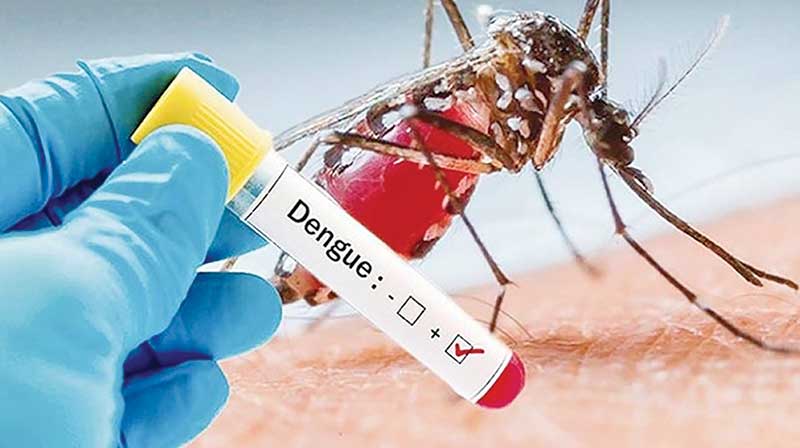
Symbolic Photo
Dengue fever has evolved from a seasonal threat into a year-round public health challenge in Bangladesh.
This prompted health experts, researchers and government officials to call for stronger coordination, evidence-based interventions and greater public participation to curb the spread of the mosquito-borne disease.
The observations came at a roundtable discussion titled “Dengue Situation and Our Responsibilities,” organised by Jago News in Dhaka on Saturday.
Experts said eliminating mosquito breeding sites, strengthening surveillance, improving healthcare preparedness and changing public behaviour are far more effective than relying solely on fogging operations.
Speaking at the event, Directorate General of Health Services (DGHS) epidemiologist and Medical Officer Dr Md Tarikul Islam Limon said dengue is no longer confined to the monsoon season and should now be treated as a year-round public health concern.
He said more than 70 per cent of mosquitoes survive conventional fogging, making source reduction the most effective preventive strategy.
Drawing on investigations conducted during last year’s dengue outbreak in Barguna, Dr Limon said prolonged water storage in large containers due to shortages of safe drinking water in coastal areas had created ideal breeding grounds for Aedes mosquitoes.
He also highlighted significant gaps in disease surveillance, noting that many dengue patients treated at private hospitals and clinics are not included in the national database.
He called for stronger integration of public and private health data, year-round entomological surveillance, increased treatment capacity at the upazila level and more evidence-based research.
Entomologist Prof Kabirul Bashar of Jahangirnagar University said almost all urban areas in Bangladesh now have Aedes mosquito densities capable of sustaining dengue transmission.
He explained that outbreaks occur only when infected individuals introduce the virus into areas where Aedes mosquitoes are already present.
Prof Bashar said mosquito breeding sites vary by locality and therefore control measures should be tailored to local conditions rather than applying a single nationwide strategy.
He urged households to clean water containers thoroughly at least once a week instead of simply emptying them, noting that mosquito eggs often remain attached to container surfaces.
Dr Nishat Parvin, Deputy Chief Health Officer of Dhaka South City Corporation (DSCC), stressed that public participation remains the cornerstone of dengue prevention despite advances in chemical, biological and genetic mosquito control methods.
She said rapid urbanisation, waterlogging, climate change and poor public awareness continue to undermine mosquito control efforts.
According to DSCC’s pre-monsoon larval survey conducted between May 12 and 23, 27 of the city’s 75 wards were identified as high-risk, while another 36 were classified as medium-risk.
The survey found the highest proportion of mosquito larvae in multi-storey buildings, followed by standalone houses and construction sites.
She said DSCC has introduced biological larvicides alongside conventional insecticides and launched monthly “Cleaning Day” campaigns to encourage residents to eliminate stagnant water around their homes.
Dr Ayesha Akter, Deputy Director of the 250-bed TB Hospital, said preventing mosquito breeding remains the most effective way to reduce dengue cases.
She urged people to regularly scrub flower pots, refrigerator trays, air-conditioner drainage trays and other water-holding containers, as mosquito eggs can survive on container surfaces even after water is removed.
Public health expert Dr Mushtaq Hossain warned that Bangladesh could face a more severe dengue situation unless the disease is addressed as a public health emergency.
He recommended establishing rapid response teams to investigate outbreak hotspots, improving access to NS1 diagnostic testing and strengthening primary healthcare services, particularly in rural areas.
He also proposed forming a national command and control centre involving multiple ministries to coordinate dengue prevention and response efforts.
Bangladesh Health Reporters Forum President Pratik Ijaz criticised the continued failure to implement expert recommendations made over the past two decades.
He said weak coordination between the health sector and local government, combined with inadequate monitoring and poor implementation, has allowed dengue to spread beyond Dhaka to the rest of the country.
Addressing the discussion, DGHS Additional Director General (Planning and Development) Prof Dr Fowara Tasnim said the government had initiated preventive measures before the dengue season began.
She said all government hospitals have dengue testing facilities, while fee ceilings have been set for private hospitals to ensure affordable diagnostic services.
She added that dengue treatment guidelines have been distributed nationwide and healthcare professionals are receiving regular training.
“There is no shortage of saline, diagnostic kits or other essential supplies,” she said, emphasising that long-term prevention requires active participation from every citizen.
Renowned physician Prof Dr ABM Abdullah said there is no specific antiviral treatment or vaccine currently available for routine dengue prevention.
He cautioned against the unnecessary use of antibiotics, platelet transfusions and unproven remedies such as papaya leaf extract unless clinically indicated.
He urged people to seek medical attention promptly if they develop fever during the dengue season and stressed that NS1 testing within the first few days of illness can help ensure early diagnosis and treatment.
Prof Abdullah also said dengue can no longer be considered solely a Dhaka-centric disease, as it has spread across both urban and rural Bangladesh.
He emphasised that sustained public awareness, destruction of mosquito breeding sites and coordinated efforts involving government agencies and citizens are essential to keeping dengue under control.
The discussion was moderated by Jago News Editor KM Ziaul Haque.









Published by the Editor on behalf of the Observer Ltd. from Globe Printers, 24/A, New Eskaton Road, Ramna, Dhaka.
Editorial, News and Commercial Offices : Aziz Bhaban (2nd floor), 93, Motijheel C/A, Dhaka-1000.
Phone: PABX- 41053001-06; Advertisement: 41053012; 01793317829, 01550707291, E-mail: [email protected], [email protected] Online: email: [email protected] 41053014; 01550707297 Advertisement: 01550707296


