





| HEADLINE |

|
Large-scale student dropouts hinder our educational progress


 The commencement of the Higher Secondary Certificate (HSC) examination on July 2, 2026 has once again exposed one of the gravest yet least discussed crises in Bangladesh's education sector. While public attention largely focuses on examination management, question paper security and pass rates, a far more alarming reality lies beneath the statistics. Hundreds of thousands of students who entered the education system with dreams of a better future have disappeared before reaching the HSC examination hall. This silent exodus is not merely an education issue but a national development challenge with profound social, economic and security implications.
The numbers are deeply concerning. Students who appeared in the Secondary School Certificate (SSC) examination two years ago were expected to sit for this year's HSC examination. However, approximately 43 percent did not reach this stage. Similarly, around 1.49 million regular students enrolled in HSC-level education, but only about 0.95 million eventually registered for the examination. In other words, nearly 36.38 percent dropped out before even registering. The dropout rate stands at approximately 33.04 percent for the nine general education boards, 44.07 percent for the Madrasa Education Board and 54.54 percent for the Technical Education Board.
The crisis does not end there. A total of 1,270,583 regular and irregular candidates registered for this year's HSC examination, yet approximately 25,000 students did not appear even on the first examination day. Estimates further suggest that nearly 130,000 candidates may fail to complete the examination process. That means Bangladesh is effectively losing close to one million young people from its formal education pipeline within just two years. These figures should concern policymakers far more than annual pass rates.
Bangladesh has repeatedly declared its ambition to become an upper-middle-income country and eventually a developed nation. Such aspirations cannot be achieved if hundreds of thousands of young people leave education before acquiring even higher secondary qualifications. International evidence consistently shows that youth who are neither in education, employment nor training (NEET) face substantially higher risks of poverty, social exclusion and poor health outcomes. According to the International Labor Organization, countries with large NEET populations often experience slower productivity growth and greater social instability.
Hence, the consequences of mass dropout extend far beyond economics. Young people disconnected from both education and employment become increasingly vulnerable to social exclusion and frustration. Without educational qualifications, many struggle to secure decent jobs as Bangladesh's economy shifts toward technology-intensive and knowledge-based industries. Many enter low-paid informal employment with limited prospects, while others remain unemployed for prolonged periods, creating financial hardship for themselves and their families. Some migrate under risky conditions in search of overseas employment, often accepting exploitative work because of their limited education.
Students who appeared in the Secondary School Certificate (SSC) examination two years ago were expected to sit for this year's HSC examination. However, approximately 43 percent did not reach this stage.
More worrying is the social dimension. Idle youth are more susceptible to drug abuse, criminal activities, violent gangs, cybercrime and extremist recruitment. Bangladesh has already witnessed the rise of adolescent gangs and increasing youth involvement in crime across urban and rural areas. While education alone cannot eliminate crime, keeping young people engaged in meaningful learning significantly reduces their vulnerability.
Unfortunately, Bangladesh still lacks comprehensive evidence explaining why so many students abandon education between SSC and HSC. The government should commission nationwide research to identify the causes of dropout at different educational levels. These studies should examine economic hardship, family responsibilities, child marriage, migration, health and mental health challenges, academic pressure, institutional quality, examination policies, transportation difficulties, geographic disparities, digital inequality and labor market incentives. The reasons are unlikely to be identical across urban and rural areas, between boys and girls, or among general, madrasa and technical institutions. Without robust evidence, policymaking will continue to rely on assumptions rather than facts.
Economic hardship continues to force many students into work before completing their education. Rising living costs have increased pressure on families, compelling many young people to earn instead of remain in school. Child marriage still interrupts the education of many girls despite recent progress. Academic failure, repeated examinations, lack of career guidance, inadequate counseling, mental health problems and limited opportunities within technical education also contribute to student disengagement.
Addressing this multidimensional problem requires coordinated national action rather than isolated interventions. The Ministry of Education, education boards, local administrations, educational institutions and communities must work together to identify students at risk of dropping out before they leave the system.
Educational institutions should establish early warning systems to monitor attendance, academic performance and behavioral changes. Students showing signs of disengagement should receive counseling, mentoring and financial support where needed. Scholarships, transport assistance and conditional cash transfer programs should be expanded for vulnerable students, while career counseling should become a regular part of higher secondary education. Technical and vocational education also requires strengthening. The exceptionally high dropout rate suggests structural weaknesses requiring urgent investigation. Improving curriculum relevance, industry partnerships, apprenticeship opportunities and employment pathways could make technical education more rewarding.
Examination administration should also be modernized. Examination center allocation should prioritize proximity to students' institutions whenever possible, while digital mapping and data analytics can optimize assignments and reduce unnecessary travel. Authorities should coordinate with traffic management agencies during public examinations to ease transportation.
Most importantly, policymakers must stop judging educational success solely by pass rates. A country cannot celebrate high examination results while ignoring the hundreds of thousands of students who never reach the examination hall. Success should also be measured by retention, completion and transition to higher education or productive employment.
Bangladesh stands at a critical demographic moment. Its youthful population is an extraordinary opportunity, but only if young people remain educated, skilled and economically productive. Every dropout signals weaknesses within the education system requiring urgent attention. Comprehensive research, evidence-based policymaking, better examination management, improved transportation, stronger financial support, greater institutional accountability and student-centered interventions can reverse this alarming trend.
Protecting Bangladesh's future requires protecting its students today. The true success of Bangladesh's education system will be measured not by pass rates alone but by ensuring every student has a genuine opportunity to complete the journey. Hence, we hope our policymakers will ensure a smooth journey for every child from their early education to higher education.
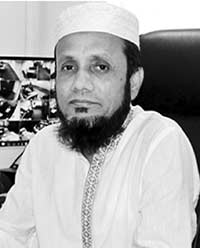
The writer is Chief Editor at Mohammadi News Agency (MNA) and Editor at Kishore Bangla
Loading...
Loading...
Also read



Editor : Iqbal Sobhan Chowdhury
Published by the Editor on behalf of the Observer Ltd. from Globe Printers, 24/A, New Eskaton Road, Ramna, Dhaka.
Editorial, News and Commercial Offices : Aziz Bhaban (2nd floor), 93, Motijheel C/A, Dhaka-1000.
Phone: PABX- 41053001-06; Online: 41053014; 01550707296 Advertisement: 41053012; 01550707291
E-mail: [email protected] [email protected]
Published by the Editor on behalf of the Observer Ltd. from Globe Printers, 24/A, New Eskaton Road, Ramna, Dhaka.
Editorial, News and Commercial Offices : Aziz Bhaban (2nd floor), 93, Motijheel C/A, Dhaka-1000.
Phone: PABX- 41053001-06; Online: 41053014; 01550707296 Advertisement: 41053012; 01550707291
E-mail: [email protected] [email protected]


