



| HEADLINE |

|
How misuse of social media hampers people’s lives
Published : Wednesday, 8 July, 2026 at 12:00 AM
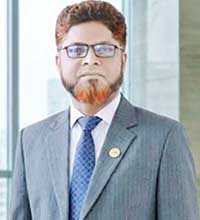
Dr M Abdul Momin


 Social media has become an integral part of everyday life, transforming how people communicate and express their thoughts, emotions, and experiences. It was originally developed to strengthen human connections by enabling people to build and maintain relationships through digital communication.
The concept of social media emerged in the late twentieth century with the widespread use of email, which demonstrated the potential for instant communication across distances. Building on this idea, Andrew Weinreich launched SixDegrees in 1997 (introduced in 1996), the world's first social networking platform. It allowed users to create profiles, connect with friends, and share personal information. Although limited internet access prevented its widespread success, SixDegrees is widely recognized as the first social networking site, and Weinreich is often referred to as a pioneer of social media.In 2003, LinkedIn was established to facilitate professional networking, demonstrating that social media could serve business and career development in addition to personal interaction.
Around the same time, Mark Zuckerberg and his classmates at Harvard University launched The Facebook on February 4, 2004, initially as a platform for Harvard students. Following rapid adoption, it expanded to other universities and became available to the general public worldwide in 2006. In 2005, the platform was renamed Facebook, marking the beginning of its rise as the world's largest social networking platform.Overall, the evolution of social media reflects its original purpose of fostering communication and relationships. However, as its influence has grown, concerns have also emerged regarding its misuse and the resulting social challenges, particularly in countries such as Bangladesh.
Following the success of Facebook, numerous social media platforms emerged to serve different purposes. YouTube focused on video sharing, Twitter on short messages and real-time public discourse, Instagram on image-based communication, and TikTok on short-form entertainment. Each platform was originally designed to meet specific communication, professional, or entertainment needs.
A notable feature of these platforms is that they were all founded with positive objectives: bringing people closer together, facilitating communication, and promoting the free flow of information. However, commercialization, advertising-driven business models, and competition for user attention gradually shifted their priorities. Instead of strengthening human connections, many platforms increasingly became mechanisms for maximizing engagement, often fostering addiction, polarization, and social division.
In Bangladesh, this shift is particularly evident. Platforms such as Facebook, YouTube, TikTok, WhatsApp, and Messenger are no longer merely communication tools; they have also become channels for misinformation, social conflict, psychological stress, and moral decline. When social media amplifies hatred, intolerance, and confusion rather than empathy and constructive dialogue, its use can reasonably be described as antisocial.
Bangladesh now has more than 125 million internet users, the majority of whom primarily access social media through Facebook and YouTube. Facebook alone has over 60 million users, representing roughly 36% of the country's population. Young people aged 18�"24 constitute the largest user group, with men significantly outnumbering women. Given this scale of use, the influence of social media on young people has become an issue of national importance.
One of the most serious consequences of antisocial social media use is the rapid spread of misinformation and rumors. In Bangladesh, Facebook-based rumors have repeatedly contributed to violence, mob attacks, and social unrest, particularly in the aftermath of the July 2024 movement. Manipulated images and misleading information can spread within minutes, sometimes triggering real-world violence. Women and adolescents are especially vulnerable to online harassment, image manipulation, blackmail, and reputational damage. Many incidents remain unreported due to social stigma and family pressure.
Violations of personal privacy have become increasingly common in Bangladesh's digital space. Sharing someone's photos or personal information without consent, exposing private conversations, and publishing sensitive content as an act of revenge are growing concerns. At the same time, social media has intensified political polarization. Rather than encouraging constructive dialogue, online platforms often amplify hostility, while algorithm-driven "echo chambers" expose users primarily to views that reinforce their existing beliefs, reducing tolerance for differing opinions.
Another major concern is the impact of excessive social media use on mental health. Research indicates that heavy use is associated with insomnia, anxiety, depression arising from constant social comparison, and reduced attention spans, particularly among young people. Social media is also affecting family relationships. Even within the same household, family members increasingly spend time on their individual devices instead of engaging in face-to-face conversations. Reports also suggest that social media contributes to marital conflict, distrust, and relationship breakdown. Furthermore, the pursuit of online popularity through platforms such as TikTok and short-form video reels has encouraged the production of risky, inappropriate, and sometimes illegal content, negatively influencing adolescents' judgment and behavior.
Several structural factors contribute to these problems. First, digital literacy and critical thinking remain insufficiently integrated into formal education. Second, platform algorithms are designed to maximize user engagement by promoting sensational, controversial, and misleading content. Third, concerns have been raised that cyber laws are sometimes used to suppress dissent rather than effectively combat misinformation and online harassment. Finally, rapid urbanization and weakening social bonds have led many people to seek validation online instead of through real-world relationships.
Abandoning social media is neither practical nor desirable. Instead, addressing these challenges requires a coordinated effort involving families, educational institutions, technology companies, civil society, and government. Digital literacy should become an essential part of school and college curricula, teaching students how to verify information, identify misinformation, and behave responsibly online. Families should encourage open communication so that children feel comfortable seeking help when they encounter online risks. Governments should strengthen victim-friendly legal mechanisms to combat cyberbullying and blackmail while ensuring transparency to prevent misuse of cyber laws. Independent fact-checking organizations and responsible journalism also play a vital role in limiting the spread of misinformation. At the individual level, users must verify information before sharing it, think carefully before commenting, and maintain healthy limits on screen time.
Ultimately, social media is neither inherently good nor bad; it is a tool whose impact depends on how it is used. In Bangladesh, its antisocial use has reached a level that affects individual mental well-being, family relationships, and social cohesion. The solution is not to reject technology but to promote digital literacy, responsible use, and balanced regulation so that social media can once again fulfill its original purpose of strengthening human connection.
The writer is a Senior Communication Officer, Bangladesh Rice Research Institute
Loading...
Loading...
Also read



Editor : Iqbal Sobhan Chowdhury
Published by the Editor on behalf of the Observer Ltd. from Globe Printers, 24/A, New Eskaton Road, Ramna, Dhaka.
Editorial, News and Commercial Offices : Aziz Bhaban (2nd floor), 93, Motijheel C/A, Dhaka-1000.
Phone: PABX- 41053001-06; Advertisement: 41053012; 01793317829, 01550707291, E-mail: [email protected], [email protected] Online: email: [email protected] 41053014; 01550707297 Advertisement: 01550707296
Published by the Editor on behalf of the Observer Ltd. from Globe Printers, 24/A, New Eskaton Road, Ramna, Dhaka.
Editorial, News and Commercial Offices : Aziz Bhaban (2nd floor), 93, Motijheel C/A, Dhaka-1000.
Phone: PABX- 41053001-06; Advertisement: 41053012; 01793317829, 01550707291, E-mail: [email protected], [email protected] Online: email: [email protected] 41053014; 01550707297 Advertisement: 01550707296


