



| HEADLINE |

|
Why are landslides not pre-empted?
Published : Wednesday, 8 July, 2026 at 12:00 AM
Osman Gani


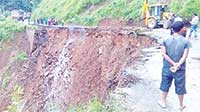
 Landslide deaths are not new to Bangladesh. Every rainy season, lives are lost, yet no permanent solution is found. Indiscriminate hill cutting and encroachment continue to increase the risk of such disasters. The Rohingya refugee camps in Ukhiya, Cox’s Bazar, have once again been devastated by the combined effects of nature’s fury and human negligence. At least eleven people, including women and children, lost their lives in separate incidents at Balukhali, Kutupalong, Jamtali and Jamshia late Monday night. While the immediate cause of the tragedy was heavy rainfall triggered by the low-pressure in the Bay of Bengal, there is no way to overlook the long-term environmental degradation and humanitarian crisis that lie behind it.
Those who lost their lives were not mere statistics; each carried a dream of survival. These people had once fled Myanmar with their families to escape brutal violence, ethnic cleansing and the burning of their homes, hoping to find safety in Bangladesh.
Yet, in a cruel twist of fate, they survived bullets only to be buried beneath collapsing hills in their place of refuge. This tragedy is a painful reminder of the profound humanitarian crisis confronting the Rohingya people.
This crisis is not a sudden accident but a long-predicted disaster. In 2017, when millions of Rohingyas fled Myanmar, Bangladesh cleared nearly 8,000 acres of forest in Ukhiya and Teknaf to establish 34 refugee camps. Faced with one of the world’s largest humanitarian crises, providing immediate shelter was unavoidable. However, the unplanned construction of settlements on deforested hillsides has carried a heavy price. The loss of trees has weakened the soil, while fragile bamboo-and-plastic shelters built on steep slopes have made the camps highly vulnerable. During prolonged monsoon rains, the saturated hills turn into deadly traps. According to the forecast of the Meteorological Office, heavy rainfall and landslides may continue for a few more days, which mean thousands of refugees remain under imminent threat.
The solution to this crisis cannot be limited to rescue operations and condolences. While the Fire Service, APBn, and Rohingya volunteers deserve praise for their courageous rescue efforts, greater emphasis must now be placed on prevention.
An effective early warning system should ensure the timely evacuation of families living on vulnerable slopes whenever heavy rainfall is forecast during the monsoon. At the same time, with international support, environmentally friendly retaining structures, improved drainage systems, and slope restoration measures should be introduced to stabilise the hillsides. Above all, the construction of new shelters in high-risk areas must be strictly prohibited.
The biggest truth is that such humanitarian disasters will continue to occur until a sustainable and permanent solution is found to the Rohingya crisis. Bangladesh has shown extraordinary generosity by sheltering this vast refugee population despite immense environmental and economic costs. However, it cannot bear this burden indefinitely. The ecological balance of Cox’s Bazar has already been severely damaged, and the local population also faces growing long-term risks. The international community must move beyond humanitarian assistance and exert effective diplomatic pressure on Myanmar to ensure the safe, dignified and sustainable repatriation of the Rohingya to their homeland.
In conclusion, Ukhiya landslides are not merely a natural disaster but a tragic manifestation of the indifference of the world conscience and an unresolved humanitarian crisis. The people, who took shelter in this country to save their lives after being subjected to ethnic cleansing in their own country, now find themselves at the mercy of nature in their place of refuge. Although there is no shortage of ability and sincerity in temporary rescue work, the only way to save this vulnerable population from permanent death is the safe and dignified repatriation of the Rohingyas. If the international community does not take effective action now, the soil of Ukhiya will continue to be stained with blood every monsoon, which will be a permanent stain on civilised society.
The writer is Vice President, Chandina Press Club
Loading...
Loading...
Also read



Editor : Iqbal Sobhan Chowdhury
Published by the Editor on behalf of the Observer Ltd. from Globe Printers, 24/A, New Eskaton Road, Ramna, Dhaka.
Editorial, News and Commercial Offices : Aziz Bhaban (2nd floor), 93, Motijheel C/A, Dhaka-1000.
Phone: PABX- 41053001-06; Advertisement: 41053012; 01793317829, 01550707291, E-mail: [email protected], [email protected] Online: email: [email protected] 41053014; 01550707297 Advertisement: 01550707296
Published by the Editor on behalf of the Observer Ltd. from Globe Printers, 24/A, New Eskaton Road, Ramna, Dhaka.
Editorial, News and Commercial Offices : Aziz Bhaban (2nd floor), 93, Motijheel C/A, Dhaka-1000.
Phone: PABX- 41053001-06; Advertisement: 41053012; 01793317829, 01550707291, E-mail: [email protected], [email protected] Online: email: [email protected] 41053014; 01550707297 Advertisement: 01550707296


