



| HEADLINE |

|
Japan Garden City without power for 3 days
Published : Thursday, 9 July, 2026 at 9:50 PM
Observer Online Report


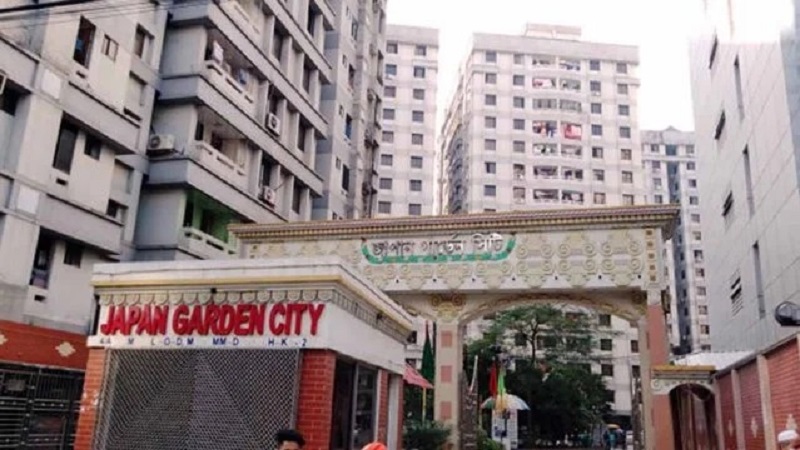
Thousands of residents of Japan Garden City, an upscale residential complex in Mohammadpur, Dhaka, have been suffering as the area has remained without electricity for the past three days due to a faulty transformer.
The power outage began on Tuesday (July 7) after a transformer at the residential area's own 33kV substation malfunctioned. Although the authorities said repair work was underway, they could not provide any clear timeline for restoring electricity.
Residents said the outage has severely disrupted daily life, affecting lift operations, water supply, internet services and other essential activities. Many residents have been forced to leave their homes temporarily due to the extreme heat and lack of basic facilities.
A resident, Laboni, said her son Arnob is sitting for the HSC examination from Cambrian College this year, but the prolonged power crisis has disrupted his studies and normal routine. She said her family has temporarily moved to a relative’s house in Farmgate.
“Lifts are not working, there is a water crisis, and staying at home in this heat has become extremely difficult. Many families have already left their flats,” she said.
Residents also said food stored in refrigerators has spoiled, while work-from-home activities, online services and internet connectivity have been disrupted. Children, elderly people and sick residents are facing the most difficulties due to the power crisis.
Meanwhile, no specific announcement has been made regarding when the transformer repair will be completed and electricity supply will return to normal, increasing frustration among residents.
Attempts to contact the Japan Garden City authorities for comments went unanswered.
On the other hand, the local electricity distribution authority said it had not received any official request for assistance regarding the problem at Japan Garden City's own substation, preventing them from taking direct action.
Residents, numbering more than 3,000, have demanded immediate restoration of power and a permanent solution to prevent such disruptions in the future.
-HIS
Loading...
Loading...
Also read








Editor : Iqbal Sobhan Chowdhury
Published by the Editor on behalf of the Observer Ltd. from Globe Printers, 24/A, New Eskaton Road, Ramna, Dhaka.
Editorial, News and Commercial Offices : Aziz Bhaban (2nd floor), 93, Motijheel C/A, Dhaka-1000.
Phone: PABX- 41053001-06; Advertisement: 41053012; 01793317829, 01550707291, E-mail: [email protected], [email protected] Online: email: [email protected] 41053014; 01550707297 Advertisement: 01550707296
Published by the Editor on behalf of the Observer Ltd. from Globe Printers, 24/A, New Eskaton Road, Ramna, Dhaka.
Editorial, News and Commercial Offices : Aziz Bhaban (2nd floor), 93, Motijheel C/A, Dhaka-1000.
Phone: PABX- 41053001-06; Advertisement: 41053012; 01793317829, 01550707291, E-mail: [email protected], [email protected] Online: email: [email protected] 41053014; 01550707297 Advertisement: 01550707296


