



| HEADLINE |

|
The art of surviving knockout football
Why winning matters more than playing beautifully


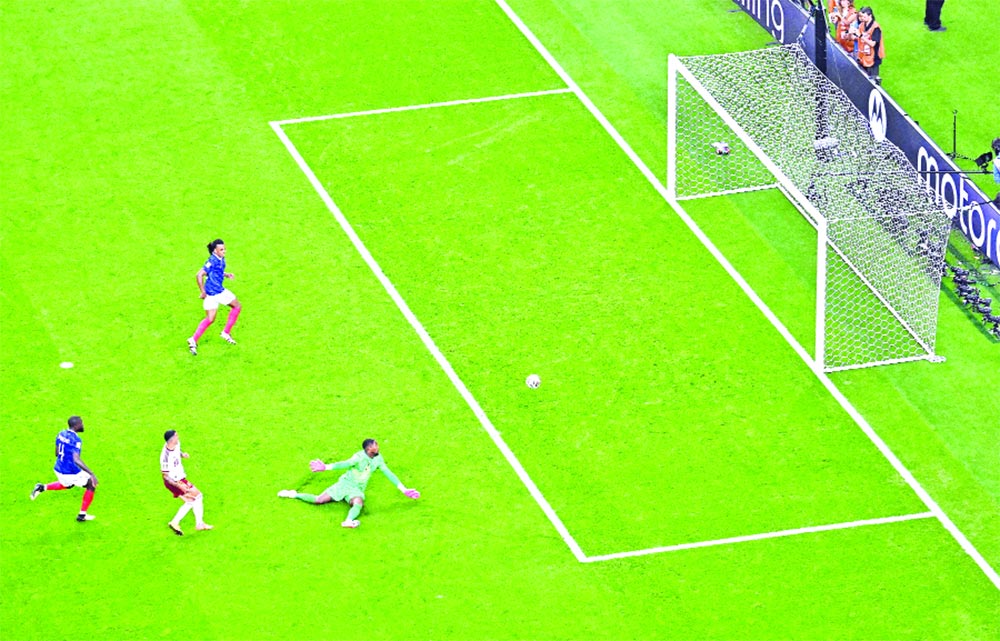 The knockout stage of a FIFA World Cup teaches football's harshest lesson.
Beauty can inspire.
Possession can entertain.
Attacking football can excite millions.
But none of those guarantees survival.
As World Cup 2026 reaches its final four, one truth has become impossible to ignore: knockout football is not about playing the best football for 90 minutes. It is about making the right decisions in the moments that matter most.
Spain understood that.
England understood that.
Argentina understood that.
And those who failed to recognise it is already on their way home.
Throughout the group stage, teams often have room for mistakes. One defeat can be recovered. One draw can still be enough. The knockout rounds offer no such luxury.
One defensive lapse.
One missed chance.
One careless tackle.
One failed penalty.
The dream disappears.
That is exactly why knockout football is its own art form.
Spain's journey perfectly illustrates this reality.
Luis de la Fuente's side have played some of the tournament's most attractive football, but what has truly separated them has been their discipline. Against Belgium they remained calm after conceding. Against France they resisted early pressure before patiently taking control of the match.
They did not panic.
They waited.
Then they struck.
England have followed a completely different path.
Rather than overwhelming opponents with relentless attacking football, Gareth Southgate's team have mastered patience. Against Norway they trailed before Jude Bellingham rescued them. They never abandoned their structure, never chased the game recklessly and were rewarded in extra time.
Winning ugly is still winning.
Argentina have perhaps demonstrated the greatest lesson of all.
Lionel Messi continues to inspire, but this Argentina team no longer depends solely on his brilliance. Against Switzerland they accepted frustration, trusted their system and eventually found the breakthrough in extra time.
Champions rarely force football.
They allow football to come to them.
The contrast with several eliminated teams is striking.
Some attempted to attack at every opportunity, leaving themselves vulnerable to counter-attacks.
Others dominated possession without creating meaningful chances.
Several controlled matches statistically but lost them emotionally.
World Cups are not awarded for possession percentages.
They are awarded for decisive moments.
Modern knockout football has also become a contest of endurance.
Sports science, recovery, squad rotation and intelligent substitutions now influence matches as much as technical ability. Fresh legs arriving from the bench have repeatedly transformed games during this tournament.
Managers now plan for 120 minutes rather than 90.
Perhaps the greatest quality shared by every remaining semi-finalist is emotional control.
When they concede, they remain composed.
When they lead, they stay disciplined.
When pressure increases, they simplify rather than complicate.
That mentality cannot be measured by statistics, yet it often determines champions.
Football has always celebrated beauty.
The World Cup, however, celebrates survival.
History rarely remembers which team completed the most passes or enjoyed the highest possession.
It remembers who lifted the trophy.
As the tournament approaches its conclusion, the surviving teams have reminded the football world of an uncomfortable but timeless truth.
Playing beautifully can win admiration.
Winning when everything is on the line creates legends.
And in knockout football, legends are all that history remembers.
Loading...
Loading...
Also read



Editor : Iqbal Sobhan Chowdhury
Published by the Editor on behalf of the Observer Ltd. from Globe Printers, 24/A, New Eskaton Road, Ramna, Dhaka.
Editorial, News and Commercial Offices : Aziz Bhaban (2nd floor), 93, Motijheel C/A, Dhaka-1000.
Phone: PABX- 41053001-06; Advertisement: 41053012; 01793317829, 01550707291, E-mail: [email protected], [email protected] Online: email: [email protected] 41053014; 01550707297 Advertisement: 01550707296
Published by the Editor on behalf of the Observer Ltd. from Globe Printers, 24/A, New Eskaton Road, Ramna, Dhaka.
Editorial, News and Commercial Offices : Aziz Bhaban (2nd floor), 93, Motijheel C/A, Dhaka-1000.
Phone: PABX- 41053001-06; Advertisement: 41053012; 01793317829, 01550707291, E-mail: [email protected], [email protected] Online: email: [email protected] 41053014; 01550707297 Advertisement: 01550707296


