



| HEADLINE |

|

Commercial lotkon farming gains ground at Dumuria
Published : Saturday, 18 July, 2026 at 12:00 AM
Our Correspondent


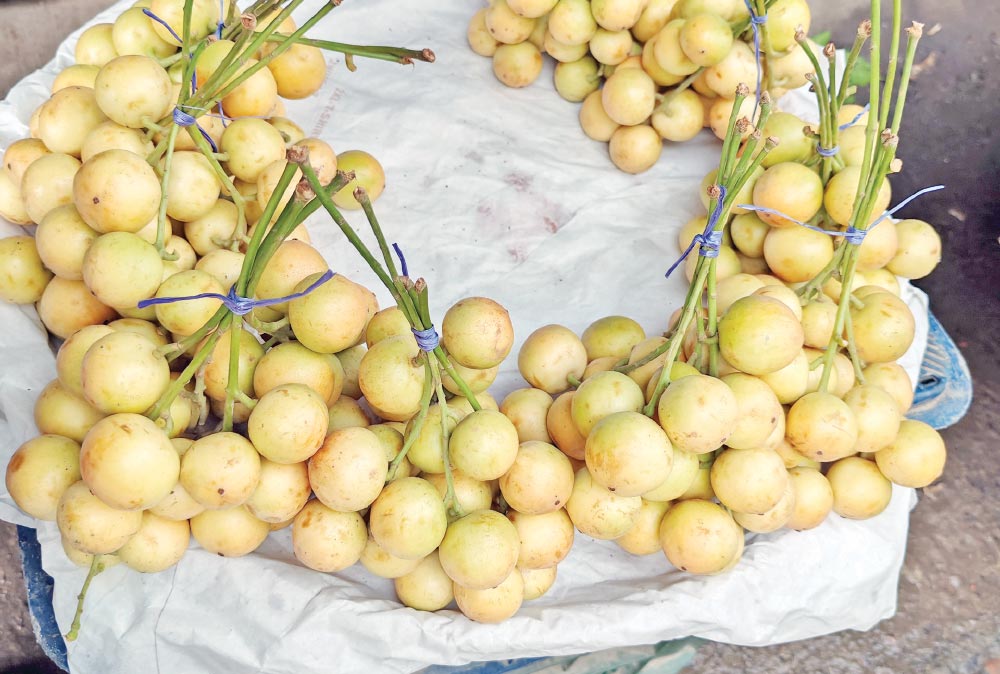 KHULNA, July 17: Commercial cultivation of lotkon (Burmese grape), a popular tropical fruit, is gaining momentum across all 14 unions of Dumuria Upazila in Khulna, with growers enjoying a bumper harvest and attractive market prices this season.
Favourable soil and weather conditions have contributed to high yields, encouraging more farmers to switch from homestead cultivation to commercial orchards. Once limited to a few trees in household yards, lotkon is now emerging as a profitable cash crop in the area.
Mustafa Kamal, a farmer from Atlia Union, said he planted 50 saplings on fallow land beside his house four years ago on a trial basis.
"The trees started bearing fruit last year, but this season the yield has been excellent. The fruits are large and sweet, and demand in the market is high," he said.
He added that lotkon cultivation requires relatively low investment and maintenance, as the crop is less vulnerable to pests and diseases. He is currently selling the fruit at Tk 100-120 per kilogram in the wholesale market and expects to earn more than Tk 100,000 in profit after deducting production costs.
"The success of my orchard has inspired many unemployed youths in the area to take up lotkon cultivation," he added.
Dumuria Upazila Agriculture Officer Md Nazmul Huda said the area's fertile loamy soil and climate are highly suitable for the fruit.
"Lotkon is a shade-loving plant and can easily be grown under larger trees or on unused shaded land around homesteads. We regularly provide farmers with training on quality saplings, balanced fertiliser use and proper pest management," he said.
He noted that the crop's low production cost and strong market demand have made it an attractive option for farmers, contributing positively to the rural economy.
A visit to local markets showed that lotkon grown in Dumuria is not only meeting local demand but is also being supplied to Khulna city and neighbouring districts.
Agriculture officials believe that improved storage and marketing facilities could further expand the crop's commercial potential, creating a new source of income for farmers across the region.
Loading...
Loading...
Also read



Editor : Iqbal Sobhan Chowdhury
Published by the Editor on behalf of the Observer Ltd. from Globe Printers, 24/A, New Eskaton Road, Ramna, Dhaka.
Editorial, News and Commercial Offices : Aziz Bhaban (2nd floor), 93, Motijheel C/A, Dhaka-1000.
Phone: PABX- 41053001-06; Advertisement: 41053012; 01793317829, 01550707291, E-mail: [email protected], [email protected] Online: email: [email protected] 41053014; 01550707297 Advertisement: 01550707296
Published by the Editor on behalf of the Observer Ltd. from Globe Printers, 24/A, New Eskaton Road, Ramna, Dhaka.
Editorial, News and Commercial Offices : Aziz Bhaban (2nd floor), 93, Motijheel C/A, Dhaka-1000.
Phone: PABX- 41053001-06; Advertisement: 41053012; 01793317829, 01550707291, E-mail: [email protected], [email protected] Online: email: [email protected] 41053014; 01550707297 Advertisement: 01550707296


