



| HEADLINE |

|
Teesta, Dharla, Dudhkumar likely to rise again
Published : Saturday, 18 July, 2026 at 12:00 AM
Staff Correspondent


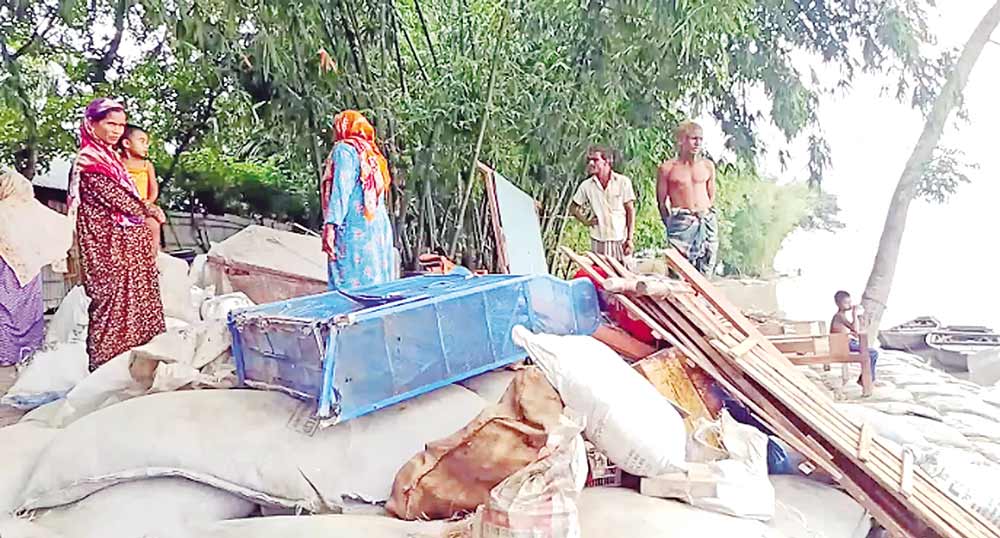 Water levels in the Teesta, Dharla and Dudhkumar rivers may rise again within the next three days, triggering a fresh flood alert for five northern districts, the Flood Forecasting and Warning Centre (FFWC) said on Friday, even as erosion and the aftermath of flash floods continued to batter several parts of the country.
The FFWC report, signed by Assistant Engineer Mostofa Kamal Jihan, said Lalmonirhat, Nilphamari, Rangpur, Gaibandha and Kurigram districts could face short-term flooding in low-lying areas along the riverbanks. The Kushiyara river was already flowing above the danger level at Fenchuganj in Sylhet and at Markuli in Sunamganj.
The report added that the Brahmaputra-Jamuna and the Ganges-Padma rivers were also rising, a trend likely to continue for five days, with water expected to touch warning marks at several points in Kurigram, Gaibandha, Jamalpur and Bogura. The flood situation in the Surma-Kushiyara basin of Sylhet and Sunamganj was likely to remain fairly stable over the next 24 hours, it said, as a low-pressure area over the northwest Bay of Bengal weakened into a trough over north Odisha and adjoining Bihar and Gangetic West Bengal.
Flood alert for Lalmonirhat, Nilphamari, Rangpur, Gaibandha and Kurigram
In Kurigram’s Rajarhat upazila, at least 20 houses in Char Bidyanondo and Char Toiyobkha villages were swept away by the Teesta over the past two days as falling water levels intensified the erosion. Residents said more than 300 houses, a government primary school and two mosques were under threat. Upazila Nirbahi Officer Tanjila Tasnim said she had visited the affected areas and geo-bags were being placed in coordination with the Bangladesh Water Development Board (BWDB) to slow the erosion.
In Sirajganj, the Jamuna rose by 32 centimetres at the Sirajganj town protection embankment hard point and 38 centimetres at the Kazipur Meghai Ghat point over the past 24 hours, BWDB sub-divisional engineer Zakir Hossain said. Though the river remained below danger level, the district administration identified 31 of its 83 unions as risk-prone. Civil Surgeon Dr Md Nurul Amin said 83 medical teams had been formed and emergency medicine stocked. Deputy Commissioner Md Aminul Islam said preparatory meetings had been held and relief distribution was ongoing.
In Rangamati, heavy rainfall in the catchment area has caused Kaptai Lake's water levels to surge. On Thursday evening, the water level stood at 103.91 feet MSL against a maximum capacity of 109 feet MSL. To control the situation, the Karnaphuli Hydro Power Station authorities plan to open 16 spillway gates by six inches after 11AM on Saturday (July 18), initially releasing about 9,000 cusecs of water into the Karnaphuli River. Manager Mahmud Hasan stated that five operational power units are already discharging around 32,000 cusecs. The Bangladesh Power Development Board (BPDB) has advised residents in low-lying areas along the Karnaphuli River to remain vigilant.
In Chattogram’s Satkania upazila, meanwhile, receding floodwaters from days of heavy rain and hill torrents exposed damage exceeding Tk 100 crore, according to preliminary upazila administration estimates. Agriculture losses alone stood at around Tk 60 crore, affecting more than 16,500 farmers, while the fisheries sector lost close to Tk 37.5 crore after floods swept away fish from 3,575 ponds. Upazila Nirbahi Officer Khondaker Mahmudul Hasan said 45 roads and six culverts were damaged, and assistance would be extended to affected families once final assessments were complete.
Loading...
Loading...
Also read



Editor : Iqbal Sobhan Chowdhury
Published by the Editor on behalf of the Observer Ltd. from Globe Printers, 24/A, New Eskaton Road, Ramna, Dhaka.
Editorial, News and Commercial Offices : Aziz Bhaban (2nd floor), 93, Motijheel C/A, Dhaka-1000.
Phone: PABX- 41053001-06; Advertisement: 41053012; 01793317829, 01550707291, E-mail: [email protected], [email protected] Online: email: [email protected] 41053014; 01550707297 Advertisement: 01550707296
Published by the Editor on behalf of the Observer Ltd. from Globe Printers, 24/A, New Eskaton Road, Ramna, Dhaka.
Editorial, News and Commercial Offices : Aziz Bhaban (2nd floor), 93, Motijheel C/A, Dhaka-1000.
Phone: PABX- 41053001-06; Advertisement: 41053012; 01793317829, 01550707291, E-mail: [email protected], [email protected] Online: email: [email protected] 41053014; 01550707297 Advertisement: 01550707296


