



| HEADLINE |

|
Private univ students built resistance on this day during July uprising


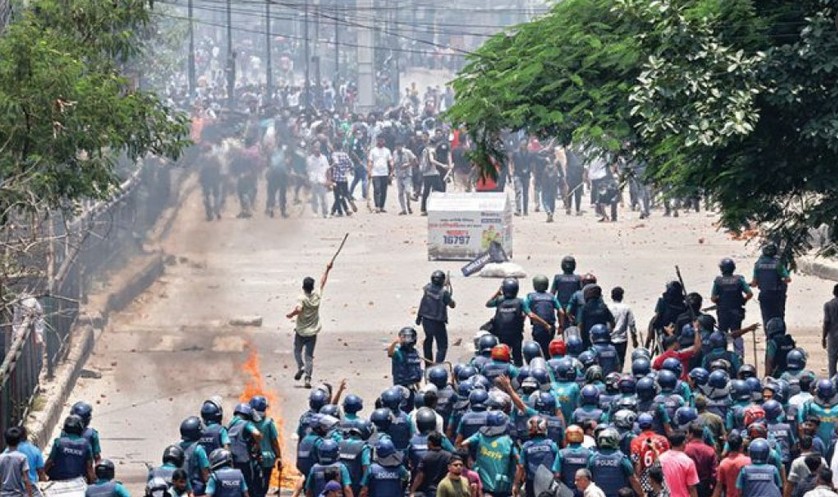
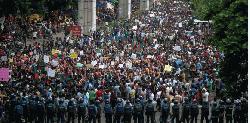
July 18 marks 'Private University Resistance Day,' commemorating the day when students from the country's private universities joined the 2024 quota reform movement, transforming it into a nationwide mass uprising.
The movement, which began in July, last year, with demands for quota reform in government recruitment, gradually evolved into a broader anti-government protest amid escalating violence against demonstrators.
What had initially been confined to public university campuses spread across the country after private university students organized a coordinated resistance.
Participants describe the movement as a fight against the repression of fellow students rather than solely a campaign for quota reform. July 18 has since become known as 'Private University Resistance Day.'
This year, however, the Private University Student Alliance of Bangladesh (PUSAB) is not observing the day with formal programs, citing severe flooding across parts of the country.
The organization said commemorative events have been postponed.
From Quota Reform to Nationwide Protest
Under the banner of the Anti-Discrimination Student Movement, students organized sit-ins, demonstrations, rallies and road blockades throughout July 2024.
On July 7, students announced a boycott of classes and examinations. The following day, demonstrations spread to several public universities, including Chittagong University, Khulna University, Hajee Mohammad Danesh Science and Technology University, Jashore University of Science and Technology, Bangabandhu Sheikh Mujibur Rahman Science and Technology University (now Gopalganj Science and Technology University), and Mawlana Bhashani Science and Technology University.
As the days progressed, the movement intensified. Protesters launched the 'Bangla Blockade' program, temporarily blocking major roads and highways across the country. In Dhaka, prolonged road blockades brought large parts of the capital to a standstill. Students at universities and colleges nationwide simultaneously announced class and examination boycotts in support of the central movement.
Protesters continued demonstrations by blocking roads and railway lines while maintaining sit-in programs.
Violence Escalates
Tensions rose sharply after then-Prime Minister Sheikh Hasina made remarks on July 14 that protesters strongly opposed. Students held midnight protest marches in response.
On July 15, attacks were reported on demonstrators at several universities, including Dhaka University, Rajshahi University and Comilla University. Following the violence, students called for nationwide protest rallies at educational institutions.
Although the movement initially centered on Dhaka University, it quickly spread throughout Bangladesh. Security forces attempted to suppress the demonstrations using gunfire, tear gas and batons. Authorities also restricted access to Facebook before later shutting down internet services nationwide.
On July 16, Abu Sayeed, an English department student at Begum Rokeya University in Rangpur, was shot dead by police during protests. He is widely remembered by participants as the first martyr of the movement.
Following his death, students attempted to hold a funeral prayer in absentia at Dhaka University. On July 17, educational institutions were ordered closed and residential halls were vacated. Protest leaders responded by announcing a 'Complete Shutdown.'
That same day, private university students formally joined the movement. On July 18, they organized a coordinated resistance across the country.
The Call for Resistance
Students involved in the movement say many private university students initially had limited interest in quota reform, believing it affected relatively few of them directly. However, videos and reports circulating on social media-particularly those showing attacks on students, including female protesters-dramatically changed public sentiment.
Smaller demonstrations had already begun on July 15 at institutions including East West University, Bangladesh University of Business and Technology (BUBT), and United International University (UIU).
Following Abu Sayeed's death on July 16, PUSAB announced that private university students would join the movement in full force.
PUSAB founder Abdullah Al Mahfuz Zakaria said, "We could not accept that students were being shot dead. On July 16 alone, seven people were killed. Political movements in the past did not draw ordinary citizens in this way. But when ordinary students were shot, it deeply affected us psychologically. That day we called on all private universities to unite.''
He said some students attempted to demonstrate on July 17 despite campus closures but faced attacks and intimidation.
According to Zakaria, students from BRAC University, East West University, Canadian University of Bangladesh, North South University, Independent University, Bangladesh (IUB), American International University-Bangladesh (AIUB), and others established communication networks across different areas of Dhaka. PUSAB coordinated these groups through a common organizational structure, allowing students to mobilize simultaneously on July 18.
The BRAC University Frontline
Participants believe the turning point came outside BRAC University in Merul Badda.
Police dispersed demonstrators there, prompting students from East West University to rush to their support. They were soon joined by students from North South University and UIU, who together mounted a coordinated resistance that protesters say forced police to retreat.
A Coordinated Resistance
On July 18, repeated clashes erupted between police and protesters outside BRAC University.
Police later entered the Canadian University of Bangladesh campus while demonstrators remained outside. Officers reportedly fired rubber bullets and shotgun pellets from inside the campus, injuring numerous protesters.
Participants say some police personnel became trapped inside the university during the confrontation and were later evacuated by helicopter from the rooftop.
Following July 18, private university students established nationwide communication networks despite internet restrictions, using available channels to coordinate demonstrations and share information.
According to students involved in the protests, between 22 and 23 people were killed across the country on July 18. They said demanding the government's resignation became increasingly widespread after the day's violence.
Organizing Without Central Leadership
BRAC University student Sakin Shabab, who participated directly in the movement, said coordination developed organically rather than through a formal command structure.
''We encouraged everyone to contact students from additional universities,'' he said. ''That is how the network gradually expanded.''
Students said that communication continued despite internet blackouts and curfews. Because private universities are spread across different parts of Dhaka, they were able to organize simultaneous road blockades at strategic locations throughout the city.
Even after several central coordinators, including Nahid Islam, were taken into Detective Branch (DB) custody, protesters say communication with other organizers continued through alternative channels.
''Without Private University Students, August 5 Would Not Have Happened''
Many participants argue that the involvement of private university students was instrumental in sustaining the movement after public university campuses were largely emptied.
Referring to August 5- described by protesters as ''July 36''- Sakin Shabab said private university students were not the only contributors.
''Madrasah students, religious scholars and even street children also played important roles,'' he said.
''Everyone contributed from their own position. But many now acknowledge that private university students helped carry the movement forward.''
Abdullah Al Mahfuz Zakaria echoed that view.
''When public universities were forced to vacate their dormitories under intense repression, many believed the movement was over,'' he said.
''If private university students had not entered the streets on July 18, August 5 would not have happened.''
He added that the participation of private university students encouraged ordinary citizens and madrasa students to join the demonstrations. According to him, in many divisional cities outside Dhaka, private university students played leading roles in organizing protests until August 5.
The Final Phase
On August 3, 2024, coordinators of the Anti-Discrimination Student Movement announced a one-point demand calling for the resignation of the government during a rally at the Central Shaheed Minar in Dhaka. They also launched an indefinite nationwide non-cooperation movement.
A ''Long March to Dhaka'' was initially scheduled for August 6 but was brought forward by one day.
On August 5, amid intensifying nationwide protests, reports emerged that Prime Minister Sheikh Hasina had resigned and left the country, marking a decisive turning point in the political crisis.
The movement, which began in July, last year, with demands for quota reform in government recruitment, gradually evolved into a broader anti-government protest amid escalating violence against demonstrators.
What had initially been confined to public university campuses spread across the country after private university students organized a coordinated resistance.
Participants describe the movement as a fight against the repression of fellow students rather than solely a campaign for quota reform. July 18 has since become known as 'Private University Resistance Day.'
This year, however, the Private University Student Alliance of Bangladesh (PUSAB) is not observing the day with formal programs, citing severe flooding across parts of the country.
The organization said commemorative events have been postponed.
From Quota Reform to Nationwide Protest
Under the banner of the Anti-Discrimination Student Movement, students organized sit-ins, demonstrations, rallies and road blockades throughout July 2024.
On July 7, students announced a boycott of classes and examinations. The following day, demonstrations spread to several public universities, including Chittagong University, Khulna University, Hajee Mohammad Danesh Science and Technology University, Jashore University of Science and Technology, Bangabandhu Sheikh Mujibur Rahman Science and Technology University (now Gopalganj Science and Technology University), and Mawlana Bhashani Science and Technology University.
As the days progressed, the movement intensified. Protesters launched the 'Bangla Blockade' program, temporarily blocking major roads and highways across the country. In Dhaka, prolonged road blockades brought large parts of the capital to a standstill. Students at universities and colleges nationwide simultaneously announced class and examination boycotts in support of the central movement.
Protesters continued demonstrations by blocking roads and railway lines while maintaining sit-in programs.
Violence Escalates
Tensions rose sharply after then-Prime Minister Sheikh Hasina made remarks on July 14 that protesters strongly opposed. Students held midnight protest marches in response.
On July 15, attacks were reported on demonstrators at several universities, including Dhaka University, Rajshahi University and Comilla University. Following the violence, students called for nationwide protest rallies at educational institutions.
Although the movement initially centered on Dhaka University, it quickly spread throughout Bangladesh. Security forces attempted to suppress the demonstrations using gunfire, tear gas and batons. Authorities also restricted access to Facebook before later shutting down internet services nationwide.
On July 16, Abu Sayeed, an English department student at Begum Rokeya University in Rangpur, was shot dead by police during protests. He is widely remembered by participants as the first martyr of the movement.
Following his death, students attempted to hold a funeral prayer in absentia at Dhaka University. On July 17, educational institutions were ordered closed and residential halls were vacated. Protest leaders responded by announcing a 'Complete Shutdown.'
That same day, private university students formally joined the movement. On July 18, they organized a coordinated resistance across the country.
The Call for Resistance
Students involved in the movement say many private university students initially had limited interest in quota reform, believing it affected relatively few of them directly. However, videos and reports circulating on social media-particularly those showing attacks on students, including female protesters-dramatically changed public sentiment.
Smaller demonstrations had already begun on July 15 at institutions including East West University, Bangladesh University of Business and Technology (BUBT), and United International University (UIU).
Following Abu Sayeed's death on July 16, PUSAB announced that private university students would join the movement in full force.
PUSAB founder Abdullah Al Mahfuz Zakaria said, "We could not accept that students were being shot dead. On July 16 alone, seven people were killed. Political movements in the past did not draw ordinary citizens in this way. But when ordinary students were shot, it deeply affected us psychologically. That day we called on all private universities to unite.''
He said some students attempted to demonstrate on July 17 despite campus closures but faced attacks and intimidation.
According to Zakaria, students from BRAC University, East West University, Canadian University of Bangladesh, North South University, Independent University, Bangladesh (IUB), American International University-Bangladesh (AIUB), and others established communication networks across different areas of Dhaka. PUSAB coordinated these groups through a common organizational structure, allowing students to mobilize simultaneously on July 18.
The BRAC University Frontline
Participants believe the turning point came outside BRAC University in Merul Badda.
Police dispersed demonstrators there, prompting students from East West University to rush to their support. They were soon joined by students from North South University and UIU, who together mounted a coordinated resistance that protesters say forced police to retreat.
A Coordinated Resistance
On July 18, repeated clashes erupted between police and protesters outside BRAC University.
Police later entered the Canadian University of Bangladesh campus while demonstrators remained outside. Officers reportedly fired rubber bullets and shotgun pellets from inside the campus, injuring numerous protesters.
Participants say some police personnel became trapped inside the university during the confrontation and were later evacuated by helicopter from the rooftop.
Following July 18, private university students established nationwide communication networks despite internet restrictions, using available channels to coordinate demonstrations and share information.
According to students involved in the protests, between 22 and 23 people were killed across the country on July 18. They said demanding the government's resignation became increasingly widespread after the day's violence.
Organizing Without Central Leadership
BRAC University student Sakin Shabab, who participated directly in the movement, said coordination developed organically rather than through a formal command structure.
''We encouraged everyone to contact students from additional universities,'' he said. ''That is how the network gradually expanded.''
Students said that communication continued despite internet blackouts and curfews. Because private universities are spread across different parts of Dhaka, they were able to organize simultaneous road blockades at strategic locations throughout the city.
Even after several central coordinators, including Nahid Islam, were taken into Detective Branch (DB) custody, protesters say communication with other organizers continued through alternative channels.
''Without Private University Students, August 5 Would Not Have Happened''
Many participants argue that the involvement of private university students was instrumental in sustaining the movement after public university campuses were largely emptied.
Referring to August 5- described by protesters as ''July 36''- Sakin Shabab said private university students were not the only contributors.
''Madrasah students, religious scholars and even street children also played important roles,'' he said.
''Everyone contributed from their own position. But many now acknowledge that private university students helped carry the movement forward.''
Abdullah Al Mahfuz Zakaria echoed that view.
''When public universities were forced to vacate their dormitories under intense repression, many believed the movement was over,'' he said.
''If private university students had not entered the streets on July 18, August 5 would not have happened.''
He added that the participation of private university students encouraged ordinary citizens and madrasa students to join the demonstrations. According to him, in many divisional cities outside Dhaka, private university students played leading roles in organizing protests until August 5.
The Final Phase
On August 3, 2024, coordinators of the Anti-Discrimination Student Movement announced a one-point demand calling for the resignation of the government during a rally at the Central Shaheed Minar in Dhaka. They also launched an indefinite nationwide non-cooperation movement.
A ''Long March to Dhaka'' was initially scheduled for August 6 but was brought forward by one day.
On August 5, amid intensifying nationwide protests, reports emerged that Prime Minister Sheikh Hasina had resigned and left the country, marking a decisive turning point in the political crisis.
Loading...
Loading...
Also read

Editor : Iqbal Sobhan Chowdhury
Published by the Editor on behalf of the Observer Ltd. from Globe Printers, 24/A, New Eskaton Road, Ramna, Dhaka.
Editorial, News and Commercial Offices : Aziz Bhaban (2nd floor), 93, Motijheel C/A, Dhaka-1000.
Phone: PABX- 41053001-06; Advertisement: 41053012; 01793317829, 01550707291, E-mail: [email protected], [email protected] Online: email: [email protected] 41053014; 01550707297 Advertisement: 01550707296
Published by the Editor on behalf of the Observer Ltd. from Globe Printers, 24/A, New Eskaton Road, Ramna, Dhaka.
Editorial, News and Commercial Offices : Aziz Bhaban (2nd floor), 93, Motijheel C/A, Dhaka-1000.
Phone: PABX- 41053001-06; Advertisement: 41053012; 01793317829, 01550707291, E-mail: [email protected], [email protected] Online: email: [email protected] 41053014; 01550707297 Advertisement: 01550707296


