



| HEADLINE |

|
Rivers swell risking flood in north
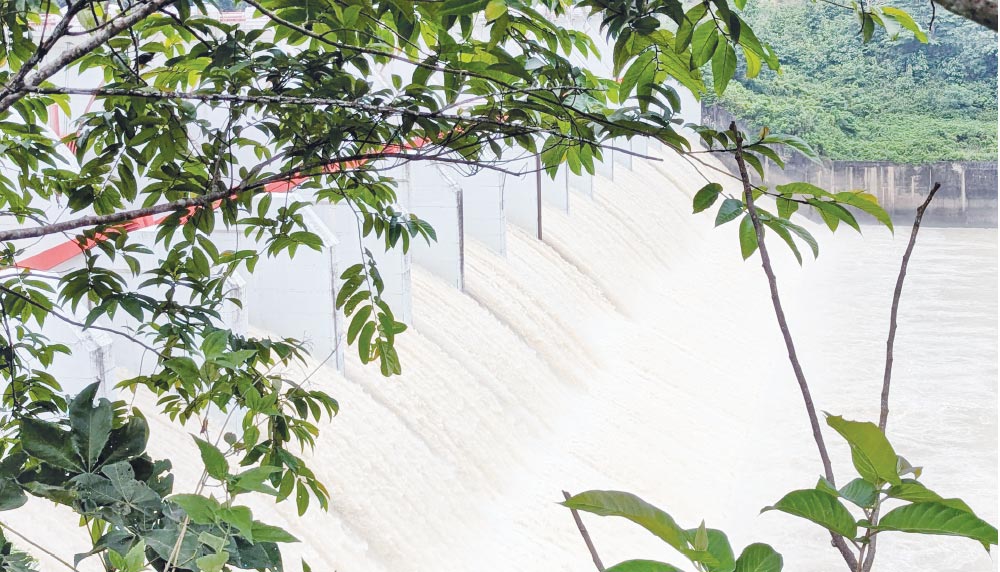
16 spillways of Kaptai Dam opened
Published : Sunday, 19 July, 2026 at 12:00 AM
Our Correspondents


 Flood concerns are mounting across parts of the country as rivers continue to swell, with the Kushiyara flowing above the danger level at two points and forecasts of more rainfall raising the risk of fresh flooding in several northern districts over the next five days.
The Bangladesh Meteorological Department (BMD) has forecast rainfall of varying intensity across the country through the next five days from Saturday, while the Flood Forecasting and Warning Centre (FFWC) warned that rising river levels could inundate low-lying areas if the trend continues.
According to the FFWC, the Kushiyara River is flowing above the danger level at Fenchuganj in Sylhet and Markuli in Sunamganj. Water levels in the Brahmaputra-Jamuna river system have also increased during the past 24 hours, although they remain below the danger mark.
The FFWC said river levels are likely to continue rising over the next five days. During the next 24 to 48 hours, water at some points may cross the danger level, triggering temporary flooding in low-lying riverbank areas of Lalmonirhat, Nilphamari, Rangpur, Gaibandha and Kurigram districts.
Meanwhile, severe flooding has been reported in Bauphal Upazila of Patuakhali after the Tetulia River rose above the danger level. A nearly six-kilometre embankment built by the Bangladesh Water Development Board at a cost of Tk 712 crore to protect Dhulia Union from river erosion has failed to prevent tidal inundation.
Nearly all villages in Chandradwip Union have gone under water, leaving around 8,000 families stranded during high tide.
In Rangamati, authorities opened all 16 spillway gates of the Kaptai Karnafuli Hydroelectric Power Plant by six inches at 11:20am on Saturday after the water level in Kaptai Lake continued to rise. The measure is releasing about 9,000 cusecs of water per second into the Karnaphuli River.
Plant Manager Engr Mahmud Hasan said the lake's water level reached 104.08 feet above mean sea level (MSL) at 10am. The plant's five generating units are producing 222 megawatts of electricity while discharging around 32,000 cusecs of water per second through the turbines.
He said additional spillway gates could be opened if required and urged people living in low-lying areas along the Karnaphuli River to remain vigilant.
Loading...
Loading...
Also read



Editor : Iqbal Sobhan Chowdhury
Published by the Editor on behalf of the Observer Ltd. from Globe Printers, 24/A, New Eskaton Road, Ramna, Dhaka.
Editorial, News and Commercial Offices : Aziz Bhaban (2nd floor), 93, Motijheel C/A, Dhaka-1000.
Phone: PABX- 41053001-06; Advertisement: 41053012; 01793317829, 01550707291, E-mail: [email protected], [email protected] Online: email: [email protected] 41053014; 01550707297 Advertisement: 01550707296
Published by the Editor on behalf of the Observer Ltd. from Globe Printers, 24/A, New Eskaton Road, Ramna, Dhaka.
Editorial, News and Commercial Offices : Aziz Bhaban (2nd floor), 93, Motijheel C/A, Dhaka-1000.
Phone: PABX- 41053001-06; Advertisement: 41053012; 01793317829, 01550707291, E-mail: [email protected], [email protected] Online: email: [email protected] 41053014; 01550707297 Advertisement: 01550707296


