



| HEADLINE |

|
Why Bangladesh’s vast tourism potential remains untapped
Published : Tuesday, 21 July, 2026 at 12:00 AM
Mohosinul Karim


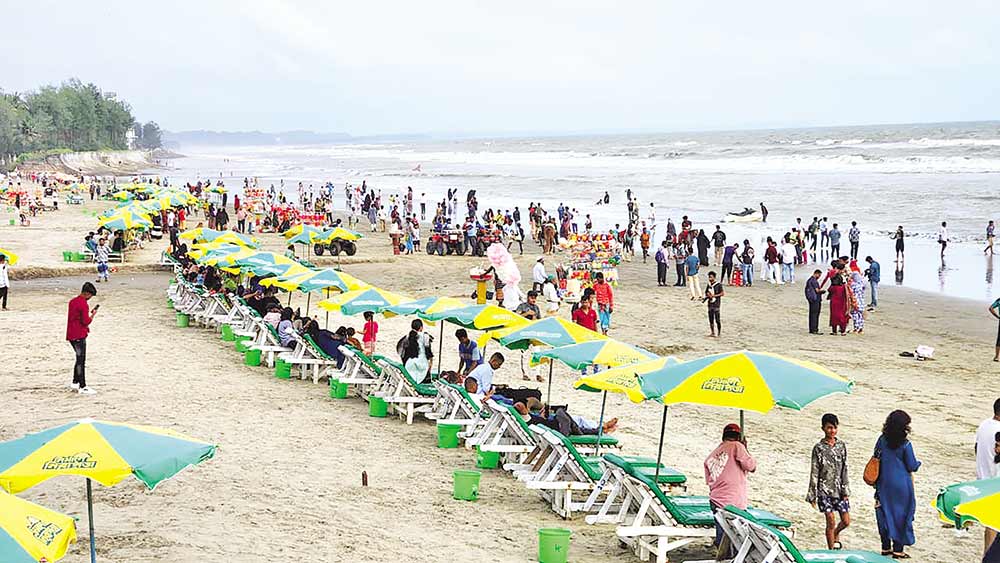 Despite being home to the world's longest natural sea beach, the Sundarbans mangrove forest, picturesque hill tracts, vast haor wetlands and UNESCO-recognised archaeological treasures, Bangladesh has yet to unlock the full potential of its tourism industry, according to sector experts and stakeholders.
Industry insiders say tourism contributes around 4.4 percent of the country's GDP and has the potential to become a major source of employment, foreign exchange earnings and regional economic development. However, inadequate infrastructure, weak international promotion, policy gaps and poor coordination among government agencies continue to limit growth.
Although Bangladesh has an estimated 700 to 800 tourist attractions, ranging from beaches and hills to rivers, heritage sites and cultural destinations, international visitor numbers remain modest. According to industry data, only 8.6 million foreign tourists have visited Bangladesh over the past three decades, while many destinations remain crowded only during peak holiday seasons and underutilised for the rest of the year.
Tourism experts say Bangladesh's challenge is not a shortage of attractions but the inability to transform them into internationally competitive tourism products.
Among the major obstacles identified by stakeholders is inadequate infrastructure. Bangladesh ranks 109th globally in tourism infrastructure, with poor road connectivity, traffic congestion, limited quality accommodation and insufficient visitor facilities affecting tourists' experiences. Weak aviation connectivity, limited direct international flights and comparatively high travel costs also make the country less competitive than regional destinations.
The absence of a strong international destination brand has further reduced Bangladesh's visibility in the global tourism market. Unlike countries that regularly feature on platforms such as BBC and National Geographic, Bangladesh remains largely unknown to many international travellers despite its diverse natural and cultural assets.
Security perceptions also continue to influence foreign tourist arrivals. Industry representatives say ensuring visitor safety, strengthening law enforcement and improving crisis management are essential for building international confidence.
The sector also faces shortages of skilled tourism professionals, multilingual guides and modern visitor information systems. Tourism websites often contain outdated information, while integrated digital services and online booking platforms remain limited. Visitors frequently complain that accommodation and food costs are relatively high compared with neighbouring destinations despite offering fewer services.
Another challenge is the heavy dependence on domestic tourism. Although local travellers sustain hotels, restaurants and transport operators throughout the year, experts say Bangladesh needs to attract more visitors from Europe and North America instead of relying primarily on tourists from neighbouring India.
According to the Bangladesh Tourism Board officials, management shortcomings continue to affect the sector.
"There is no proper capacity planning for tourist destinations, resulting in overcrowding during holidays while many places remain underutilised at other times," she said. "Facilities are limited, while food and accommodation costs are comparatively high. Poor road conditions also affect visitors' travel experience."
Kazi Russell, former president of the Cox's Bazar Resort Owners Association, said the lack of coordination among tourism authorities, local government institutions and environmental agencies remains one of the sector's biggest weaknesses.
"Better utilisation of Cox's Bazar and the ongoing development of its airport could significantly boost both domestic and international tourism," he said.
Former Tour Operators Association of Bangladesh (TOAB) president Shiblul Azam Qureshi said domestic tourism continues to keep the industry alive despite low foreign arrivals.
"The problems are well known and discussed repeatedly, but implementation remains weak," he observed.
Firoz Alam Sumon, joint secretary general of the Bangladesh Hotel-Restaurant Owners' Association, stressed that ensuring security and improving service quality are essential to unlocking the industry's full potential.
Tourism specialists also point to the need for research-based planning and better use of technology. They argue that Bangladesh lacks reliable tourism statistics, destination management plans and data-driven policies. The country also needs greater investment in digital marketing, artificial intelligence-enabled tourism services and integrated online information platforms to meet changing traveller expectations.
At the same time, experts believe Bangladesh has a unique opportunity to pursue sustainable tourism rather than mass tourism. Community-based tourism, eco-tourism and year-round tourism products could generate direct income for local communities while preserving cultural heritage and natural ecosystems.
Bangladesh also possesses unique tourism assets�"including its rivers, tea gardens, cuisine, indigenous cultures and the Sundarbans�"that could be packaged into authentic tourism experiences for international markets.
Experts further recommend stronger regional collaboration under a broader South Asia tourism framework, arguing that joint marketing initiatives and cross-border tourism circuits could increase Bangladesh's global visibility.
Industry insiders say unlocking the sector's potential will require coordinated efforts between government and the private sector, backed by improved infrastructure, stronger destination branding, enhanced aviation connectivity, better safety measures, skilled human resources and consistent policy implementation.
With strategic planning and sustained investment, they believe Bangladesh can significantly increase international tourist arrivals, strengthen domestic tourism and transform the sector into one of the country's leading drivers of economic growth.
Loading...
Loading...



Editor : Iqbal Sobhan Chowdhury
Published by the Editor on behalf of the Observer Ltd. from Globe Printers, 24/A, New Eskaton Road, Ramna, Dhaka.
Editorial, News and Commercial Offices : Aziz Bhaban (2nd floor), 93, Motijheel C/A, Dhaka-1000.
Phone: PABX- 41053001-06; Advertisement: 41053012; 01793317829, 01550707291, E-mail: [email protected], [email protected] Online: email: [email protected] 41053014; 01550707297 Advertisement: 01550707296
Published by the Editor on behalf of the Observer Ltd. from Globe Printers, 24/A, New Eskaton Road, Ramna, Dhaka.
Editorial, News and Commercial Offices : Aziz Bhaban (2nd floor), 93, Motijheel C/A, Dhaka-1000.
Phone: PABX- 41053001-06; Advertisement: 41053012; 01793317829, 01550707291, E-mail: [email protected], [email protected] Online: email: [email protected] 41053014; 01550707297 Advertisement: 01550707296


