



| HEADLINE |

|
Sustainable development of housing sector impossible without planned urbanization and Less Buildable Space
Published : Friday, 24 July, 2026 at 12:00 AM
Interview conducted by Walid Khan


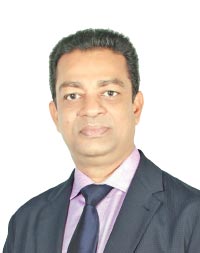 Mohammed Akther Biswas, Vice-President-1 of the Real Estate and Housing Association of Bangladesh (REHAB), Chairman of Latif Group and founder of Akhter Properties Ltd, has been involved in the country’s real estate sector for decades. In an interview with the Daily Observer, he spoke about the housing sector, DAP, rising flat prices, taxation, decentralisation and planned urbanisation.
Daily Observer: What changes have you seen in Bangladesh’s real estate sector?
Mohammed Akther Biswas: We have been working in the sector since its early days and have experienced many ups and downs. Initially, there were limitations involving building rules, setbacks, building heights and utility connections. Many of these rules have changed over time through discussions with the government.
Another major challenge was the absence of effective policies governing relations between landowners and developers. A landowner provides the land, while a developer invests money, labour and expertise. For a long time, there was no proper framework defining their respective rights and responsibilities.
DO: What role has REHAB played in developing housing policies?
Biswas: In the early days, there were cases where promised plots or flats were not delivered. Problems arose involving both landowners and developers.
REHAB worked with RAJUK, the National Housing Authority and utility service providers to address these issues and bring the housing business under a policy framework.
Previously, the death of a landowner could also create complications over power of attorney. Later, legal provisions helped protect the rights of heirs and ensure continuity of projects, benefiting both landowners and developers.
DO: What are your concerns about DAP and building rules?
Biswas: Relevant stakeholders, including REHAB, should be properly consulted when policies are formulated. Some provisions of the DAP and building rules have significantly reduced buildable floor space in many areas.
Previously, around 14,500 to 15,000 square feet could be built on five kathas of land. In many cases, the buildable area has now decreased significantly. But land prices have not fallen, while construction material prices have increased. This raises production costs per square foot and ultimately pushes up flat prices.
DO: How important is decentralising Dhaka?
Biswas: It is extremely important. Such a huge population cannot be accommodated in one city. Unless employment and livelihood opportunities are created elsewhere, people will continue moving towards Dhaka.
RAJUK’s jurisdiction has expanded to areas including Narayanganj, Savar and Keraniganj, which is positive. But simply including new areas in a plan is not enough. Infrastructure, housing, institutions and civic amenities must be developed first. Otherwise, meaningful decentralisation will not happen.
DO: Why are flat prices rising so sharply?
Biswas: Construction material prices have increased, while the Covid-19 pandemic, global instability, wars and the country’s political situation have raised business costs.
At the same time, DAP and building regulations have reduced the number of flats that can be constructed on the same amount of land in many areas. Land and construction costs are rising, while VAT, taxes and other expenses are being added.
I believe flat prices have already increased by around 30 to 40 percent. If the situation continues, prices could rise by 45 to 50 percent in some cases.
DO: What is your view on the new tax on landowners?
Biswas: We are concerned about taxing the valuation of apartments landowners receive from developers. A person may have inherited or legally acquired land and may develop it to receive several apartments as part of long-term financial planning.
Someone may live in one flat and rent another for future income. Additional taxes on such assets could discourage long-term property investment. I urge the government to reconsider measures that put unreasonable pressure on landowners.
DO: What is your advice to flat buyers?
Biswas: Property is generally a long-term investment. If housing supply falls while construction costs continue rising, flat prices may increase further.
Those who have the financial capacity and genuinely want to buy should carefully check the market, project, developer and all necessary documents before making a decision.
DO: How has real estate changed people’s lifestyles?
Biswas: The sector has significantly contributed to improving living standards. We first introduced apartments, then residential complexes, and now we are moving towards condominiums.
Modern condominiums provide gyms, community spaces, grocery facilities, event venues, playgrounds, garages and swimming pools. Many facilities traditionally found in a neighbourhood are now available within a single development.
DO: Why has Dhaka failed to become a planned city?
Biswas: Both citizens and the government have responsibilities. People continue moving towards Dhaka, while many buildings are constructed without adequate professional knowledge or compliance with rules. This affects liveability, environmental balance, building durability and the city’s beauty.
Frequent policy changes also make long-term planning difficult. We need consistent, realistic and long-term policies like those used for planned urban development in Singapore and Malaysia.
DO: What role should professional developers play?
Biswas: Many attractive buildings in Dhaka have been built by professional developers, who have contributed significantly to urban development. There may be irregularities involving some developers, and existing laws should be properly enforced. But the entire industry should not be judged by the actions of a few.
Professional developers, government agencies, urban planners and citizens must work together for planned urbanisation.
DO: Where do you want to see the housing sector in the future?
Biswas: I want Bangladesh’s housing sector to become more modern, environmentally friendly and planned. We can learn from countries such as Singapore and Malaysia, but we need long-term policies, infrastructure, a business-friendly environment and participation from all stakeholders.
Real estate is not merely a business. It is directly connected to housing, quality of life, urban liveability and the national economy. Sustainable development of the housing sector is not possible without planned urbanisation.
Loading...
Loading...
Also read



Editor : Iqbal Sobhan Chowdhury
Published by the Editor on behalf of the Observer Ltd. from Globe Printers, 24/A, New Eskaton Road, Ramna, Dhaka.
Editorial, News and Commercial Offices : Aziz Bhaban (2nd floor), 93, Motijheel C/A, Dhaka-1000.
Phone: PABX- 41053001-06; Advertisement: 41053012; 01793317829, 01550707291, E-mail: [email protected], [email protected] Online: email: [email protected] 41053014; 01550707297 Advertisement: 01550707296
Published by the Editor on behalf of the Observer Ltd. from Globe Printers, 24/A, New Eskaton Road, Ramna, Dhaka.
Editorial, News and Commercial Offices : Aziz Bhaban (2nd floor), 93, Motijheel C/A, Dhaka-1000.
Phone: PABX- 41053001-06; Advertisement: 41053012; 01793317829, 01550707291, E-mail: [email protected], [email protected] Online: email: [email protected] 41053014; 01550707297 Advertisement: 01550707296


