



| HEADLINE |

|
Old Dhaka: A Living Example of the 15-Minute City
Published : Friday, 31 July, 2026 at 12:00 AM
Staff correspondent


 The 15-minute city is widely seen today as a new approach to urban planning. However, urban planners say its core principles are not new. Many historic cities around the world including Paris, Barcelona, Bogotá and Portland were originally developed in a way that allowed people to reach markets, schools, healthcare, workplaces and other essential services within walking distance. Today, as cities face the challenges of climate change, traffic congestion and rapid urbanization, many historic cities are being redesigned around these principles, while new urban projects such as Nusantara, NEOM and The Line are also being planned with the same people-centered vision.
Yet its core principles walkable neighborhoods, mixed-use development and nearby public services had existed long before. Old Dhaka is one of the best examples of these ideas in practice.
The heart of Old Dhaka was the mahalla or neighborhood. Unlike today's cities, there was no clear separation between residential, commercial and work areas. Shops, markets, schools, religious institutions and workshops were located close to people's homes.
Old Dhaka also followed the principle of mixed-use development. Families often lived above shops, while artisan workshops, markets and places of worship were only a short walk away. This close arrangement strengthened both the local economy and social relationships. Shopkeepers knew their customers, neighbors met regularly and the neighborhood became an important part of people's identity.
Over time, however, Dhaka changed rapidly. Population growth, expanding business activities and increasing use of motor vehicles transformed the city. The narrow streets of Old Dhaka, once designed mainly for pedestrians, now carry rickshaws, motorcycles, private cars, delivery vehicles and heavy crowds. Although Old Dhaka remains a mixed-use area, its century-old road network has not expanded to match today's population and commercial pressure.
One of the biggest contradictions is that daily services are still nearby, but reaching them has become difficult. A market, pharmacy or grocery shop may be only a few minutes away, yet traffic congestion, roadside loading and unloading of goods and blocked walkways have made walking less safe and less comfortable. The modern 15-Minute City is not only about having nearby services but also about providing safe and convenient walking and cycling routes.
New Dhaka faces a different challenge. Homes, offices, schools and hospitals are often located far apart. Many residents spend hours travelling every day between Mirpur, Motijheel, Dhanmondi and other parts of the city, making daily life heavily dependent on transportation.
Urban planners believe modern Dhaka can still learn from Old Dhaka. A livable city should provide schools, markets, healthcare, parks and jobs close to residential areas. Safe sidewalks, pedestrian crossings and bicycle-friendly streets are equally important. Above all, the lesson from Old Dhaka is clear: a city works best when daily life is built around people, not just vehicles.
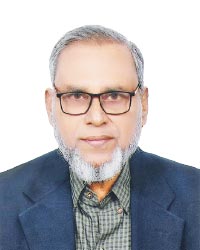
Azim Bakhfh
Chairman, Dhaka Kendra
Loading...
Loading...
Also read



Editor : Iqbal Sobhan Chowdhury
Published by the Editor on behalf of the Observer Ltd. from Globe Printers, 24/A, New Eskaton Road, Ramna, Dhaka.
Editorial, News and Commercial Offices : Aziz Bhaban (2nd floor), 93, Motijheel C/A, Dhaka-1000.
Phone: PABX- 41053001-06; Advertisement: 41053012; 01793317829, 01550707291, E-mail: [email protected], [email protected] Online: email: [email protected] 41053014; 01550707297 Advertisement: 01550707296
Published by the Editor on behalf of the Observer Ltd. from Globe Printers, 24/A, New Eskaton Road, Ramna, Dhaka.
Editorial, News and Commercial Offices : Aziz Bhaban (2nd floor), 93, Motijheel C/A, Dhaka-1000.
Phone: PABX- 41053001-06; Advertisement: 41053012; 01793317829, 01550707291, E-mail: [email protected], [email protected] Online: email: [email protected] 41053014; 01550707297 Advertisement: 01550707296


