



| HEADLINE |

|

HRW raises fair trial concerns over Bangladesh ICT proceedings
Published : Wednesday, 29 July, 2026 at 1:29 PM
Observer Online Report


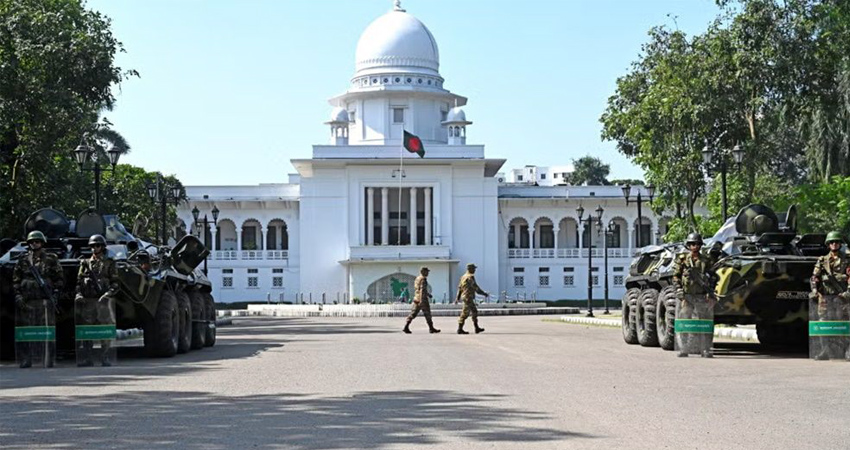
Human Rights Watch (HRW) has urged Bangladesh authorities to ensure due process and adhere to international legal standards during trials at the International Crimes Tribunal (ICT).
The statement was published in the official HRW website on Tuesday, July 28.
In the report, the London-based rights group expressed deep concerns about current failures risk denying justice to victims, undermining the rule of low and repeating past human rights violations.
The statement was released after the submission of formal charges against 41 individuals on July 27 for crimes against humanity and genocide.
The tribunal is currently trying politicians, security personnel and journalists accused of abuses under the former Awami League regime, which was ousted in 2024.
"Those responsible for abuses under the Sheikh Hasina government should be held to account, but many prosecutions fall short of international fair trial standards," said Meenakshi Ganguly, Deputy Asia Director at HRW. She urged the government to reform the criminal justice system to prevent arbitrary allegations and political vendettas.
The tribunal is hearing cases regarding the crackdown on student-led protests in July and August 2024. Moreover, alleged extrajudicial killings and enforced disappearances committed during Hasina regime are also being heard.
However, according to HRW’s monitoring of over a dozen ICT cases, significant procedural shortcomings were witnessed. The rights group alleged that prosecutors have detained suspects without sufficient evidential thresholds.
Many individuals were held for months without written jurisdictions and relied on witness statements containing identical, duplicated text across multiple files.
Since the fall of the previous government, the tribunal has completed six trials, convicting 62 individuals, including 42 tried in absentia, and issuing 16 death sentences.
Although the interim government amended the tribunal's governing act to better align offense definitions with international law, HRW noted that key procedural safeguards remain unaddressed.
Critical gaps highlighted by HRW include limited defense preparation time, restrictions on cross-examining witnesses, lack of interlocutory appeal rights, and inadequate safeguards for trials held in absentia.
The report also pointed to a case in Chittagong where 14 separate witness statements contained identical six-line passages implicating suspects. In the same case, a prosecutor recently resigned after allegations surfaced regarding a bribe offer to secure bail for a defendant; however, formal proceedings are scheduled to begin on August 6 despite an ongoing internal investigation.
Meenakshi Ganguly stressed that reliance on duplicated statements harms the credibility of the judicial process, warning that a lack of transparent proceedings will ultimately fail victims and their families.
-SA
Loading...
Loading...
Also read





Editor : Iqbal Sobhan Chowdhury
Published by the Editor on behalf of the Observer Ltd. from Globe Printers, 24/A, New Eskaton Road, Ramna, Dhaka.
Editorial, News and Commercial Offices : Aziz Bhaban (2nd floor), 93, Motijheel C/A, Dhaka-1000.
Phone: PABX- 41053001-06; Advertisement: 41053012; 01793317829, 01550707291, E-mail: [email protected], [email protected] Online: email: [email protected] 41053014; 01550707297 Advertisement: 01550707296
Published by the Editor on behalf of the Observer Ltd. from Globe Printers, 24/A, New Eskaton Road, Ramna, Dhaka.
Editorial, News and Commercial Offices : Aziz Bhaban (2nd floor), 93, Motijheel C/A, Dhaka-1000.
Phone: PABX- 41053001-06; Advertisement: 41053012; 01793317829, 01550707291, E-mail: [email protected], [email protected] Online: email: [email protected] 41053014; 01550707297 Advertisement: 01550707296


