



| HEADLINE |

|
BAU prof explains possible causes behind green color in cooked beef
Published : Wednesday, 29 July, 2026 at 4:19 PM
Observer Correspondent


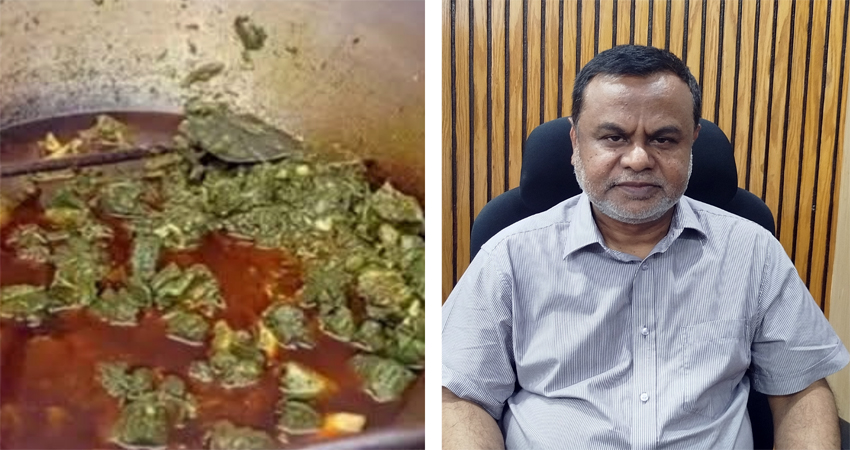
The unusual incident of cooked beef turning green is a phenomenon which can be explained through established principles of meat science and food chemistry, says a meat science expert at Bangladesh Agricultural University (BAU).
Prof. Dr. Md. Abul Hashem, Professor in the Department of Animal Science at Bangladesh Agricultural University (BAU) and President of the Bangladesh Meat Science Association, shared the scientific explanation in an interview with the Daily Observer on Wednesday.
In his opinion, the primary cause of such color changes is the chemical alteration of myoglobin, the muscle protein, and its porphyrin or heme ring. There is no need for the addition of external dyes or chemicals to produce this change.
The color of meat depends on the oxidation state of the iron atom at the centre of the myoglobin molecule and the type of ligand bound to it.
He explained that immediately after slaughter, when no molecule is attached to the free binding site of the porphyrin ring, the pigment exists as myoglobin, deoxymyoglobin or reduced myoglobin.
At this stage, the iron remains in the ferrous state, giving the meat a purplish red appearance. When exposed to air, oxymyoglobin is formed, causing the meat to develop the bright red color commonly associated with fresh meat.
Professor further added that in this bright red state, oxygen occupies the free binding site of the porphyrin ring while the iron remains in the ferrous state. This bright red color generally lasts for two to three hours before the meat gradually turns brown.
At this stage, water binds to the free binding site of the porphyrin ring, and the ferrous iron is oxidized to the ferric state, forming metmyoglobin. This is a normal and natural change in meat.
However, in spoiled or improperly stored meat, bacteria such as Pseudomonas, Shewanella putrefaciens and certain Lactobacillus species break down sulphur containing amino acids to produce hydrogen sulphide (H₂S).
Sulphur derived from hydrogen sulphide then binds to the free binding site of the porphyrin ring, forming sulfmyoglobin. As a result, the meat develops a green color, which becomes even more pronounced after cooking.
He identified a second possible mechanism as the formation of choleglobin or verdoheme. This occurs due to the action of hydrogen peroxide or oxidized lipids.
Lactic acid bacteria belonging to the genera Leuconostoc and Weissella produce peroxide, which oxidizes the porphyrin ring and forms green pigments. Similar changes may also result from lipid oxidation during prolonged storage, often accompanied by a rancid odor.
Discussing two additional causes, Dr. Hashem said these are generally associated with processed or cured meat products. Excessive use of nitrite can produce nitrosyl related green pigments, a condition internationally known as "nitrite burn".
This is not a sign of spoilage but rather the result of chemical imbalance during the curing process. In the most advanced stage of oxidation, the porphyrin ring may completely break down to form biliverdin like bile pigments, making the green color permanent.
Referring specifically to the Khulna incident, Dr. Hashem said the first two mechanisms appeared to be the most plausible explanations. Based on media reports, he said the animal had been slaughtered the previous day, stored in a conventional refrigerator and sold the following day.
If an uninterrupted cold chain is not maintained or the meat remains under conditions favorable for bacterial growth for an extended period, bacterial production of H₂S or lipid oxidation may begin before cooking.
Although cooking destroys the bacteria, the chemical changes they produce remain, making the green color more visible after heating, he said. Therefore, the absence of live bacteria in cooked meat does not necessarily mean that the meat was safe before cooking.
Addressing speculation that bakery chemicals or spices might have caused the color change, Dr. Hashem pointed out that the curry gravy reportedly retained its normal red color while only the meat pieces turned green.
This observation, he said, supports the explanation of internal changes in the heme pigments rather than contamination from external chemicals. However, he stressed that laboratory analysis of representative samples would be required for a definitive conclusion.
From a public health perspective, Dr. Hashem warned that green discoloration caused by sulfmyoglobin or choleglobin generally indicates microbial spoilage and such meat should not be consumed.
Although nitrite induced green color in cured meat does not always indicate spoilage, he advised consumers not to eat meat with suspicious discoloration unless its source and cause are confirmed. Discarding such meat remains the safest option.
He added that the green color observed in cooked meat is primarily the result of chemical changes in the porphyrin ring caused by bacterial H₂S, peroxide, lipid oxidation or excessive nitrite. These reactions generally begin before cooking, while heat simply makes the discoloration more visible.
To prevent similar incidents, Dr. Hashem emphasised the importance of maintaining a proper cold chain from slaughter to retail. Rapid chilling, appropriate storage temperatures, hygienic handling and proper vacuum packaging can effectively minimize bacterial growth and lipid oxidation.
He also expressed long standing concern over weaknesses in Bangladesh's cold chain system and hygiene practices at the retail level. According to him, power outages or inadequate temperature control during transportation may trigger chemical changes inside meat even when it appears normal externally, with the discoloration becoming evident only after cooking.
-MA/SA
Loading...
Loading...
Also read






Editor : Iqbal Sobhan Chowdhury
Published by the Editor on behalf of the Observer Ltd. from Globe Printers, 24/A, New Eskaton Road, Ramna, Dhaka.
Editorial, News and Commercial Offices : Aziz Bhaban (2nd floor), 93, Motijheel C/A, Dhaka-1000.
Phone: PABX- 41053001-06; Advertisement: 41053012; 01793317829, 01550707291, E-mail: [email protected], [email protected] Online: email: [email protected] 41053014; 01550707297 Advertisement: 01550707296
Published by the Editor on behalf of the Observer Ltd. from Globe Printers, 24/A, New Eskaton Road, Ramna, Dhaka.
Editorial, News and Commercial Offices : Aziz Bhaban (2nd floor), 93, Motijheel C/A, Dhaka-1000.
Phone: PABX- 41053001-06; Advertisement: 41053012; 01793317829, 01550707291, E-mail: [email protected], [email protected] Online: email: [email protected] 41053014; 01550707297 Advertisement: 01550707296


