



| HEADLINE |

|

The place that kindles hope for TB patients
The 250-bed TB Hospital in Shyamoli provides services for 10 taka including modern tests and medicines
Published : Thursday, 6 August, 2026 at 12:00 AM
Arifur Rahman Rabbi


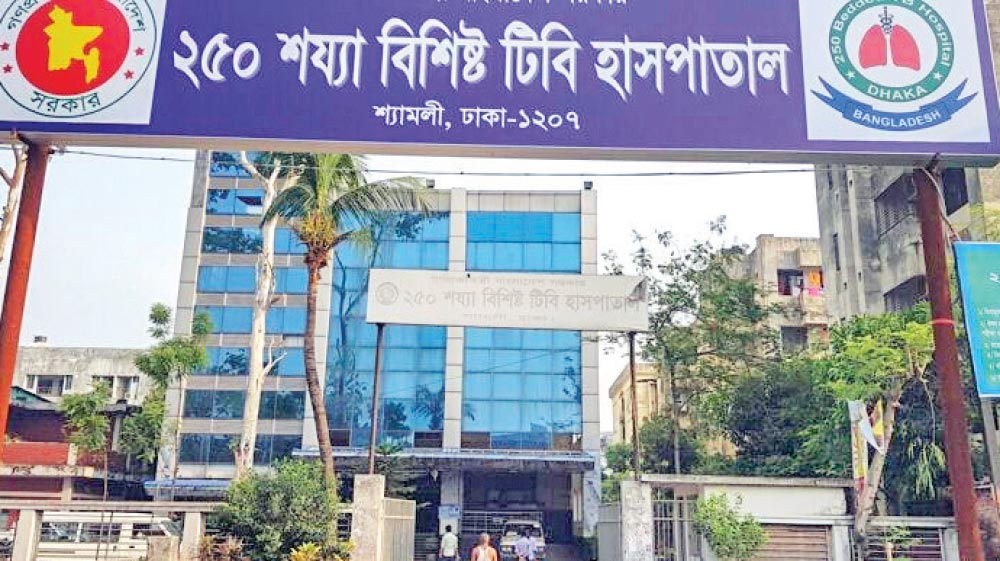 When Anna Akter arrived in Dhaka from Jamalpur with her young daughter, she carried little more than hope. The child had been suffering from breathing difficulties for weeks. After examinations at a local hospital, doctors suspected tuberculosis (TB) and referred her to the 250-Bed TB Hospital in Shyamoli.
“My family is struggling financially,” Anna said. She added: “I heard treatment here is affordable and many medicines are provided free of cost. That’s why I came all this way.”
Anna is one of hundreds of patients who travel from across Bangladesh to seek treatment at the hospital every day. Many arrive with referral slips from district hospitals, while others come after months of illness, seeing the facility as their last hope.
This hospital’s activities started its journey in 1963 as the TB Control Project. After independence in 1971, it was renamed as the “National TB Control Project, Shyamoli” and started providing outpatient services from then on. In 2015, a new 4-storey building was constructed and the hospital was named the “250-bed TB Hospital”. Inpatient services were inaugurated in January 2017.
The hospital has grown into one of the country’s leading specialised centres for tuberculosis and chest diseases. For just Tk 10, patients can consult specialist physicians at the outpatient department and access emergency care, thoracic surgery, a negative-pressure intensive care unit, an MDR-TB ward, advanced laboratories and modern diagnostic services under one roof.
One of its most significant services is the ‘GeneXpert test’, regarded as one of the most reliable methods for diagnosing TB. The test, which can cost Tk 7,000-8,000 at private facilities, is provided free of charge at the hospital. The government also supplies free medication for both drug-sensitive and multidrug-resistant (MDR) tuberculosis.
Hospital’s Assistant Director Dr Md Golam Kawser said respiratory diseases are increasing due to climate change, air pollution, overcrowding and poor health practices. He noted that many people still ignore cough etiquette, do not wear masks and often take antibiotics without medical advice, contributing to antibiotic resistance and delayed treatment.
He also expressed concern over the rising number of TB cases among children, saying many families seek treatment too late because of poverty or a lack of awareness.
Hospital’s Chief and Deputy Director Dr Ayesha Akhter stressed that government efforts alone cannot eliminate tuberculosis. Early diagnosis, prompt treatment and preventive therapy for family members are essential, she said, with a warning that concealing the disease puts entire household at risk.
She added that although the hospital is currently approved for 150 beds administratively, efforts are underway to upgrade it into a National Tuberculosis Hospital, which would expand manpower, infrastructure and specialised services for referred patients nationwide.
Dr Ayesha Akhter also noted that tuberculosis is not confined to the lungs, as improved diagnostic methods are increasingly identifying extrapulmonary TB affecting other parts of the body. According to national data from last year, the number of detected TB cases declined slightly compared with the previous year. However, she said further research is needed to determine whether the decline reflects lower transmission or fewer people undergoing testing.
She expressed optimism that Bangladesh could make significant progress toward eliminating tuberculosis by 2035 through continued government programmes, free testing and treatment, early case detection and greater public cooperation.
Beyond patient care, the hospital serves as an important centre for research and training. Medical students, physicians and laboratory technologists from public and private institutions receive regular training there. The hospital’s Asthma Centre also provides inhaler training, health education and awareness programmes for patients.
Doctors say many of the preventive habits adopted during the COVID-19 pandemic�"such as regular hand washing, mask use and proper cough etiquette�"have faded. Reviving those practices, they believe, could significantly reduce the spread of tuberculosis and other respiratory infections.
The crowded waiting rooms and long queues tell a story that extends beyond medicine. For thousands of low-income Bangladeshis, the 250-Bed TB Hospital is more than a healthcare facility�"it is a place where affordable treatment offers a second chance at life.
Loading...
Loading...
Also read



Editor : Iqbal Sobhan Chowdhury
Published by the Editor on behalf of the Observer Ltd. from Globe Printers, 24/A, New Eskaton Road, Ramna, Dhaka.
Editorial, News and Commercial Offices : Aziz Bhaban (2nd floor), 93, Motijheel C/A, Dhaka-1000.
Phone: PABX- 41053001-06; Advertisement: 41053012; 01793317829, 01550707291, E-mail: [email protected], [email protected] Online: email: [email protected] 41053014; 01550707297 Advertisement: 01550707296
Published by the Editor on behalf of the Observer Ltd. from Globe Printers, 24/A, New Eskaton Road, Ramna, Dhaka.
Editorial, News and Commercial Offices : Aziz Bhaban (2nd floor), 93, Motijheel C/A, Dhaka-1000.
Phone: PABX- 41053001-06; Advertisement: 41053012; 01793317829, 01550707291, E-mail: [email protected], [email protected] Online: email: [email protected] 41053014; 01550707297 Advertisement: 01550707296


