



| HEADLINE |

|
From page to screen: how Bangladeshi cinema has reimagined Rabindranath Tagore
Published : Thursday, 6 August, 2026 at 6:36 PM
Sakia Kawser Siddique


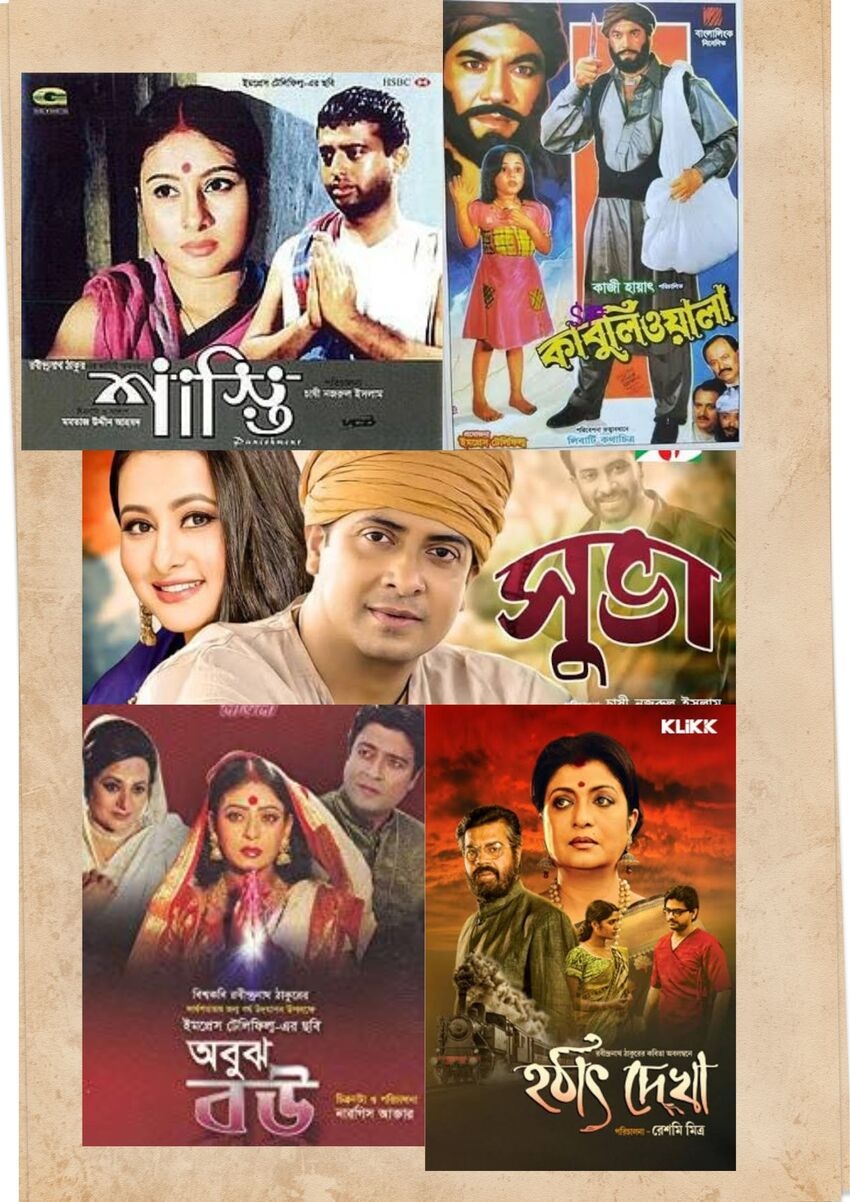
More than eight decades after his death, Rabindranath Tagore continues to shape Bengali literature, music and culture. His stories of love, injustice, loneliness, sacrifice and human dignity have also found a place on the silver screen, inspiring filmmakers in both Bangladesh and India.
Although Bangladeshi cinema has produced relatively few adaptations of Tagore's works, those films have played an important role in introducing his timeless narratives to wider audiences. From rural tragedies to deeply personal tales of love and loss, these productions demonstrate the enduring appeal of the Nobel laureate's writings.
Shasti: A timeless story revisited
One of the most recognised Bangladeshi adaptations is Shasti (2004), directed by Chashi Nazrul Islam. Based on Tagore's short story of the same name, the film stars Riaz, Purnima, Ilias Kanchan and Champa.
Set in rural Bengal, Shasti explores injustice, poverty, sacrifice and patriarchal oppression through a tragic narrative that remains relevant today.
More than two decades later, the story is returning to the screen. Director Leesa Gazi is preparing a new adaptation starring Pori Moni, Chanchal Chowdhury, Aanon Siddiqua and Arka Das. Scheduled to begin production later this year, the film will reinterpret Tagore's classic story for contemporary audiences.
Shuva: The power of silence
Chashi Nazrul Islam returned to Tagore's literature with Shuva, adapted from the short story Subha.
Starring Purnima and Shakib Khan, the film follows a mute village girl whose inability to speak becomes a barrier to love and acceptance. Rather than relying on dramatic twists, the story draws its emotional strength from the quiet struggles of its central character.
The adaptation remains one of Bangladesh's notable interpretations of Tagore's exploration of isolation and human emotion.
Kabuliwala: A story beyond borders
Few of Tagore's stories have achieved the universal recognition of Kabuliwala, which was adapted for Bangladeshi cinema by director Kazi Hayat.
The film stars Manna as Rahmat, an Afghan fruit seller who develops a touching bond with a young Bengali girl named Mini, played by Dighi.
At its heart, Kabuliwala is a story about fatherhood, separation and compassion "themes that continue to resonate regardless of nationality or generation.
Abujh Bou: Reimagining Samapti
Director Nargis Akter adapted Tagore's Samapti into Abujh Bou in 2010.
Featuring Ferdous, Nipun, Shakil Khan and Bobita, the film tells the story of a spirited young woman gradually adjusting to married life while maintaining her individuality.
Rather than serving as a period piece, the adaptation presents Tagore's ideas through a more contemporary cinematic lens.
Hotath Dekha: Poetry becomes cinema
Tagore's influence on Bangladeshi cinema extends beyond his short stories.
The Bangladesh-India joint production Hotath Dekha, directed by Reshmi Mitra and Shahadat Hossain Bidyut, draws inspiration from Tagore's poem of the same name.
Starring Debashree Roy, Ilias Kanchan and Deep Bhattacharya, the film explores memory, love and the passage of time, demonstrating that Tagore's poetry can also provide the foundation for compelling cinema.
Why Tagore still matters
The number of Bangladeshi films based on Tagore's works may be modest, but their impact is significant.
Whether portraying injustice in Shasti, the silent suffering of Shuva, the humanity of Kabuliwala, the emotional growth in Abujh Bou or the nostalgic romance of Hotath Dekha, these films illustrate the remarkable versatility of Tagore's writing.
His stories continue to speak to contemporary audiences because they address universal human experiences rather than the concerns of a single era.
As filmmakers revisit his works and reinterpret them for modern viewers, Tagore's legacy continues to evolve not only through books and songs, but also through cinema.
Loading...
Loading...
Also read








Editor : Iqbal Sobhan Chowdhury
Published by the Editor on behalf of the Observer Ltd. from Globe Printers, 24/A, New Eskaton Road, Ramna, Dhaka.
Editorial, News and Commercial Offices : Aziz Bhaban (2nd floor), 93, Motijheel C/A, Dhaka-1000.
Phone: PABX- 41053001-06; Advertisement: 41053012; 01793317829, 01550707291, E-mail: [email protected], [email protected] Online: email: [email protected] 41053014; 01550707297 Advertisement: 01550707296
Published by the Editor on behalf of the Observer Ltd. from Globe Printers, 24/A, New Eskaton Road, Ramna, Dhaka.
Editorial, News and Commercial Offices : Aziz Bhaban (2nd floor), 93, Motijheel C/A, Dhaka-1000.
Phone: PABX- 41053001-06; Advertisement: 41053012; 01793317829, 01550707291, E-mail: [email protected], [email protected] Online: email: [email protected] 41053014; 01550707297 Advertisement: 01550707296


