



| HEADLINE |

|

Taxing the Rich or Growing the Pie?
Can Bangladesh Defeat Inequality without Punishing Growth?
From New York’s explosive battle over taxing wealth to Dhaka’s “life-friendly” budget, governments are
confronting the same question: how can they narrow inequality without weakening investment?
Published : Saturday, 8 August, 2026 at 12:00 AM
Faruk Ahmed


 A global fiscal war comes to Dhaka.
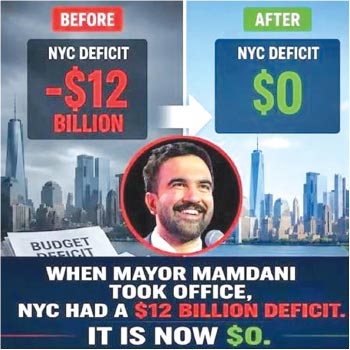
In New York, Mayor Zohran Mamdani has launched an audacious fiscal offensive against wealth concentration. His prescription is unapologetically redistributive: tax luxury properties, ask the wealthy to contribute more and freeze rents to protect nearly one million tenants squeezed by a relentless housing crisis.
President Donald Trump has responded with equal force, condemning the measures as a “socialist experiment” that would drive away investors, weaken property markets and erode the foundations of American capitalism.
The confrontation is about far more than New York.
The war against inequality is no longer confined to academic journals or economic conferences. It has erupted into one of the defining political battles of our time. It has become a global contest between two competing visions of economic justice�"one arguing that governments must redistribute wealth more aggressively, the other insisting that prosperity can only be created by rewarding enterprise and expanding markets.
Few countries illustrate the importance of that debate more clearly than Bangladesh.
Despite decades of remarkable economic progress, the country’s prosperity has become increasingly uneven, confronting Prime Minister Tarique Rahman with one of the most difficult policy questions facing any developing economy: how do you narrow the wealth gap without slowing the engine of growth?
 Bangladesh Chooses
the Middle Road
Unlike Mamdani’s redistributive approach or Trump’s market-first philosophy, Bangladesh’s first budget under Prime Minister Tarique Rahman attempts to occupy the pragmatic centre ground.
Presented by Finance Minister Amir Khosru Mahmud Chowdhury, the FY2026-27 budget is built around what ministers describe as a “Jibon Bandhob”�"or life-friendly�"framework designed to reduce hardship without undermining business confidence.
Rather than targeting wealth through sweeping new taxes, the government has opted to ease pressure on household budgets. Import duties and taxes on 61 essential commodities�"including rice, lentils, edible oil and salt�"have been withdrawn to soften inflation's impact on low- and middle-income families.
The budget also raises the tax-free income threshold, removes the controversial provision allowing undisclosed wealth to be legalised and expands the Family Card programme to strengthen the social safety net.
Perhaps its most strategic commitment is the pledge to raise combined public spending on education and healthcare towards 5 per cent of GDP over the next five years�"a recognition that lasting reductions in poverty depend as much on human capital as on fiscal transfers.
Government leaders argue that protecting purchasing power today while investing in people tomorrow offers the most sustainable route to inclusive growth.
The philosophy differs fundamentally from Mamdani’s. Instead of redistributing accumulated wealth, it seeks to expand opportunity. Yet many economists caution that opportunity alone cannot close an inequality gap increasingly driven by concentrated assets, tax avoidance and unequal access to capital. They argue that Bangladesh's next reform agenda must include broader tax compliance, more accurate property valuation, stronger action against illicit financial flows and a determined assault on corruption.
Without those reforms, they warn, economic growth risks enriching balance sheets faster than lives.
The Lesson Beyond
Trump and Mamdani
Markets generate wealth. Fair taxation determines how widely that wealth is shared. Excessive redistribution can discourage investment. So, unchecked inequality can weaken consumption, reduce social mobility and ultimately undermine long-term growth itself.
Bangladesh cannot afford either extreme.
As an emerging economy competing for investment, it must remain attractive to entrepreneurs and global capital. Yet it also cannot ignore widening disparities that threaten social cohesion and economic resilience.
The challenge therefore is not to choose between growth and equality, but to ensure they reinforce one another. That requires a fiscal compact built on four foundations: investment-friendly policies that create jobs; a broader and fairer tax system that asks everyone to contribute according to their capacity; uncompromising action against corruption and illicit financial flows; and sustained investment in education, healthcare and skills so that opportunity reaches every citizen.
Prime Minister Tarique Rahman’s first budget is an important opening chapter in that journey.
Whether it becomes a turning point will depend less on headline tax reductions than on disciplined implementation, institutional reform and the courage to confront entrenched privilege.
For the defining economic question of our age is no longer simply how fast an economy grows. It is who grows with it.
That is the test that will ultimately define Bangladesh’s development story�"and the legacy of its new government.
The writer is the Consulting Editor of The Daily Observer

Loading...
Loading...
Also read



Editor : Iqbal Sobhan Chowdhury
Published by the Editor on behalf of the Observer Ltd. from Globe Printers, 24/A, New Eskaton Road, Ramna, Dhaka.
Editorial, News and Commercial Offices : Aziz Bhaban (2nd floor), 93, Motijheel C/A, Dhaka-1000.
Phone: PABX- 41053001-06; Advertisement: 41053012; 01793317829, 01550707291, E-mail: [email protected], [email protected] Online: email: [email protected] 41053014; 01550707297 Advertisement: 01550707296
Published by the Editor on behalf of the Observer Ltd. from Globe Printers, 24/A, New Eskaton Road, Ramna, Dhaka.
Editorial, News and Commercial Offices : Aziz Bhaban (2nd floor), 93, Motijheel C/A, Dhaka-1000.
Phone: PABX- 41053001-06; Advertisement: 41053012; 01793317829, 01550707291, E-mail: [email protected], [email protected] Online: email: [email protected] 41053014; 01550707297 Advertisement: 01550707296


