



| HEADLINE |

|

US–Iran War: Remaking of the Middle East’s Strategic Order
Published : Saturday, 15 August, 2026 at 12:00 AM
Tasnia Tasnim Hossain


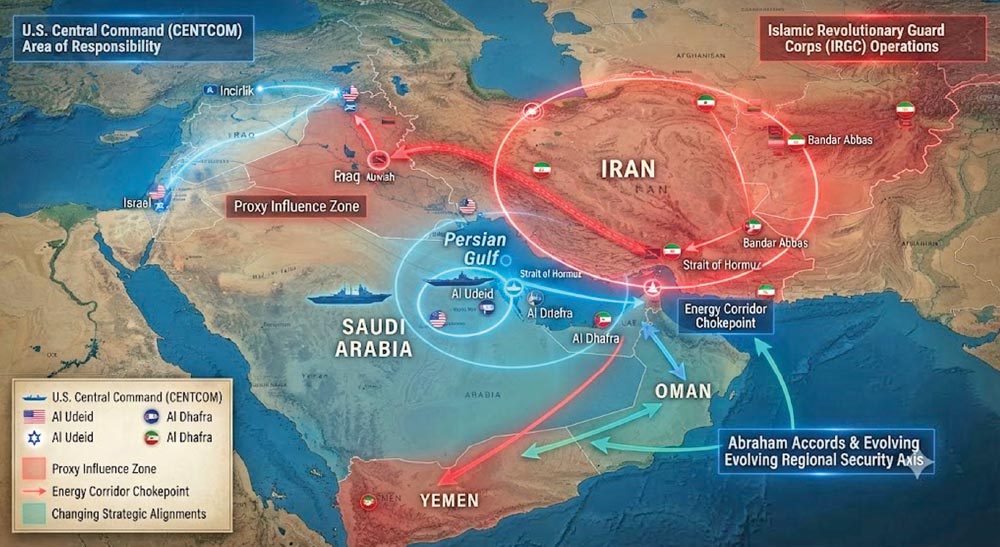
 Five months after American and Israeli jets first struck Iran through Operation Epic Fury, the war many hoped would lead to a grimmer and bitter Iranian collapse. However, this apparently became a long, grinding contest without a tunnel light. A ceasefire brokered in June collapsed on 7 July, when President Trump declared the truce over after Iranian forces fired on three commercial vessels near the Strait of Hormuz. Thereafter, Washington reimposed a naval blockade on Iranian ports, with resultant Iranian retaliation against American and allied facilities across Bahrain, Jordan, Kuwait, Oman, Qatar and Syria. The Brent crude spiked between roughly $ 76 to 91 a barrel as traders react to each new headline.
Despite the intense missile and drone strike trade-offs, neither side appears capable of achieving its strategic objectives with only adding growingly unacceptable political, military and economic costs in the region. Iran continues to absorb extensive damage to its military infrastructure and energy facilities while facing mounting internal political instability. Reports indicate growing divisions within the country's leadership, parliamentary dissent and increasing activity by armed opposition groups operating in several provinces. Nevertheless, Tehran has so far demonstrated an ability to sustain huge punishment due to its sheer geographic depth, pre-positioning and dispersal of critical assets and asymmetric responses through long-range missiles, armed drones, electronic warfare capabilities and continued disruption of maritime trade routes, allowing it to impose significant costs on its adversaries.
Gulf States displayed significantly different approaches. The UAE allegedly played a low profile retaliatory kinetic role, while Qatar, despite its balancing mediation efforts with the protection of its own territory from Iranian missile attacks recently declared intent of self-defense (tantamount to UAE approach). Saudi Arabia remains cautious and quietly supports Western security efforts while simultaneously confronting renewed threats against its Red Sea energy export infrastructure by the pro-Iran Houthis (its alternative export route around Hormuz being under pressure). Jordan has largely confined itself to Iranian missile interception operations, avoiding direct involvement in combat. Pakistan, bounded by the Strategic Mutual Defence Agreement (SMDA) with Saudi Arabia, recently warned against any direct Iranian attack on Saudi Arabia as crossing a major strategic red line which reflects strong bilateral strategic relationship.
 The Iranian government is contending with an alleged power struggle between the hardliners and the mediators, like Parliament Speaker Bagher Ghalibaf and Foreign Minister Abbas Araghchi. More so, pushback from over 180 members of parliament, and growing armed opposition from Kurdish and Ahwazi groups alongside reinfused urban unrest in several major cities. In Washington, the war has become the least popular American conflict since comparable polling began, with roughly a thirty-point gap between disapproval and approval. This is a political reality that constrains, without eliminating the appetite for further escalation ahead of this year's midterm elections.
China and Russia reiterated diplomatic push for de-escalation while avoiding direct military involvement. Beijing continues advocating dialogue and freedom of navigation despite widespread online misinformation portraying a far more confrontational Chinese position. Moscow equally criticized Western military operations through diplomatic channels but carefully avoided entering the conflict militarily. The information domain has become an increasingly significant battleground, with unverified social media claims and fabricated official statements circulating alongside genuine developments.
The US military avoids announcing plans regarding any major ground invasion against Iran. However, contingency plans for limited ground operations are reportedly not off table. Such plans may entail seizure strategic Iranian energy hubs like Kharg and Qeshm islands in the Strait of Hormuz, recovery of nuclear stockpiles or even neutralising key figureheads like Islamic Revolutionary Guard Corps (IRGC) leadership. However, to counter opponent’s overwhelming military pressures, the much talked about Iranian "Mosaic Defense" doctrine developed by the IRGC remains a vaunted bulwark to prevent system collapse. It allows decentralized Iranian military operations across 31 nationwide semi-independent provincial commands. The pre-arranged mechanism ensures local units retain resources, intelligence, and the authority to fight autonomously if central command in Tehran gets compromised. Such an asymmetric defense mechanism backed by a secret silo-based missile and drone arsenal apparently make for a formidable Iranian fighting capability expected to offer long term resistance. The Iranian apparent aim is not to decisively defeat the US military, rather render prohibitive cost to US military operations in the region through attrition, increasing the global energy price and raise global and US domestic anti-war public opinions.
Taken together, these dynamics lead to an uncertain future for next eighteen months or so. It translates towards an indecisive victory for either side, and not a swift peace. Such a scenario highlights a prolonged war of attrition and sustained cycle of limited offensives, retaliatory strikes punctuated by spikes in violence around Hormuz and, increasingly, the Red Sea and periodic disruptions to regional commerce. Unfortunately, these may see the Gulf Countries sliding towards a near-permanent state of chaos in the coming years and lose their status as long known economic dream zone. Ironically, to many, the countries around the Horn Of Africa (HOA) with its shipping facilities, deep harbours, strategic landscape and access to Red Sea might gradually replace the Middle East/Gulf countries as promoted alternative economic hub.
Unfortunately, third world countries became victims of this US�"Iran�"Israel conflict. Bangladesh has become one of the major global economic casualties due to its heavy dependence on imported energy and remittance dependence. The country imports about 95% of its oil and gas from Middle East, making it highly vulnerable to disruptions in Gulf supply routes and surging global energy prices. Rising fuel costs, inflation, blackouts and reduced industrial productivity have strained the economy, prompting the government to seek additional IMF support. Millions of Bangladeshi workers in Gulf states also face growing security risks, threatening remittance flows that are vital to foreign exchange reserves. To reduce long-term vulnerability, analysts recommend maintaining diplomatic neutrality, diversifying energy sources and export routes, making evacuation plans for Middle East based workers, arranging alternative remittance sources and securing multilateral financial assistance.
The writer is an International Relations student at the Bangladesh University of Professionals (BUP) and a UNDP Student Ambassador
Loading...
Loading...
Also read



Editor : Iqbal Sobhan Chowdhury
Published by the Editor on behalf of the Observer Ltd. from Globe Printers, 24/A, New Eskaton Road, Ramna, Dhaka.
Editorial, News and Commercial Offices : Aziz Bhaban (2nd floor), 93, Motijheel C/A, Dhaka-1000.
Phone: PABX- 41053001-06; Advertisement: 41053012; 01793317829, 01550707291, E-mail: [email protected], [email protected] Online: email: [email protected] 41053014; 01550707297 Advertisement: 01550707296
Published by the Editor on behalf of the Observer Ltd. from Globe Printers, 24/A, New Eskaton Road, Ramna, Dhaka.
Editorial, News and Commercial Offices : Aziz Bhaban (2nd floor), 93, Motijheel C/A, Dhaka-1000.
Phone: PABX- 41053001-06; Advertisement: 41053012; 01793317829, 01550707291, E-mail: [email protected], [email protected] Online: email: [email protected] 41053014; 01550707297 Advertisement: 01550707296


