



| HEADLINE |

|

Drought threatens Aman farming at Chilmari
Published : Tuesday, 1 September, 2026 at 12:00 AM
Our Correspondent


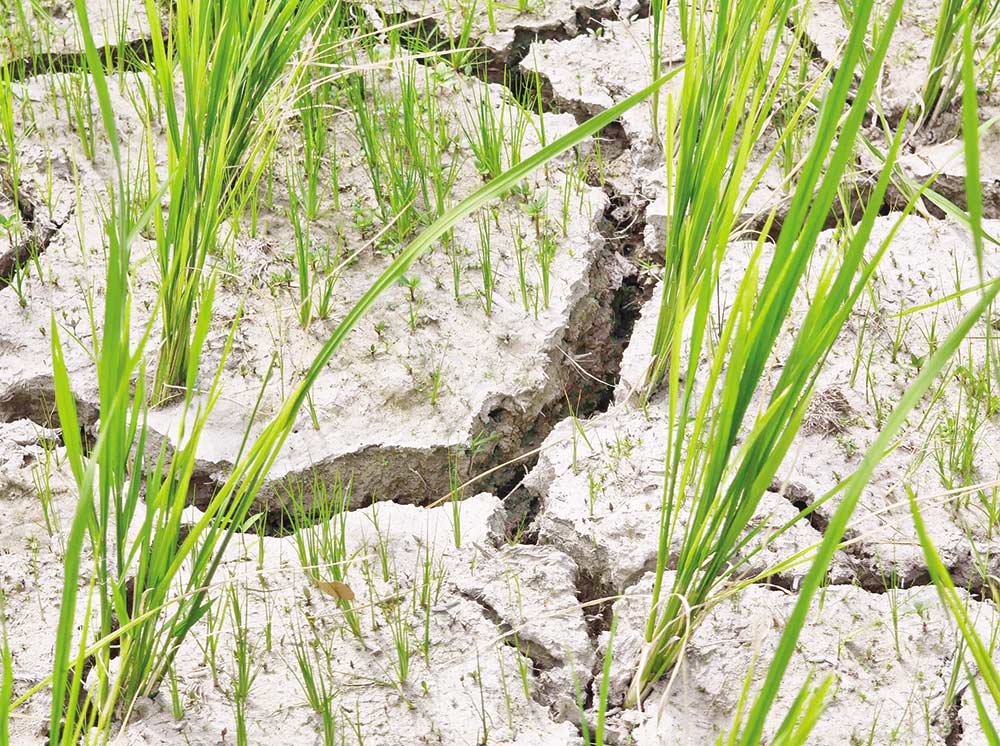 CHILMARI, KURIGRAM, Aug 31: Aman cultivation in Chilmari Upazila is facing the risk of disruption as a prolonged dry spell and hot weather have left fields parched, with cracks appearing in the soil and paddy seedlings drying up.
Farmers are increasingly worried about the growth and yield of Aman paddy this season.
Around 7,450 hectares of land have been brought under Aman cultivation in Chilmari this year. According to the upazila agriculture office, water has dried up in around 50 per cent of the fields.
Some farmers are irrigating their fields, but frequent load-shedding is hampering the process.
According to the Bangladesh Meteorological Department, Kurigram recorded 114mm of rainfall from August 1 to 28, below the normal level. The average maximum temperature during the period was 34 degree Celsius.
Chilmari Upazila Agriculture Officer Kanak Chandra Roy said water shortage during the rice growth stage could stunt plant growth, reduce the number of tillers and increase weed infestation.
“Water shortage at the panicle initiation stage can reduce panicle length and increase the number of unfilled grains, increasing the risk of lower yields,” he said.
He advised farmers to irrigate their fields to protect Aman crops from drought stress.
Agriculture officials recommended irrigation in the early morning or after afternoon instead of during the peak midday heat, as this can reduce rapid evaporation.
Sohel Rana, a farmer from Gabertal area, said the rising cost of electricity and fuel had made irrigation an additional burden.
“Providing water on time is becoming difficult because of the additional cost. If we fail to irrigate the fields in time, the rice plants may be damaged,” he said.
Farmers said continued dry weather could worsen the situation if rainfall does not occur soon. They urged the authorities to ensure uninterrupted power supply for irrigation during the critical growth period of the Aman crop.
With nearly half of the cultivated land already facing water shortages, farmers fear prolonged drought could eventually affect both crop growth and production.
Loading...
Loading...
Also read



Editor : Iqbal Sobhan Chowdhury
Published by the Editor on behalf of the Observer Ltd. from Globe Printers, 24/A, New Eskaton Road, Ramna, Dhaka.
Editorial, News and Commercial Offices : Aziz Bhaban (2nd floor), 93, Motijheel C/A, Dhaka-1000.
Phone: PABX- 41053001-06; Advertisement: 41053012; 01793317829, 01550707291, E-mail: [email protected], [email protected] Online: email: [email protected] 41053014; 01550707297 Advertisement: 01550707296
Published by the Editor on behalf of the Observer Ltd. from Globe Printers, 24/A, New Eskaton Road, Ramna, Dhaka.
Editorial, News and Commercial Offices : Aziz Bhaban (2nd floor), 93, Motijheel C/A, Dhaka-1000.
Phone: PABX- 41053001-06; Advertisement: 41053012; 01793317829, 01550707291, E-mail: [email protected], [email protected] Online: email: [email protected] 41053014; 01550707297 Advertisement: 01550707296


