



| HEADLINE |

|

Dismissal of teacher without board approval is not effective : HC
Published : Tuesday, 1 September, 2026 at 10:44 AM
Observer Online Report


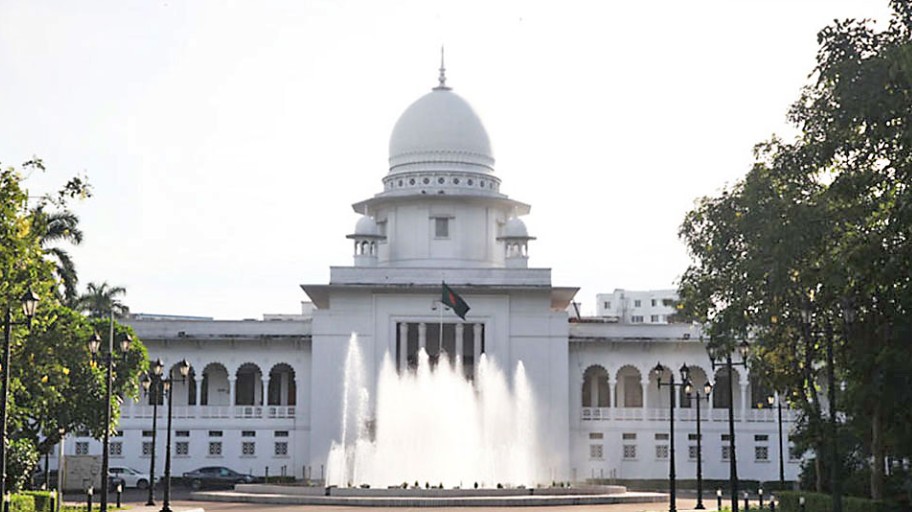
The High Court has ruled that a private educational institution cannot enforce the dismissal or removal of a teacher without prior approval from the education board’s Appeal and Arbitration Committee.
The court said that any serious punishment, such as dismissal or removal of a teacher from a private educational institution, must first be examined by the board’s Appeal and Arbitration Committee. The governing body cannot enforce such a punishment before receiving approval from the education board.
The ruling was issued after the High Court dismissed a rule issued in response to a writ petition challenging the board’s non-objection to the dismissal of a college teacher over allegations of misconduct.
The court said that the regulations and principles of natural justice must be properly followed when dismissing or removing a teacher from a private college. It observed that dismissing a teacher without giving them an adequate opportunity to show cause, or hastily forming an investigation committee merely on the basis of verbal or mobile-phone instructions, is completely beyond legal authority and unlawful.
The judgment, delivered on July 7 by Justice Md. Sohrawardi and Justice Dihidar Masum Kabir, was published yesterday. Justice Dihidar Masum Kabir authored the main judgment.
Lawyer Md. Kamruzzaman appeared for the writ petitioner during the hearing. Lawyer Md. Zahirul Islam represented the college teacher. Deputy Attorneys General Md. Anisur Rahman Khan and Sultan Mahmud Banna represented the state.
In the judgment, the court upheld the decision of the Appeal and Arbitration Committee of the Board of Intermediate and Secondary Education, Dhaka, which had rejected the dismissal of Md. Abul Mansur, an assistant professor in the Mathematics Department of Gachihata College in Katiadi upazila of Kishoreganj, and directed that he be paid his outstanding salary and allowances and provided with post-retirement benefits.
On November 9, 2014, Zakia Begum, head teacher of Gachihata Palli Academy in Katiadi upazila, Kishoreganj, filed a complaint of immoral conduct or misconduct against Md. Abul Mansur.
According to the complaint, Abul Mansur went to Zakia Begum’s house at around 10:30am on November 9, 2014. He initially went there saying that he had come to return a book to Zakia Begum’s daughter. According to the allegation, he later returned with an improper intention, sat beside her younger daughter and touched her head and hand. The complaint also stated that he attempted to enter the house for a third time. Following the allegation, the college principal issued a show-cause notice to Abul Mansur on November 17, 2014.
However, according to court documents, the date of the alleged incident was mentioned as November 7 in the first notice, and the teacher was asked to provide an explanation within three days. In his reply the following day, the teacher admitted that he had gone to the house but denied having any improper intention or engaging in immoral conduct.
As the teacher’s response was deemed unsatisfactory, the governing body decided on November 29 to issue a second show-cause notice containing five specific questions. In his reply submitted on December 6, the teacher again denied the allegations against him.
Subsequently, on the verbal or mobile-phone instructions of the governing body chairman and college founder, Md. Akhtaruzzaman, the principal formed a three-member investigation committee on December 7. The committee submitted its investigation report in only six days, in violation of the prescribed procedure.
Based on the investigation report, the governing body decided at a meeting on January 31, 2015, to dismiss Md. Abul Mansur. The dismissal was shown as effective from February 1, 2015.
The decision was later sent to the Appeal and Arbitration Committee of the Dhaka Education Board on February 16 for approval. At a meeting held on April 20, 2015, the committee rejected the governing body’s proposal to dismiss the teacher and ordered his reinstatement with all outstanding salary and allowances.
The decision was communicated to the college authorities through a memorandum on May 28. Although the college subsequently applied for reconsideration, the board informed them that there was no legal provision for reviewing the final decision of the Appeal and Arbitration Committee.
The college founder and governing body chairman, Md. Akhtaruzzaman, then filed a writ petition with the High Court challenging the board’s decision. The court subsequently issued a rule and stayed the Dhaka Education Board’s decision.
After the final hearing, the High Court on July 7 dismissed the rule and lifted the stay order previously issued.
However, the court noted that as the teacher had reached the statutory retirement age while the case was pending, there was no longer any scope to reinstate him in his previous post. Instead, the judgment stated that he would be entitled to receive all outstanding salaries, employment-related benefits and applicable pension benefits from the date of his dismissal until the date he reached retirement age.
The court emphasized that no teacher can be directly dismissed or removed without examination by the Appeal and Arbitration Committee and final approval from the education board.
The Gachihata College authorities had issued the dismissal order themselves before obtaining approval from the board, thereby disregarding the board’s legal jurisdiction. The court termed the action completely unlawful.
The court further observed that since Md. Abul Mansur had already reached the prescribed retirement age while the case was pending, he could not now be reinstated in his former position. However, he remains fully entitled to all outstanding salary and allowances, employment-related benefits and pension dues payable from the date of his dismissal until his retirement.
The judgment directed the education board and the college authorities to implement the decision immediately.
-MT
Loading...
Loading...
Also read


Editor : Iqbal Sobhan Chowdhury
Published by the Editor on behalf of the Observer Ltd. from Globe Printers, 24/A, New Eskaton Road, Ramna, Dhaka.
Editorial, News and Commercial Offices : Aziz Bhaban (2nd floor), 93, Motijheel C/A, Dhaka-1000.
Phone: PABX- 41053001-06; Advertisement: 41053012; 01793317829, 01550707291, E-mail: [email protected], [email protected] Online: email: [email protected] 41053014; 01550707297 Advertisement: 01550707296
Published by the Editor on behalf of the Observer Ltd. from Globe Printers, 24/A, New Eskaton Road, Ramna, Dhaka.
Editorial, News and Commercial Offices : Aziz Bhaban (2nd floor), 93, Motijheel C/A, Dhaka-1000.
Phone: PABX- 41053001-06; Advertisement: 41053012; 01793317829, 01550707291, E-mail: [email protected], [email protected] Online: email: [email protected] 41053014; 01550707297 Advertisement: 01550707296


