



| HEADLINE |

|
Sundarban starts afresh after 3-month closure
The forest regains its natural rhythm as human activities stay low
Published : Sunday, 6 September, 2026 at 12:00 AM
Our Correspondent


 FAKIRHAT, BAGERHAT, Sept 5: The Sundarban reopens tomorrow (Sept 1) after a three-month closure aimed at ensuring uninterrupted breeding and movement of fish and wildlife in the world's largest mangrove forest.
The forest remained closed to tourists and forest-dependent people from June 1 to August 31. With human activity reduced during the period, deer, crocodiles, birds and other wildlife had greater scope to move and breed without disturbance.
The Forest Department has prepared to issue passes and permits to fishermen, woodcutters and honey collectors, regulate vessel movement and strengthen surveillance. Tourist spots will also reopen.
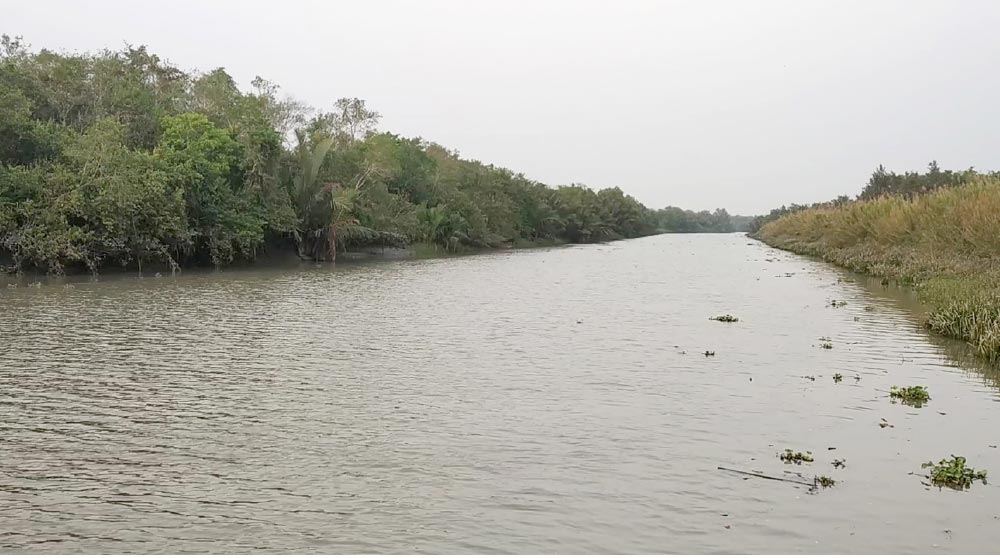
During a recent visit to the forest through the confluence of the Bhola and Alibanda rivers, herds of deer were seen grazing on chars. Crabs were moving around mangrove breathing roots, while calls of different bird species could be heard from the forest.
Forest officials said the absence of fishermen, woodcutters, honey collectors and tourists created a relatively quiet environment, allowing wildlife to move freely. Deer were seen roaming on different chars and crocodiles basking along canal banks.
According to the Department of Forest (DoF), it conducted 63 operations in the Sundarban between June and August and filed 39 cases over forest offences. A total of 37 people were arrested.
During the drives, 12 trawlers, 50 boats, 55 fishing nets, 28 bottles and two litres of liquid poison, and 6,290 deer-hunting traps were seized.
The department also recovered 186kg of poisoned fish, 736kg of crabs, 1,562 charu, 2,000 fishing hooks, 170kg of honey and 5kg of dried fish.
Forest officials said forest crimes declined compared with the same period last year, attributing the improvement to technology-based surveillance and regular drives.
Mohammad Rezaul Karim Chowdhury, Divisional Forest Officer of the Sundarban East Forest Division in Bagerhat, said the department had strengthened special drives, smart patrolling and drone-based surveillance in remote areas.
“As a result, activities of deer poaching and fish-poisoning gangs have been brought largely under control,” he said.
He said fish movement in rivers and canals increased during the closure, while tigers, deer and other wildlife had more opportunities to move and breed undisturbed.
“The reduction in artificial noise, excessive tourism and illegal entry has also helped the forest regain its natural environment,” he added.
State Minister for Environment, Forest and Climate Change Sheikh Faridul Islam said reducing human pressure was essential for maintaining the natural balance of forests.
“When human pressure is reduced, an ecosystem gets an opportunity to recover through its own natural processes. The closure is particularly effective for wildlife breeding,” he said.
The Sundarban is home to Bengal tigers, deer, monkeys, crocodiles, monitor lizards and other wildlife. It has 290 bird species, 344 plant species and various aquatic species.
Following recommendations from the Integrated Resources Management Plan, entry to the Sundarban was closed from July 1 to August 31 from 2019. In 2022, the closure was extended to June 1-August 31 in coordination with the Fisheries Department.
The forest will reopen today, but officials stressed that responsible behaviour, movement within designated areas and compliance with Forest Department rules will be essential to protect its biodiversity.
Loading...
Loading...
Also read



Editor : Iqbal Sobhan Chowdhury
Published by the Editor on behalf of the Observer Ltd. from Globe Printers, 24/A, New Eskaton Road, Ramna, Dhaka.
Editorial, News and Commercial Offices : Aziz Bhaban (2nd floor), 93, Motijheel C/A, Dhaka-1000.
Phone: PABX- 41053001-06; Advertisement: 41053012; 01793317829, 01550707291, E-mail: [email protected], [email protected] Online: email: [email protected] 41053014; 01550707297 Advertisement: 01550707296
Published by the Editor on behalf of the Observer Ltd. from Globe Printers, 24/A, New Eskaton Road, Ramna, Dhaka.
Editorial, News and Commercial Offices : Aziz Bhaban (2nd floor), 93, Motijheel C/A, Dhaka-1000.
Phone: PABX- 41053001-06; Advertisement: 41053012; 01793317829, 01550707291, E-mail: [email protected], [email protected] Online: email: [email protected] 41053014; 01550707297 Advertisement: 01550707296


