



| HEADLINE |

|
Govt Medical Colleges Lack Basic Infrastructure, Teaching Staff
Is BD producing competent doctors?
Published : Wednesday, 9 September, 2026 at 12:00 AM
Tanvir Raihan


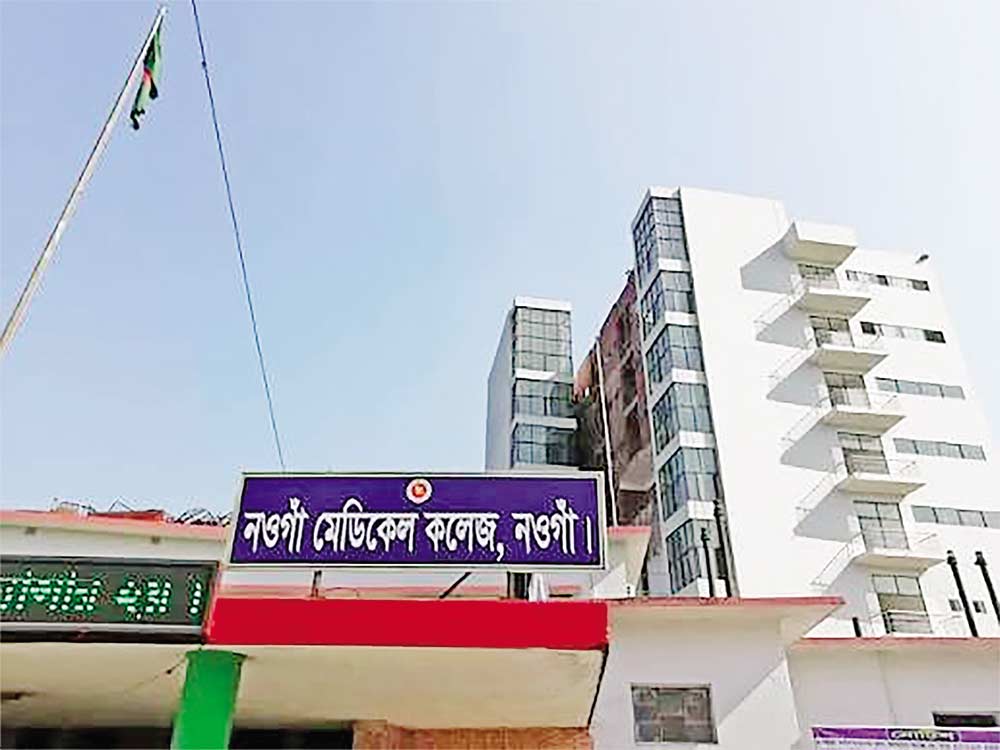 Bangladesh is expanding its network of government medical colleges, but the expansion is taking place against a troubling reality: many existing institutions still lack the basic infrastructure and human resources to provide quality medical education.
Several medical colleges have been operating from temporary campuses for years. Some have fewer than half of their sanctioned teaching posts filled, while students in others face severe shortages of classrooms, laboratories and residential facilities.
The growing gap between institutional expansion and educational capacity is raising a critical question: Are we producing more medical colleges without first ensuring the capacity to produce competent doctors?
Netrokona Medical College offers a telling example. Established in 2018, the college began academic activities at temporary facilities in the staff quarters of the 250-bed Netrokona Sadar Hospital. Eight years later, it still does not have a permanent campus.
The college currently has 333 students. The absence of a permanent campus has affected classrooms, accommodation and practical learning opportunities.
Professor Dr Mohammad Saiful Hasan, principal of the college, said construction of the permanent campus could begin once the necessary decision is taken by the ministry.
“The sooner it happens, the better,” he said.
The problem is not confined to Netrokona. Rangamati, Chandpur, Magura, Naogaon, Nilphamari and Sunamganj medical colleges have also been operating without permanent campuses for years. Recent reporting based on Directorate General of Medical Education (DGME) data identified seven such government medical colleges.
Rangamati Medical College began its journey in 2014. Its academic activities started in the Coronary Care Unit building of Rangamati General Hospital. More than a decade later, the institution is still struggling with infrastructure and manpower shortages.

Of 58 sanctioned teaching posts in basic and clinical subjects, only 25 are currently occupied. Thirty-three posts remain vacant, including seven professor posts, 13 associate professor posts and 13 assistant professor posts.
To partly address the shortage, 18 teachers are reportedly working through attachments. The college authorities have planned a permanent campus on 28 acres of land at Sukhi Nilganj in Rangamati at an estimated cost of around Tk 1,293 crore.
But infrastructure is only one side of the problem. Naogaon Medical College has 90 sanctioned positions, but only 45 are occupied. The shortage forces existing teachers to handle multiple responsibilities, putting additional pressure on teaching and academic administration.
Chandpur Medical College faces a similar situation. Against 109 sanctioned positions, only 47 teachers are currently working. According to the college administration, some teachers are required to perform three or four responsibilities because of the shortage.
For a discipline that depends heavily on practical training and close supervision, such shortages raise questions about the amount of academic attention students can actually receive. The crisis is not limited to colleges without permanent campuses.
At Sirajganj Medical College, 173 positions have been sanctioned, but only 59 are occupied. As many as 114 positions remain vacant. Patuakhali Medical College has 51 vacancies among 94 sanctioned positions, while Jamalpur Medical College has 31 vacancies against 86 posts.
The figures indicate that constructing buildings alone cannot resolve the problems facing medical education. A medical college needs teachers, laboratories, classrooms, hospitals, clinical training facilities and support staff. The absence of any one of these can weaken the overall learning environment.
The accommodation crisis is particularly visible at Sirajganj Medical College. A female students' hostel designed for 100 students is currently accommodating 318. Medical students spend long hours in classrooms, laboratories and hospitals. Overcrowded accommodation adds another burden to an already demanding academic routine.
The national picture is even more worrying. According to the latest DGME data, 43.38 percent of teaching posts in government medical colleges are vacant. The shortage is particularly serious at senior levels. Recent reporting found that 68.61 percent of professor posts were vacant, while half of associate professor posts and 51 percent of assistant professor posts remained unfilled.
The shortage is also acute in basic medical sciences such as anatomy, physiology and biochemistry. According to the information provided by the colleges, 2,069 teaching posts exist in basic subjects, against which 1,560 teachers are currently working.
These subjects form the foundation of medical education. Weak teaching capacity at this stage can affect students' ability to develop the knowledge required for later clinical training.Against this backdrop, the government's decision to establish more medical colleges has triggered debate.
Thakurgaon and Narsingdi have recently received approval for new government medical colleges, bringing the total number of government medical colleges to 39.
There is a clear rationale for expanding medical education to underserved regions. But expansion without adequate teachers, laboratories, hospitals and accommodation risks creating institutions in name rather than fully functional medical schools.
Health sector experts have previously warned that the government should first assess the country's long-term health workforce requirements and prepare a strategic plan before establishing new institutions.
The DGME has announced several measures to address the shortages, including incentives for students entering basic medical subjects, financial incentives for teachers, recruitment of qualified retired teachers and extensions of service where necessary.
Authorities have also planned to restructure development projects to accelerate construction of permanent campuses at several medical colleges while reducing unnecessary construction and land acquisition costs. But implementation remains the key challenge.
The prolonged absence of permanent campuses at several institutions demonstrates the gap that can develop between policy decisions and actual delivery.
Bangladesh undoubtedly needs more doctors. But increasing the number of medical colleges does not automatically increase the number of competent doctors.
More importantly, these components must be available together.
The experience of Netrokona, Rangamati, Naogaon, Chandpur and Sirajganj points to a common problem: the expansion of medical education has not always been matched by the expansion of institutional capacity.
Loading...
Loading...
Also read



Editor : Iqbal Sobhan Chowdhury
Published by the Editor on behalf of the Observer Ltd. from Globe Printers, 24/A, New Eskaton Road, Ramna, Dhaka.
Editorial, News and Commercial Offices : Aziz Bhaban (2nd floor), 93, Motijheel C/A, Dhaka-1000.
Phone: PABX- 41053001-06; Advertisement: 41053012; 01793317829, 01550707291, E-mail: [email protected], [email protected] Online: email: [email protected] 41053014; 01550707297 Advertisement: 01550707296
Published by the Editor on behalf of the Observer Ltd. from Globe Printers, 24/A, New Eskaton Road, Ramna, Dhaka.
Editorial, News and Commercial Offices : Aziz Bhaban (2nd floor), 93, Motijheel C/A, Dhaka-1000.
Phone: PABX- 41053001-06; Advertisement: 41053012; 01793317829, 01550707291, E-mail: [email protected], [email protected] Online: email: [email protected] 41053014; 01550707297 Advertisement: 01550707296


