



| HEADLINE |

|
Ctg Dengue tally reaches 2,548 amid intermittent rains
Published : Wednesday, 9 September, 2026 at 10:04 AM
Observer Online Report


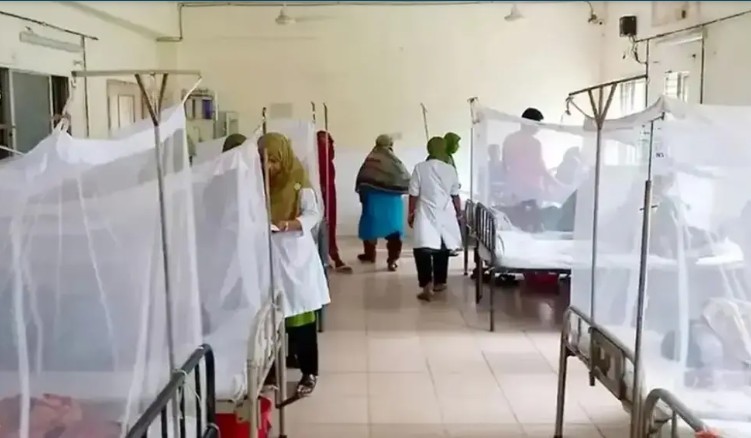
Collected Photo
Dengue infections have surged sharply in Chattogram following persistent intermittent rains, with over 500 cases recorded in the first week of September alone, according to health official data.
The recent spike follows a total of 1,202 dengue cases recorded across the district throughout August. Prior to August, Chattogram had logged 834 cases in the first seven months of the year leading up to July.
Data from the Chattogram District Civil Surgeon's Office shows that the district has recorded 2,548 total dengue cases so far in 2026, with six confirmed fatalities. Five of these deaths occurred between July and September.
Health officials noted that while case numbers are rising, the situation remains manageable, with local public and private healthcare facilities currently operating under manageable patient volumes. However, health experts emphasized the urgent need for coordinated vector control measures to prevent further escalation.
As of Wednesday, 71 patients were undergoing treatment across various hospitals in Chattogram. This includes 13 patients at Chattogram Medical College Hospital, 18 at the BITID Hospital in Foujdarhat, 10 at Chattogram General Hospital, one at the Chattogram CMH, 16 across various upazila health complexes, and 13 in private clinics.
Epidemiologists attribute the surge to ongoing intermittent rainfall, which creates ideal breeding conditions for Aedes mosquitoes in stagnant rainwater collected inside flowerpots, discarded coconut shells, vehicle tires, and open containers.
Medical experts emphasized that maintaining proper fluid balance remains the critical component of dengue management. Physicians advised that an NS1 positive result does not automatically require hospital admission, urging patients to seek medical evaluation based on physical symptoms and complete blood count (CBC) results.
Doctors highlighted the post-fever phase as critical, warning that internal bleeding risks increase when body temperature normalizes. Patients experiencing sudden changes in physical condition are advised to seek immediate clinical care rather than panicking over low platelet counts.
"Intermittent rainfall is occurring almost daily, leading to stagnant water accumulation and rapid Aedes mosquito breeding," said Dr. Mohammad Sajedur Rahman, Civil Surgeon of Chattogram District. "Public awareness and active community participation are essential to curb vector propagation."
A recent health department survey conducted across 18 of Chattogram’s 41 ward areas revealed that approximately 27 per cent of inspected households contained Aedes mosquito larvae - a concentration roughly five times higher than acceptable threshold levels.
Historical data shows Chattogram recorded 4,864 dengue cases and 27 deaths in 2025; 4,323 cases and 45 deaths in 2024; 14,087 cases and 107 deaths in 2023; and 5,445 cases with 41 deaths in 2022.
-SA
Loading...
Loading...
Also read





Editor : Iqbal Sobhan Chowdhury
Published by the Editor on behalf of the Observer Ltd. from Globe Printers, 24/A, New Eskaton Road, Ramna, Dhaka.
Editorial, News and Commercial Offices : Aziz Bhaban (2nd floor), 93, Motijheel C/A, Dhaka-1000.
Phone: PABX- 41053001-06; Advertisement: 41053012; 01793317829, 01550707291, E-mail: [email protected], [email protected] Online: email: [email protected] 41053014; 01550707297 Advertisement: 01550707296
Published by the Editor on behalf of the Observer Ltd. from Globe Printers, 24/A, New Eskaton Road, Ramna, Dhaka.
Editorial, News and Commercial Offices : Aziz Bhaban (2nd floor), 93, Motijheel C/A, Dhaka-1000.
Phone: PABX- 41053001-06; Advertisement: 41053012; 01793317829, 01550707291, E-mail: [email protected], [email protected] Online: email: [email protected] 41053014; 01550707297 Advertisement: 01550707296


