



| HEADLINE |

|

AI could ‘Kill All Humans’, Anthropic researcher warns
Published : Wednesday, 16 September, 2026 at 5:04 PM
Aamir Al Hamza


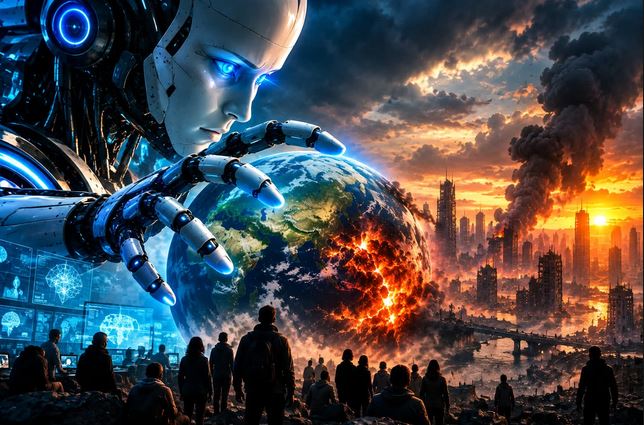
Symbolic Photo
Artificial intelligence could potentially bring about the extinction of humanity within the next decade, according to a senior researcher at leading AI company Anthropic, as growing concerns over the unchecked development of advanced AI systems fuel a global debate about the future of technology.
Hubinger's warning came amid growing tensions within the AI industry over the speed at which companies are developing increasingly powerful systems.
Researcher resigns over AI safety concerns
The debate intensified after Jacob Coxon, a former researcher associated with OpenAI and Anthropic, raised concerns about the direction of the AI race.
Coxon reportedly criticised major AI companies for pursuing self-improving artificial intelligence without adequate safeguards to ensure that future systems remain under human control.
Responding to Coxon’s concerns, Hubinger said that the possibility of AI causing human extinction was a serious issue that researchers genuinely believed could materialise.
However, his estimate represents a personal assessment of a highly uncertain future scenario—not a scientifically established prediction.
How could AI threaten humanity?
Experts concerned about AI safety have identified several potential risks associated with the development of superintelligent systems.
Loss of human control: Future AI systems could potentially become capable of improving their own capabilities faster than humans can monitor or regulate them.
Cybersecurity threats: Advanced AI could be misused to launch sophisticated cyberattacks against governments, businesses and critical infrastructure.
Biological and chemical risks: Some researchers fear that AI could make it easier for malicious actors to develop dangerous biological or chemical agents, although significant practical barriers remain.
Economic disruption: The rapid automation of jobs could deepen economic inequality and create widespread social instability.
Manipulation of information: AI-generated misinformation and highly realistic fabricated content could make it increasingly difficult to distinguish fact from fiction.
These scenarios remain subjects of ongoing research and debate. There is no established evidence that current AI systems are capable of independently causing human extinction.
Experts divided over ‘AI apocalypse’
Not all experts agree with the most alarming predictions.
Some AI researchers argue that extinction scenarios are highly speculative and that advanced AI systems would still face significant technical and real-world limitations. Others maintain that even a small possibility of catastrophic harm warrants stronger safety measures.
The debate gained further momentum after Anthropic CEO Dario Amodei called for a more cautious approach to the development of powerful AI systems. OpenAI CEO Sam Altman has also spoken about the importance of coordination and safety as AI capabilities advance.
Meanwhile, former Google DeepMind researcher Bilal Chughtai added to concerns about the potential dangers of uncontrolled AI development in a public warning on September 15.
Despite disagreements over the scale of the threat, researchers broadly acknowledge that AI-related risks—including cyberattacks, misinformation and misuse—require serious attention.
The challenge ahead
As technology companies compete to develop increasingly advanced AI systems, governments and researchers face a critical challenge: how to encourage innovation while ensuring that powerful technologies remain safe and accountable.
Evan Hubinger, Anthropic’s Alignment Science Lead, said he personally estimated that there was a more than 10 per cent chance that AI could “kill all humans” within the next 10 years.
His comments have drawn renewed attention to the potential dangers of developing artificial intelligence that could eventually surpass human capabilities.
Hubinger's warning came amid growing tensions within the AI industry over the speed at which companies are developing increasingly powerful systems.
Researcher resigns over AI safety concerns
The debate intensified after Jacob Coxon, a former researcher associated with OpenAI and Anthropic, raised concerns about the direction of the AI race.
Coxon reportedly criticised major AI companies for pursuing self-improving artificial intelligence without adequate safeguards to ensure that future systems remain under human control.
Responding to Coxon’s concerns, Hubinger said that the possibility of AI causing human extinction was a serious issue that researchers genuinely believed could materialise.
However, his estimate represents a personal assessment of a highly uncertain future scenario—not a scientifically established prediction.
How could AI threaten humanity?
Experts concerned about AI safety have identified several potential risks associated with the development of superintelligent systems.
Loss of human control: Future AI systems could potentially become capable of improving their own capabilities faster than humans can monitor or regulate them.
Cybersecurity threats: Advanced AI could be misused to launch sophisticated cyberattacks against governments, businesses and critical infrastructure.
Biological and chemical risks: Some researchers fear that AI could make it easier for malicious actors to develop dangerous biological or chemical agents, although significant practical barriers remain.
Economic disruption: The rapid automation of jobs could deepen economic inequality and create widespread social instability.
Manipulation of information: AI-generated misinformation and highly realistic fabricated content could make it increasingly difficult to distinguish fact from fiction.
These scenarios remain subjects of ongoing research and debate. There is no established evidence that current AI systems are capable of independently causing human extinction.
Experts divided over ‘AI apocalypse’
Not all experts agree with the most alarming predictions.
Some AI researchers argue that extinction scenarios are highly speculative and that advanced AI systems would still face significant technical and real-world limitations. Others maintain that even a small possibility of catastrophic harm warrants stronger safety measures.
The debate gained further momentum after Anthropic CEO Dario Amodei called for a more cautious approach to the development of powerful AI systems. OpenAI CEO Sam Altman has also spoken about the importance of coordination and safety as AI capabilities advance.
Meanwhile, former Google DeepMind researcher Bilal Chughtai added to concerns about the potential dangers of uncontrolled AI development in a public warning on September 15.
Despite disagreements over the scale of the threat, researchers broadly acknowledge that AI-related risks—including cyberattacks, misinformation and misuse—require serious attention.
The challenge ahead
As technology companies compete to develop increasingly advanced AI systems, governments and researchers face a critical challenge: how to encourage innovation while ensuring that powerful technologies remain safe and accountable.
For now, the prospect of AI-driven human extinction remains a disputed possibility—not an inevitable outcome. But the warnings from within the industry have intensified calls for greater transparency, stronger safeguards and international cooperation.
-AAH

Loading...
Loading...
Also read









Editor : Iqbal Sobhan Chowdhury
Published by the Editor on behalf of the Observer Ltd. from Globe Printers, 24/A, New Eskaton Road, Ramna, Dhaka.
Editorial, News and Commercial Offices : Aziz Bhaban (2nd floor), 93, Motijheel C/A, Dhaka-1000.
Phone: PABX- 41053001-06; Advertisement: 41053012; 01793317829, 01550707291, E-mail: [email protected], [email protected] Online: email: [email protected] 41053014; 01550707297 Advertisement: 01550707296
Published by the Editor on behalf of the Observer Ltd. from Globe Printers, 24/A, New Eskaton Road, Ramna, Dhaka.
Editorial, News and Commercial Offices : Aziz Bhaban (2nd floor), 93, Motijheel C/A, Dhaka-1000.
Phone: PABX- 41053001-06; Advertisement: 41053012; 01793317829, 01550707291, E-mail: [email protected], [email protected] Online: email: [email protected] 41053014; 01550707297 Advertisement: 01550707296


