



| HEADLINE |

|

Dhaka Must Not Become a City of Fear
Published : Sunday, 20 September, 2026 at 12:00 AM
Shaon Arafat


 A series of crude-bomb blasts in Dhaka over the past few days has raised grave concerns about security in the capital. On September 15, a crude bomb exploded near the main gate of the Supreme Court, followed by three blasts on the Dhaka University campus later that night. Three days later, further explosions were reported in Malibagh, Agargaon, Mohakhali and Jatrabari. The situation escalated further overnight as reports emerged of additional crude bomb explosions alongside incidents of buses being set on fire in parts of the capital. The incidents, occurring at different locations and on different days, demand a serious examination of how and why such attacks are taking place in public spaces and what can be done to prevent them.
The authorities have responded by setting up nearly 200 police checkpoints, deploying plainclothes officers, placing flyover access points under tight watch and increasing patrols across the capital. These measures are necessary, particularly when public anxiety is high. But they cannot be the whole response. The authorities must also determine how the incidents occurred, whether they are connected and whether existing security arrangements could have prevented them. If those responsible have not yet been identified, the investigations must establish the facts and avoid conclusions based on speculation.
That task will not be easy. Keeping a city of millions secure requires constant attention to roads, markets, campuses, institutions and transport points. Law enforcement officials are examining CCTV footage, checking suspicious motorcycles and monitoring important intersections. These efforts matter, but they must ultimately produce results. People should be able to go to work, attend classes, open their businesses and return home without having to consider the possibility of an explosion along the way. Public safety requires prevention as much as a response after an incident.
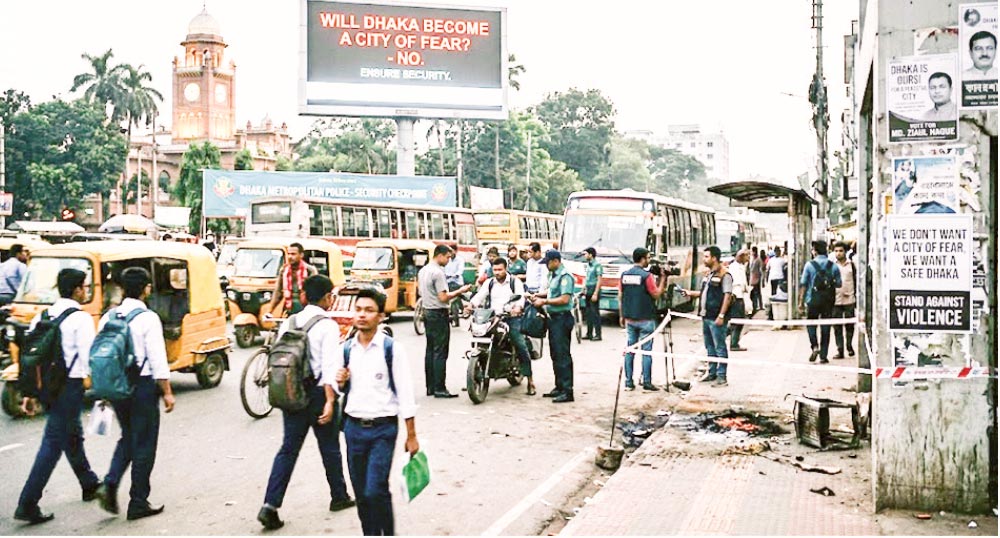 The political context adds another layer of concern. Public places can become vulnerable during periods of political tension, and the authorities must establish whether the recent incidents had any political connection. Whatever the findings, ordinary citizens should not bear the consequences of violence or intimidation. A student going to class, a shopkeeper opening a business or a commuter returning home should not become caught up in confrontations beyond their control.
This makes a coordinated investigation all the more necessary. Rather than treating each incident as an isolated episode, the authorities should examine whether there are any links between them. Who organised the attacks? Who supplied the materials or support, if any? Are the same individuals involved in more than one incident? These questions require evidence, not speculation. Law enforcement agencies must establish what happened, identify those responsible and bring them before the law. A proper investigation will not only ensure accountability but also help authorities understand how similar incidents can be prevented.
Political actors, meanwhile, have a responsibility of their own. No political objective can justify violence against or intimidation of ordinary citizens. At the same time, allegations of political involvement must be established through evidence. Political leaders and organisations should therefore make their positions clear and reject violence wherever it occurs. They should also avoid rhetoric or actions that could further heighten public tensions.
Against this backdrop, the government must ensure that the response does not end with checkpoints and increased patrols. Relevant agencies need to share information effectively, examine available evidence and act on credible leads. The public also deserves timely and accurate information about what investigators establish. At the same time, security measures should protect citizens without unnecessarily disrupting their everyday lives.
Dhaka already puts enormous pressure on its residents through traffic congestion, pollution, overcrowding and the daily struggle to move around the city. People should not have to add anxiety over sudden explosions to that burden. A capital city cannot function normally when violence in public places begins to undermine people’s confidence in their daily routines.
Dhaka must not become a city of fear. The authorities must act with urgency to establish what happened, identify those responsible and address any weaknesses that allowed the incidents to occur. Political actors must reject violence and intimidation, while law enforcement agencies must ensure that investigations are thorough, evidence-based and followed by accountability. Above all, the government must show through concrete action that protecting people in their everyday lives is a responsibility it will not compromise. Citizens have the right to use the city’s streets, markets, campuses and public institutions without living under the constant shadow of sudden violence.
The writer is a journalist of The Daily Observer

Loading...
Loading...
Also read



Editor : Iqbal Sobhan Chowdhury
Published by the Editor on behalf of the Observer Ltd. from Globe Printers, 24/A, New Eskaton Road, Ramna, Dhaka.
Editorial, News and Commercial Offices : Aziz Bhaban (2nd floor), 93, Motijheel C/A, Dhaka-1000.
Phone: PABX- 41053001-06; Advertisement: 41053012; 01793317829, 01550707291, E-mail: [email protected], [email protected] Online: email: [email protected] 41053014; 01550707297 Advertisement: 01550707296
Published by the Editor on behalf of the Observer Ltd. from Globe Printers, 24/A, New Eskaton Road, Ramna, Dhaka.
Editorial, News and Commercial Offices : Aziz Bhaban (2nd floor), 93, Motijheel C/A, Dhaka-1000.
Phone: PABX- 41053001-06; Advertisement: 41053012; 01793317829, 01550707291, E-mail: [email protected], [email protected] Online: email: [email protected] 41053014; 01550707297 Advertisement: 01550707296


