



| HEADLINE |

|
JU drops plan for divisional admission tests over scheduling snags
Published : Wednesday, 23 September, 2026 at 8:23 AM
Observer Online Report


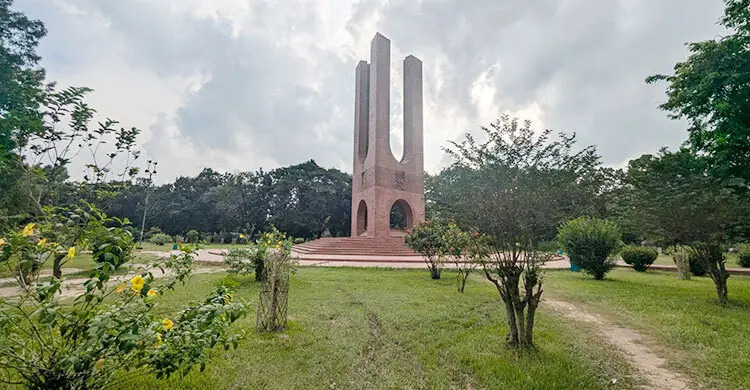
Collected Photo
Jahangirnagar University (JU) will not hold its undergraduate admission tests for the 2026-27 academic session in divisional cities due to scheduling conflicts and potential increases in application fees, university sources confirmed.
Although the university administration had formed four sub-committees to collect feasibility data from universities in four divisional cities, operational challenges have forced officials to reconsider the decentralized testing plan for the current session.
Several universities have already announced their admission test schedules for the 2026-27 academic year. If JU proceeds with holding tests across divisional centers, its exams would have to be pushed back to late March or April, raising concerns about attracting quality candidates after other institutions finalize admissions.
Syed Mohammad Ali Reza, Deputy Registrar (Education) and Member Secretary of the Admission Committee, stated that introducing procedural changes requires recommendations from the Academic Council.
"If we hold exams at the divisional level, our tests would be delayed until late March or April," Reza explained. "Conducting exams that late, after other universities complete their intake, would make it difficult to secure quality students."
Reza added that paying host institutions in divisional cities for center usage would significantly increase application form fees. All compiled data will be presented to the Academic Council for a final determination.
JU Pro-Vice Chancellor (Education) Professor Dr Md Shamsul Alam noted that securing appropriate exam slots has become difficult, making a late April or May timeline unacceptable.
"We plan to commence the admission tests by the third week of January," Dr Alam said, adding that the final methodology and timetable will be decided in the upcoming council meeting.
Earlier during the 2025-26 admission exams, JU Vice-Chancellor Professor Dr Mohammad Kamrul Ahsan announced plans to decentralize tests starting from the 2026-27 session. Sub-committees were subsequently deployed to assess infrastructure, manpower, and center management across four regional universities.
-SA
Loading...
Loading...
Also read







Editor : Iqbal Sobhan Chowdhury
Published by the Editor on behalf of the Observer Ltd. from Globe Printers, 24/A, New Eskaton Road, Ramna, Dhaka.
Editorial, News and Commercial Offices : Aziz Bhaban (2nd floor), 93, Motijheel C/A, Dhaka-1000.
Phone: PABX- 41053001-06; Advertisement: 41053012; 01793317829, 01550707291, E-mail: [email protected], [email protected] Online: email: [email protected] 41053014; 01550707297 Advertisement: 01550707296
Published by the Editor on behalf of the Observer Ltd. from Globe Printers, 24/A, New Eskaton Road, Ramna, Dhaka.
Editorial, News and Commercial Offices : Aziz Bhaban (2nd floor), 93, Motijheel C/A, Dhaka-1000.
Phone: PABX- 41053001-06; Advertisement: 41053012; 01793317829, 01550707291, E-mail: [email protected], [email protected] Online: email: [email protected] 41053014; 01550707297 Advertisement: 01550707296


