



| HEADLINE |

|

Saint Martin’s: Conservation and tourism must go together
An interview with Habibur Rahman, Owner of Sinbad Resort and Beyond in Saint Martin’s Island
Published : Tuesday, 29 September, 2026 at 12:00 AM
Mizanur Rahman


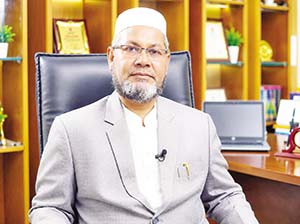 Habibur Rahman, owner of Sinbad Resort and Beyond and General Secretary of the Saint Martin Environment and Tourism Protection Council, has long been involved in the tourism industry of Saint Martin’s Island, Bangladesh’s only coral island.
He supports environmental protection measures but believes conservation and tourism should move forward together. According to him, sudden restrictions on tourist movement have affected hotels, resorts, restaurants, transport operators, tour guides and local businesses dependent on tourism. He focused on the impact of recent restrictions, the livelihood concerns of local residents, environmental challenges and the need for a science-based sustainable tourism policy. Excerpts of the interview are as follows:
The Daily Observer: The government has recently imposed tighter restrictions on tourist movement to Saint Martin’s Island. What impact have these measures had on the tourism industry?
Habibur Rahman: Environmental conservation is essential, and we fully support initiatives to protect Saint Martin’s Island. However, any policy should protect the environment while also safeguarding the livelihoods of local people.
The recent restrictions have significantly reduced the number of tourists visiting the island. As a result, hotels, resorts, restaurants, transport operators, tour guides and hundreds of small businesses dependent on tourism have been seriously affected. The overall economy of the island has slowed down.
We believe environmental protection is necessary, but it should be achieved through a planned and sustainable approach. Local people should not be left without economic opportunities because of sudden policy decisions.

DO: What are the main demands of tourism entrepreneurs?
HR: We have never supported uncontrolled tourism. Our main demand is that the government formulate a long-term, science-based tourism policy after consulting local residents, businesspeople and other stakeholders.
If the number of tourists needs to be limited, the decision should be based on scientific research and implemented according to a clearly announced plan. Sudden decisions create uncertainty for businesses, discourage investment and cause financial losses for entrepreneurs.
A sustainable tourism policy should clearly address visitor numbers, transportation, accommodation, waste management and environmental protection.
DO: Many people believe tourism is the main reason for the deterioration of the island’s environment. Do you agree?
HR: No. Tourism alone cannot be blamed for the environmental degradation of Saint Martin’s. Weak waste management, plastic pollution, inadequate infrastructure and a lack of public awareness are also major factors.
If tourism is properly managed, it can create economic incentives for conservation. Instead of simply stopping tourism, we should focus on responsible and sustainable tourism that reduces environmental pressure while allowing local communities to benefit economically.
DO: How are local people being affected by the current situation?
HR: Almost every family in Saint Martin’s is directly or indirectly dependent on tourism. When tourist numbers decline, the impact spreads throughout the local economy.
Hotel workers, boatmen, shopkeepers, fishermen, transport workers, restaurant employees and other service providers have seen their incomes decline. Some businesses have already reduced their workforce, while others are struggling to survive.
Environmental conservation is important, but protecting the livelihoods of local people is equally important. If we want local communities to become partners in conservation, they must also have sustainable economic opportunities.
DO: What steps should the government take to improve the situation?
HR: The first priority should be the preparation of an integrated and sustainable tourism master plan for Saint Martin’s Island.
A digital tourist management system could also be introduced. Through such a system, a predetermined number of tourists could enter the island through a transparent and organised process.
This would allow the authorities to monitor visitor numbers while giving tourism businesses greater predictability.
There should also be clear rules regarding waste disposal, plastic use, construction, accommodation and marine activities. Proper enforcement and regular monitoring are equally important.
DO: What role should tourism entrepreneurs play in environmental conservation?
HR: We also have a major responsibility. Resorts and tourism businesses should reduce the use of single-use plastics, introduce waste segregation and adopt environmentally friendly practices.
Tourists should also be educated about the island’s fragile ecosystem. Businesses can provide guidelines on responsible tourism, including proper waste disposal and protecting marine life.
DO: How can tourism and conservation be balanced in the long term?
HR: Proper planning is the key. We need to determine the island’s environmental carrying capacity and design tourism activities accordingly. Visitor numbers, accommodation facilities, transportation and other services should be planned based on scientific assessment.
Local communities must also be involved in decision-making. People who live on the island understand its challenges and should have a voice in policies affecting their livelihoods.
The government, environmental experts, tourism entrepreneurs, local residents and other stakeholders need to work together. Regular consultation and monitoring should be part of the process.
We do not want uncontrolled tourism, but tourism should not simply be eliminated either. The solution lies in responsible tourism based on science, proper infrastructure, effective management and participation from local communities.
Saint Martin’s natural resources are limited and extremely valuable. If we can protect its coral ecosystem, marine biodiversity and natural beauty while creating sustainable economic opportunities for local people, the island can remain an important tourism destination for future generations.
The government should formulate a long-term policy through consultation with all stakeholders. Environmental protection must remain at the centre of that policy, while the economic and social realities of local communities must also be considered.

Loading...
Loading...
Also read



Editor : Iqbal Sobhan Chowdhury
Published by the Editor on behalf of the Observer Ltd. from Globe Printers, 24/A, New Eskaton Road, Ramna, Dhaka.
Editorial, News and Commercial Offices : Aziz Bhaban (2nd floor), 93, Motijheel C/A, Dhaka-1000.
Phone: PABX- 41053001-06; Advertisement: 41053012; 01793317829, 01550707291, E-mail: [email protected], [email protected] Online: email: [email protected] 41053014; 01550707297 Advertisement: 01550707296
Published by the Editor on behalf of the Observer Ltd. from Globe Printers, 24/A, New Eskaton Road, Ramna, Dhaka.
Editorial, News and Commercial Offices : Aziz Bhaban (2nd floor), 93, Motijheel C/A, Dhaka-1000.
Phone: PABX- 41053001-06; Advertisement: 41053012; 01793317829, 01550707291, E-mail: [email protected], [email protected] Online: email: [email protected] 41053014; 01550707297 Advertisement: 01550707296


