



| HEADLINE |

|

China races ahead of West in the post-lithium battery
Published : Thursday, 1 October, 2026 at 9:10 PM
Observer Online Report


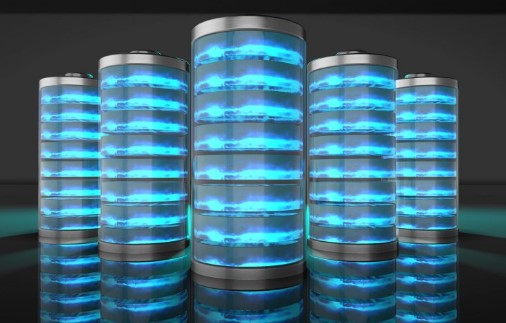
Collected Photo
China is rapidly pulling ahead of Western countries in the development and commercialisation of sodium-ion batteries, emerging as the leading force in a technology seen as a potential alternative to lithium-ion batteries.
Unlike lithium-ion batteries, sodium-ion cells rely on abundant sodium rather than lithium, offering the potential for lower costs and reduced exposure to volatile lithium supply chains. They also perform particularly well in very cold conditions, although their lower energy density remains a major limitation for some applications.
China’s battery giant CATL is driving much of the commercial push. The company has committed to large-scale sodium-ion production and plans to add 40 GWh of annual capacity at its Fujian base. It has also signed a 60 GWh, three-year sodium-ion energy-storage agreement with HyperStrong—the largest such deal announced to date.
The technology is already moving beyond the laboratory. CATL unveiled its TENER Sodium energy-storage system in June and said its first Chinese customer deliveries would begin in September 2026.
Industry analysis cited by the Financial Times puts China’s operating and planned sodium-ion capacity at more than 400 GWh, far ahead of the rest of the world. Western companies are developing competing technologies, but commercial-scale deployment remains much more limited outside China.
The shift does not mean lithium-ion batteries are about to disappear. Lithium technology still has a clear advantage in energy density and remains dominant in electric vehicles and energy storage. But China’s rapid move from research to mass production has given it a substantial head start in the emerging sodium-ion battery industry.
-AH
Loading...
Loading...
Also read






Editor : Iqbal Sobhan Chowdhury
Published by the Editor on behalf of the Observer Ltd. from Globe Printers, 24/A, New Eskaton Road, Ramna, Dhaka.
Editorial, News and Commercial Offices : Aziz Bhaban (2nd floor), 93, Motijheel C/A, Dhaka-1000.
Phone: PABX- 41053001-06; Advertisement: 41053012; 01793317829, 01550707291, E-mail: [email protected], [email protected] Online: email: [email protected] 41053014; 01550707297 Advertisement: 01550707296
Published by the Editor on behalf of the Observer Ltd. from Globe Printers, 24/A, New Eskaton Road, Ramna, Dhaka.
Editorial, News and Commercial Offices : Aziz Bhaban (2nd floor), 93, Motijheel C/A, Dhaka-1000.
Phone: PABX- 41053001-06; Advertisement: 41053012; 01793317829, 01550707291, E-mail: [email protected], [email protected] Online: email: [email protected] 41053014; 01550707297 Advertisement: 01550707296


