



| HEADLINE |

|

Don’t Let Screens Replace Our Libraries
Published : Friday, 9 October, 2026 at 12:00 AM
Humaira Parvin


 In today’s fast-paced, hyper-connected world, human existence seems increasingly trapped within the narrow boundaries of a tiny glass screen. With a simple touch or swipe, vast amounts of information materialise before our eyes in seconds. In this hyper-digital era of algorithmic feeds, viral short videos and high-speed fibre-optic internet, searching for information no longer requires hours in dusty library archives or painstakingly turning book pages. However, as this artificial technological glow grows brighter, an uncomfortable question arises: is the inner light of human intellect and critical thought quietly dimming? Behind the flickering blue light of modern screens, our traditional libraries, once proud sanctuaries of human wisdom, are silently fading into neglect.
A recent visit to a historical public library in the heart of the city revealed a deeply troubling sight. Hundreds of priceless volumes, rare editions and insightful works sat neatly arranged on high wooden shelves beneath a thick layer of dust. In the main reading room, a handful of young visitors sat at long tables with books before them, yet virtually no one was reading. Instead, their eyes were fixed on mobile phones or laptop screens. They had entered a sanctuary of literature physically, but their minds remained captive to the virtual world. This is no longer an isolated scene. Across metropolitan cities, suburban townships and rural villages, libraries face the same silence, abandonment and emptiness.
Yet not so long ago, these libraries served as the intellectual heartbeat of local communities. After school, college or a long workday, students, scholars, thinkers and curious readers gathered beneath their warm lights. The soft rustle of turning pages created a comforting symphony of learning. Discussions about favourite novels, philosophy and politics fostered an atmosphere of camaraderie and intellectual vitality. Today, much of that community spirit has been lost amid the superficial crowd of social media likes, shares and fleeting notifications.
Many digital advocates argue that thousands of e-books, research articles and digital PDFs are instantly available on phones and tablets, making physical libraries obsolete. However, this assumption misunderstands the essence of reading. There is a profound difference between consuming content on a backlit screen and reading a physical book in a quiet environment. Notifications, pop-up ads and messages constantly interrupt our concentration when we read on smartphones or computers. Instead of absorbing ideas deeply, we often scan text for quick, digestible information.
By contrast, holding a tangible book encourages sustained immersion. It allows readers to engage with complex narratives, grasp philosophical ideas and develop critical thinking. While the digital world overwhelms us with an endless ocean of information, it can distance us from meaningful knowledge.
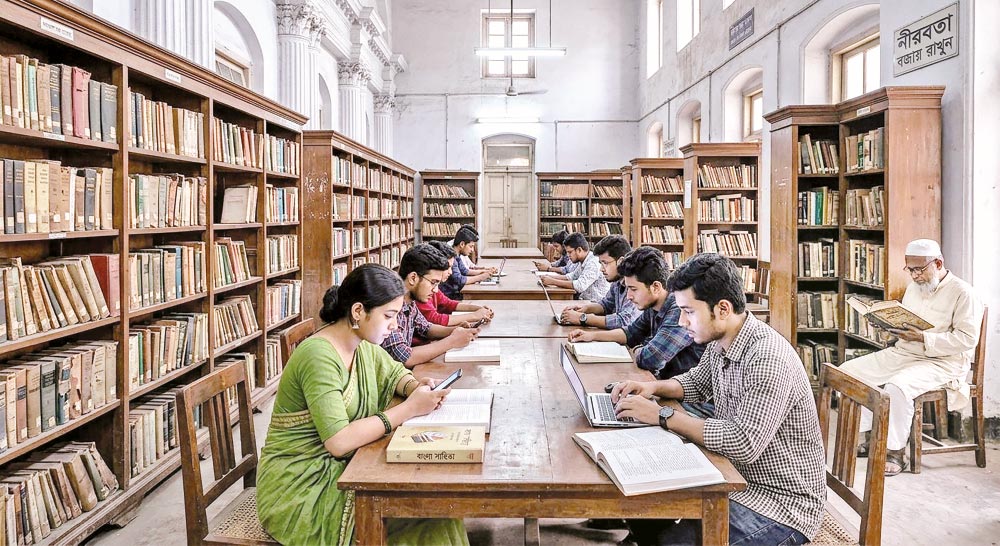 A library has never been merely a warehouse for paper and ink. It is a space for personal growth, intellectual reflection and mental nourishment. By abandoning physical books for the instant gratification of digital platforms, society risks serious cognitive consequences. Excessive consumption of short-form digital media can make it harder for young people to focus on complex arguments, lengthy novels or demanding studies. As people retreat into private virtual spaces, the loss of shared libraries also weakens community bonds and deepens social isolation.
Compounding this crisis is the structural decay of traditional libraries. Across many districts and sub-districts, community libraries are struggling with chronic underfunding and institutional neglect. Little funding is available for new books, current journals or clean and comfortable reading spaces. Some historic institutions face permanent closure. Even among those that survive, many have become crowded study halls where job seekers memorise guidebooks for competitive examinations. As a result, literature, history, philosophy and basic science receive far less attention.
Does this mean we must reject technology and return to the past? Absolutely not. Technological progress is unstoppable, and we must learn to use digital tools intelligently. The answer lies in modernising libraries without destroying their core purpose. Libraries should become vibrant, multifunctional cultural hubs, combining high-speed internet, digital archives and interactive learning tools with traditional bookshelves. Regular literary festivals, author-reader meetings, creative writing workshops and book exhibitions can also help revive young people’s interest in reading.
Rebuilding reading culture also requires changes within families. Parents play an essential role in shaping children’s relationship with knowledge. Instead of handing toddlers smartphones to keep them quiet, they should introduce them to colourful and engaging picture books from an early age. Families can also make regular library visits a shared tradition, turning reading into a pleasure rather than a chore.
A mobile phone can provide endless entertainment and information, but it cannot fully replace the experience of deep reading. The scent of paper, the tranquillity of a silent reading room and the quiet joy of turning pages are experiences no digital interface can truly replicate. Libraries are mirrors of a nation’s collective intellect, heritage and cultural maturity. If those mirrors remain covered in dust, our society’s future may also become increasingly shallow and directionless.
Therefore, let us step away from our glowing screens for a while and return to the timeless refuge of books. Let us breathe life into our libraries so that the light of deep and enduring knowledge can illuminate our minds once again.
The writer is a journalist

Loading...
Loading...
Also read



Editor : Iqbal Sobhan Chowdhury
Published by the Editor on behalf of the Observer Ltd. from Globe Printers, 24/A, New Eskaton Road, Ramna, Dhaka.
Editorial, News and Commercial Offices : Aziz Bhaban (2nd floor), 93, Motijheel C/A, Dhaka-1000.
Phone: PABX- 41053001-06; Advertisement: 41053012; 01793317829, 01550707291, E-mail: [email protected], [email protected] Online: email: [email protected] 41053014; 01550707297 Advertisement: 01550707296
Published by the Editor on behalf of the Observer Ltd. from Globe Printers, 24/A, New Eskaton Road, Ramna, Dhaka.
Editorial, News and Commercial Offices : Aziz Bhaban (2nd floor), 93, Motijheel C/A, Dhaka-1000.
Phone: PABX- 41053001-06; Advertisement: 41053012; 01793317829, 01550707291, E-mail: [email protected], [email protected] Online: email: [email protected] 41053014; 01550707297 Advertisement: 01550707296


