



| HEADLINE |

|

High-Rise Buildings: Rising Pressure on Dhaka’s Infrastructure
Published : Friday, 9 October, 2026 at 12:00 AM
Tareq Aziz


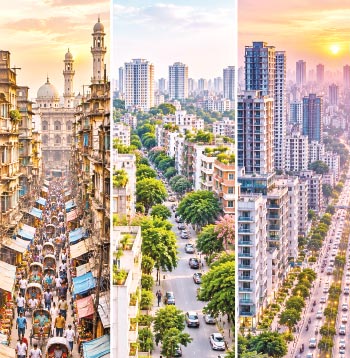 Dhaka’s housing landscape is changing fast. Old one- and two-storey houses are being replaced by high-rise buildings. More flats are being built on the same piece of land, allowing more people to live in one area.
This change is understandable as land is limited and the population continues to grow. But an important question remains: how many people can an area support, and where should the limit of housing density be?
The issue is not only about the number of buildings or residents. As the number of people increases, demand for water, electricity, gas, drainage, waste management, transport and other civic services also rises.
So, the capacity of an area must be considered together with its population.
Tareq Aziz has been working for years on power and energy management. One of his important areas of research is how electricity use by residential consumers can be managed more efficiently.
His research on electricity use among residential consumers in Dhaka has also highlighted the issue of growing residential load and the need for better management of electricity demand.
From this perspective, housing density in Dhaka cannot be measured only by the amount of land or the number of buildings. The more families living in a high-rise building, the greater the pressure on electricity, water, lifts, pumps, parking and other services.
If the number of high-rise buildings increases rapidly in the same area, the pressure on local infrastructure can become even greater.
Dhaka’s housing transformation also shows how low-density residential areas are gradually becoming high-density areas with taller buildings. At the same time, open spaces and walking areas are becoming limited, while pressure on roads and movement is increasing.
High-rise buildings, however, are not necessarily a problem. Properly planned high-rise housing can be an effective way to accommodate more people on limited land.
The problem begins when building density increases without a corresponding increase in infrastructure and civic services.
For example, an area with 10 high-rise buildings will require a certain amount of electricity and water. If the number rises to 50 buildings, demand for these services will increase significantly.
Roads, parking, drainage and waste management will also face greater pressure. During hot weather, increased use of air conditioners and other electrical appliances in residential buildings can further raise peak electricity demand.
This is why future housing plans should ask not only how many flats can be built, but also how much infrastructure will be needed to support the people living in those flats.
Housing density should be assessed through several indicators. These include the number of people and apartments per acre, building height, Floor Area Ratio or FAR, road width and the amount of open space.
The capacity of water supply, electricity, drainage, public transport, schools, hospitals and emergency services should also be considered.
Energy efficiency should also become an important part of future housing planning. Building design, natural light and ventilation, efficient use of electricity and smart energy management can help reduce pressure on resources even in high-density areas.
For Dhaka, therefore, the question is not simply how tall buildings should be. The bigger question is how many people a building and its surrounding area can accommodate without putting excessive pressure on infrastructure and services.
A city is not simply a collection of buildings. It is a place where people need services, mobility, open space, safety and a healthy environment.
Dhaka has limited land, but the demand for housing continues to grow. High-rise housing will therefore remain an important part of the city’s future.
But if greater building height and population density are not matched by proper planning, infrastructure and energy management, efforts to accommodate more people may create additional pressure on the city.
The question, therefore, is not simply whether high-rise buildings should stop. The more important question is where, how much and what type of density an area can safely support.
That is where the real calculation of Dhaka’s future housing needs should begin.

Loading...
Loading...
Also read



Editor : Iqbal Sobhan Chowdhury
Published by the Editor on behalf of the Observer Ltd. from Globe Printers, 24/A, New Eskaton Road, Ramna, Dhaka.
Editorial, News and Commercial Offices : Aziz Bhaban (2nd floor), 93, Motijheel C/A, Dhaka-1000.
Phone: PABX- 41053001-06; Advertisement: 41053012; 01793317829, 01550707291, E-mail: [email protected], [email protected] Online: email: [email protected] 41053014; 01550707297 Advertisement: 01550707296
Published by the Editor on behalf of the Observer Ltd. from Globe Printers, 24/A, New Eskaton Road, Ramna, Dhaka.
Editorial, News and Commercial Offices : Aziz Bhaban (2nd floor), 93, Motijheel C/A, Dhaka-1000.
Phone: PABX- 41053001-06; Advertisement: 41053012; 01793317829, 01550707291, E-mail: [email protected], [email protected] Online: email: [email protected] 41053014; 01550707297 Advertisement: 01550707296


