



| HEADLINE |

|

Behind the Blue Helmet: The Untold Story of Bangladesh's Peacekeepers
Published : Wednesday, 14 October, 2026 at 12:00 AM
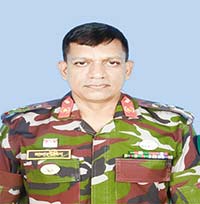
Colonel Syed Salauddin Mahmud, psc


 It started small. In 1988, Bangladesh sent 15 military observers to the United Nations Iran-Iraq Military Observer Group (UNIIMOG), and few people would have guessed where that would lead. According to the Armed Forces Division (AFD), the country has since completed 63 missions and assignments in around 43 countries and locations, with 206,476 personnel taking part. The UN has noticed. When Secretary-General António Guterres visited Dhaka in March 2025, he called Bangladesh “among the largest contributors to United Nations peacekeeping” and paid tribute to the sacrifice of its peacekeepers. Ban Ki-moon was even more direct back in 2011, telling Bangladeshi peacekeepers at BIPSOT, “No nation contributes more to our efforts than you”. As of June 2026, 4,212 Bangladeshi peacekeepers were serving in nine missions. Numbers like these are impressive, but they say little about the people behind them, or about the years of patient work in difficult places that earned the country its standing.
The World Behind the Blue Helmet
Step outside a mission camp and the picture changes quickly. The roads are poor, bridges are damaged, forests are dense and phone signals are weak. Local communities often live under the shadow of armed groups. Bangladeshi peacekeepers work in missions such as MINUSCA, MONUSCO, UNMISS, UNISFA and MINURSO. In my experience, even an ordinary patrol can go wrong in a matter of minutes. IEDs, ambushes, drone attacks, disease, harsh weather and supply shortages all come with the job.The last MINUSMA convoy shows how bad it can get. In November 2023, 848 peacekeepers travelled in 143 vehicles from Kidal to Gao, more than 350 kilometres, with no air cover. Six mine explosions hit the convoy, injuring 37 personnel and damaging seven vehicles. Bangladeshis have also been killed in attacks in Mali and the Central African Republic. And the danger keeps changing shape. On 13 December 2025, a drone struck the UNISFA logistics base in Kadugli, Sudan, killing six Bangladeshi peacekeepers and injuring nine.Remote postings add their own burdens: patchy mobile coverage, heat and humidity, heavy rain, long supply routes and slow medical evacuation. It is rarely one threat that wears people down. It is all of them at once.
Lessons from the Field: A Peacekeeper’s Experience
I have served in three UN missions, so I have seen some of this first-hand. The most recent was MINUSCA in the Central African Republic (CAR), where I worked as a Military Observers Coordinator. Elections were held on 28 December 2025, and just getting around was hard: bad roads, heavy rain, rough terrain, and armed groups to worry about. Still, the Bangladeshi peacekeepers kept going. They carried out their duties, supported the electoral process and helped local communities.Before that, I was in Mali with MINUSMA (2016-2017) as a Signal Detachment Commander. IEDs, ambushes and attacks on UN installations were a constant threat. One incident I still remember clearly happened on 29 November 2016. Two vehicles disguised as UN vehicles, both loaded with explosives, approached Gao Airport. The first broke through the gate and exploded about 130 metres inside, destroying UN offices and damaging aircraft and the terminal. The second reached the tarmac and crashed into a MINUSMA helicopter, but its explosive device failed to detonate.
A Bangladeshi platoon was stationed at the airport, and all of its personnel escaped unharmed.My first mission was UNMISS in Sudan (2006-2007), where I served as a Military Police Detachment Commander. Every mission was different, but they all taught me the same thing. The work takes courage and patience, and it takes discipline, of course. Mostly, though, it takes real concern for people. I have watched Bangladeshi peacekeepers do it far from home, often in danger, with a good deal of humanity.
Bangladesh is among the largest contributors to United Nations peacekeeping. No nation contributes more to our efforts than you: António Guterres, UN Secretary General
The Price of Peace: Sacrifice, Deaths, Injuries and Families
Bangladesh’s record has a painful human side. By June 2026, 174 Bangladeshi peacekeepers had died and 287 had been injured while serving under the UN flag. Each of those numbers is a person who left home to serve, and a family whose life changed afterwards.Take Sainik Abdur Rahim. He was killed on 5 January 2017 while serving with MINUSCA in the Central African Republic. UN records say he died in Bokayai while driving an escort for military observers. He left behind his wife and a five-month-old son. In Mali, Sainik Md Monowar Hossain, Sergeant Md Altaf Hossin and Lance Corporal Md Jakirul Alam Sarkar were killed on 24 September 2017 while serving with MINUSMA. More recently, six Bangladeshi peacekeepers died in the drone attack on the UNISFA base in Kadugli on 13 December 2025. They were later honoured with the Dag Hammarskjöld Medal.The losses don’t stay in the mission area. A spouse has to raise children alone. A child grows up with photographs instead of memories. Parents keep waiting for a son who isn’t coming home. Peace has a price, and families like these pay a large part of it.
What Makes Bangladesh a Trusted Peacekeeping Partner?
Part of the answer is simply time. Bangladesh’s reputation has been built over decades, and it rests on how its personnel do their jobs, not only on how many are sent. In 2023, UN Resident Coordinator Gwyn Lewis praised the country’s steadfast contribution to peacekeeping. Bangladeshis have worked in military, engineering, medical, aviation, logistics and staff roles, often in unfamiliar terrain and beside colleagues from many countries.Training matters a great deal here. BIPSOT runs specialised courses for military, police and civilian participants in line with international standards. But training only gets people to the starting line. The reputation is earned in the field, through discipline, professionalism, respect for local people and the ability to work in a multinational team. Decades of experience have helped build those habits, and mission leadership has come to rely on Bangladeshi contingents because
of them.
Women in Peacekeeping
Women are taking on a bigger part in Bangladesh’s peacekeeping work. The AFD reports that 1,977 women from the Bangladesh Armed Forces have served in UN peace operations, and 288 are deployed at present. It is not just a matter of representation. In many host communities, women and girls find it easier to talk to women peacekeepers, especially where cultural barriers or fear make them reluctant to approach male personnel. The UN has recognised this value in reaching vulnerable groups and addressing protection concerns. There is a second benefit too. More women taking part means more opportunities for women in the security sector, and a stronger Bangladeshi contribution to international peace and security.
Peacekeeping Beyond Security
Security is only part of what a peacekeeper offers. Trust with local people matters just as much, and Bangladeshi contingents have built it through medical care, education and engineering work. In the Central African Republic, they have supplied medicines to community hospitals, helped rehabilitate a school, handed out school materials and supported youth sports. In a more recent civil-military activity in the north-west of the country, a Bangladesh contingent gave free medical care to 372 patients and donated school materials, water tanks and medicines to local institutions. In South Sudan, Bangladeshi engineers rehabilitated the 189-kilometre Yambio-Tambura road, which UNMISS described as a lifeline for local communities. Going back further, the third Bangladesh Signals Battalion in Sierra Leone built two eight-classroom blocks at a village school in Tokeh.These are only a handful of examples, and plenty of similar work never makes the news. It matters to the people on the receiving end all the same. Peacekeeping isn’t only patrols and protection. It also means helping communities get back some sense of normal life.
Making a Peacekeeper
Putting on a blue helmet doesn’t make anyone a peacekeeper. The preparation starts long before deployment. Once a unit is selected, it trains together as a formed contingent, learning common procedures and getting to know the mission environment. BIPSOT is central to this. It offers specialised training to national and multinational military, police and civilian participants, and pre-deployment training is compulsory for selected personnel of earmarked contingents. Courses cover protection of civilians, counter-IED measures, conflict-related sexual violence, and women, peace and security.Bangladesh’s own history adds another layer. The AFD points to the Liberation War of 1971 as an important source of the country’s commitment to global peace. It notes that having lived through conflict and humanitarian suffering helps Bangladesh understand what people caught in war go through. The Bangladesh Army has also gained experience through operations in the Chittagong Hill Tracts. Taken together, the training and the experience prepare personnel for harsh conditions. They are also a reminder that how a peacekeeper behaves shapes the way local people see the UN, and Bangladesh.
The Dividends of Deployment
Peacekeeping pays back in other ways too: economically, professionally and diplomatically. The UN reimburses troop-contributing countries for personnel, major equipment and self-sustainment services provided under formal arrangements. Over the 23 fiscal years from 2000-01 to 2022-23, the Armed Forces earned Tk 27,941 crore from UN peacekeeping, which averages out to about Tk 1,214 crore a year. Another Tk 862 crore was reported for FY 2023-24. Beyond the money, deployment gives personnel experience of multinational operations, builds skills and creates international networks. So peacekeeping serves global peace, but it is also an investment in Bangladesh’s own capacity and relationships.
From Experience to Future Readiness
Experience is only useful if it gets put to work, and the challenges ahead look different. Peacekeeping threats keep evolving, and missions will need more than traditional military skills. A UN-commissioned study highlights the need to consider new technologies and changing security conditions. Under-Secretary-General Atul Khare has likewise pointed to unmanned aerial systems, counter-IED and counter-drone capabilities, digital transformation and better training. Bangladesh has started to adapt. Simulation-based training at BIPSOT is making preparation more realistic for asymmetric threats. More attention to counter-drone measures, cyber awareness, information management and fast decision-making will help. None of this is meant to replace the values that guide Bangladeshi peacekeepers. The goal is to let them do the job safely and well in a changing environment.
Conclusion
Every blue helmet has a story behind it, and most of those stories never make a headline. Bangladesh’s peacekeeping journey is one of service and sacrifice, of professionalism and human connection. Statistics show the scale of it, but they can’t capture the danger, the families waiting at home, the trust built with communities or the help given to people who needed it. Decades of experience have given Bangladesh a solid foundation. The job now is to hold on to what has been learned while getting ready for what comes next.For those of us who have worn it, the blue helmet is a symbol of military service, yes, but it also stands for Bangladesh’s commitment to peace, the dignity of its people, and the hope that a safer future is still possible, even in the hardest places.
The writer is a colonel of Bangladesh Army

Loading...
Loading...
Also read



Editor : Iqbal Sobhan Chowdhury
Published by the Editor on behalf of the Observer Ltd. from Globe Printers, 24/A, New Eskaton Road, Ramna, Dhaka.
Editorial, News and Commercial Offices : Aziz Bhaban (2nd floor), 93, Motijheel C/A, Dhaka-1000.
Phone: PABX- 41053001-06; Advertisement: 41053012; 01793317829, 01550707291, E-mail: [email protected], [email protected] Online: email: [email protected] 41053014; 01550707297 Advertisement: 01550707296
Published by the Editor on behalf of the Observer Ltd. from Globe Printers, 24/A, New Eskaton Road, Ramna, Dhaka.
Editorial, News and Commercial Offices : Aziz Bhaban (2nd floor), 93, Motijheel C/A, Dhaka-1000.
Phone: PABX- 41053001-06; Advertisement: 41053012; 01793317829, 01550707291, E-mail: [email protected], [email protected] Online: email: [email protected] 41053014; 01550707297 Advertisement: 01550707296


