



| HEADLINE |

|

Pakistan worst-hit by hunger in South Asia
Published : Thursday, 15 October, 2026 at 1:46 PM
Observer Online Report


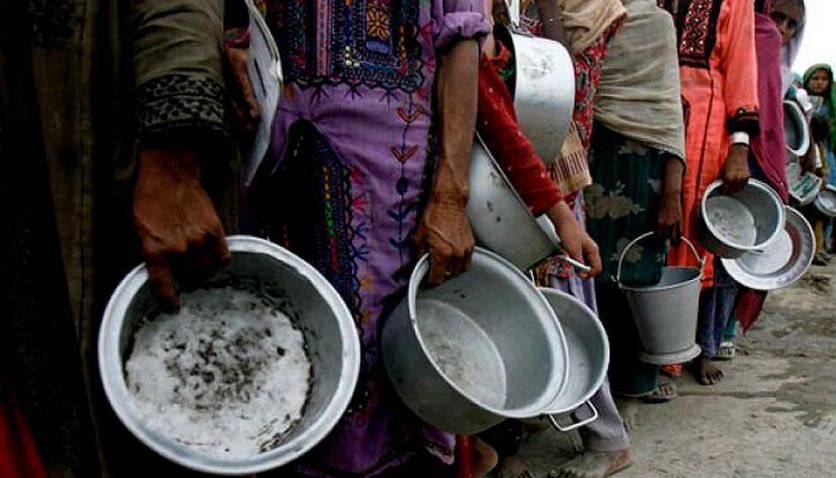
Pakistan has recorded the worst hunger situation in South Asia in the Global Hunger Index (GHI) 2026, as economic instability, climate disasters and global conflicts continue to undermine food security across the region, according to a report published by Pakistani newspaper Dawn.
The report, released on Wednesday under the theme “No Security Without Food Security,” was jointly published by Welthungerhilfe, the Institute for International Law of Peace and Armed Conflict (IFHV) at Ruhr University Bochum, and Swiss organisation Helvetas.
According to the report, economic instability and soaring food prices have eroded purchasing power in Pakistan, restricting people's access to adequate food.
The country's undernourishment level has deteriorated from the “low” category in 2018 to the “moderate” category, while the rate of child wasting has moved towards a higher level.
Across South Asia, hunger remains a serious concern, with the region recording a GHI score of 23.5. Although the situation has improved considerably from the extremely alarming score of 37.5 in 2000, most of the progress occurred before 2018.
Pakistan and Afghanistan have both improved from the extremely alarming hunger levels recorded in 2000. However, child stunting remains widespread in both countries.
The report warned that South Asia remains highly vulnerable to severe food insecurity.
Heavy rainfall and flooding have caused localised crop damage in parts of Pakistan and Bangladesh. In Afghanistan, below-average rainfall and rising temperatures have severely disrupted the country's 2026 crop production outlook.
The report also highlighted a worsening global hunger situation after nearly two decades of progress.
The Global Hunger Index score rose to 18.1 in 2026, compared with 17.6 in 2018. Since 2018, hunger has increased in 32 countries, while 57 countries are not on track to achieve the target of reaching low hunger levels by 2030.
Of the index's four indicators, three have deteriorated: undernourishment, child stunting and child wasting. Only child mortality has shown some improvement.
Disruptions to shipping through the Strait of Hormuz and the Bab el-Mandeb Strait amid conflict involving Iran have driven up energy, transport and fertiliser costs, according to the report.
Meanwhile, Russia's war in Ukraine and restrictions on exports through the Black Sea have heightened the risk of rising wheat prices, potentially putting staple foods beyond the reach of poorer populations in developing countries.
The crisis has been compounded by declining international assistance. Global spending on food security has fallen to levels last seen in 2016–2017, forcing humanitarian organisations to cut aid programmes and emergency relief allocations.
The report urged governments to reverse cuts to humanitarian assistance and data collection budgets to strengthen the international community's ability to prevent and respond to severe food crises.
It warned that without sustained investment in food security, humanitarian assistance and reliable data, vulnerable populations could face further deterioration in access to adequate nutrition.
The report, released on Wednesday under the theme “No Security Without Food Security,” was jointly published by Welthungerhilfe, the Institute for International Law of Peace and Armed Conflict (IFHV) at Ruhr University Bochum, and Swiss organisation Helvetas.
It warned that progress in reducing hunger across South Asia had largely stalled, with conditions deteriorating in Pakistan and Afghanistan since 2018.
Economic crisis worsens hunger in Pakistan
According to the report, economic instability and soaring food prices have eroded purchasing power in Pakistan, restricting people's access to adequate food.
The country's undernourishment level has deteriorated from the “low” category in 2018 to the “moderate” category, while the rate of child wasting has moved towards a higher level.
Across South Asia, hunger remains a serious concern, with the region recording a GHI score of 23.5. Although the situation has improved considerably from the extremely alarming score of 37.5 in 2000, most of the progress occurred before 2018.
Pakistan and Afghanistan have both improved from the extremely alarming hunger levels recorded in 2000. However, child stunting remains widespread in both countries.
While Pakistan has gradually reduced its child stunting rate, Afghanistan has experienced a slight increase since 2018. Child mortality, which was extremely high in both countries in 2000, has declined to moderate levels.
Climate shocks threaten food security
The report warned that South Asia remains highly vulnerable to severe food insecurity.
Heavy rainfall and flooding have caused localised crop damage in parts of Pakistan and Bangladesh. In Afghanistan, below-average rainfall and rising temperatures have severely disrupted the country's 2026 crop production outlook.
According to estimates by the United Nations Food and Agriculture Organization (FAO), around 218 million people across South Asia, including Iran, suffered from undernourishment between 2023 and 2025. That figure represents nearly one-third of the global total.
Global hunger reverses years of progress
The report also highlighted a worsening global hunger situation after nearly two decades of progress.
The Global Hunger Index score rose to 18.1 in 2026, compared with 17.6 in 2018. Since 2018, hunger has increased in 32 countries, while 57 countries are not on track to achieve the target of reaching low hunger levels by 2030.
Of the index's four indicators, three have deteriorated: undernourishment, child stunting and child wasting. Only child mortality has shown some improvement.
The report identified armed conflict and increasingly frequent extreme weather events as major drivers of the global deterioration. State-based armed conflicts have reached their highest level since the Second World War, intensifying pressure on food production and distribution.
Conflicts and aid cuts add to the crisis
Disruptions to shipping through the Strait of Hormuz and the Bab el-Mandeb Strait amid conflict involving Iran have driven up energy, transport and fertiliser costs, according to the report.
Meanwhile, Russia's war in Ukraine and restrictions on exports through the Black Sea have heightened the risk of rising wheat prices, potentially putting staple foods beyond the reach of poorer populations in developing countries.
The crisis has been compounded by declining international assistance. Global spending on food security has fallen to levels last seen in 2016–2017, forcing humanitarian organisations to cut aid programmes and emergency relief allocations.
The report urged governments to reverse cuts to humanitarian assistance and data collection budgets to strengthen the international community's ability to prevent and respond to severe food crises.
It warned that without sustained investment in food security, humanitarian assistance and reliable data, vulnerable populations could face further deterioration in access to adequate nutrition.

Loading...
Loading...
Also read








Editor : Iqbal Sobhan Chowdhury
Published by the Editor on behalf of the Observer Ltd. from Globe Printers, 24/A, New Eskaton Road, Ramna, Dhaka.
Editorial, News and Commercial Offices : Aziz Bhaban (2nd floor), 93, Motijheel C/A, Dhaka-1000.
Phone: PABX- 41053001-06; Advertisement: 41053012; 01793317829, 01550707291, E-mail: [email protected], [email protected] Online: email: [email protected] 41053014; 01550707297 Advertisement: 01550707296
Published by the Editor on behalf of the Observer Ltd. from Globe Printers, 24/A, New Eskaton Road, Ramna, Dhaka.
Editorial, News and Commercial Offices : Aziz Bhaban (2nd floor), 93, Motijheel C/A, Dhaka-1000.
Phone: PABX- 41053001-06; Advertisement: 41053012; 01793317829, 01550707291, E-mail: [email protected], [email protected] Online: email: [email protected] 41053014; 01550707297 Advertisement: 01550707296


