



| HEADLINE |

|

Dr Abdul Awal's new book explores linguistic identity
Published : Friday, 30 October, 2026 at 7:37 PM
Press Release


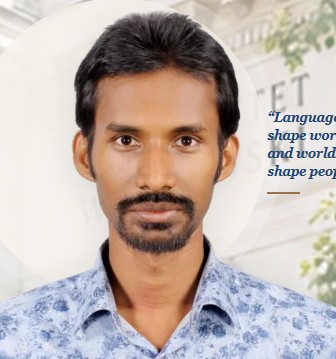
Dr. Abdul Awal examines how English shapes educational opportunity, social inequality and cultural identity in Bangladesh in a new book from Brill, published in October 2026, bringing the experiences of Bangladeshi students and teachers into international debates on language and power.
Titled English, Power, and Inequality: Linguistic Imperialism and the Localisation of English in Bangladesh, the book connects the aspirations associated with English to questions about access, colonial legacies and the emergence of a locally rooted variety of the language.
Awal is a faculty member of the Chair of South Asian Studies, Faculty of Asian and African Cultures, University of Warsaw, Poland. His new book examines the opportunities associated with English while considering how unequal access to education can reinforce social divisions. It also explores the continuing influence of colonial language hierarchies on ideas about educational success, cultural belonging and linguistic authority.
A central strand concerns Bangladeshi English and the relationship between pronunciation, identity and acceptance. Awal examines perceptions and attitudes towards Bangladeshi and British English, placing local speakers’ experiences within World Englishes. Moreover, acoustic analysis complements this discussion by comparing vowel and consonant features in Bangladeshi English and British Received Pronunciation through recorded speech. By connecting pronunciation with social attitudes, the book provides material for considering how English teaching can respond to learners’ linguistic identities and local communicative needs.
The book appears as Volume 6 of Brill’s Language Learning and Multilingualism series. It examines language education through learners’ multilingual experiences, identities and abilities, encompassing formal and informal learning.
The series is led by editor-in-chief Professor Piotr Romanowski of the University of Warsaw. Romanowski launched the series with associate editors Louisa Willoughby of Monash University, Australia, and Catherine Chua of the University of Calgary, Canada. Its international editorial board includes scholars such as Ofelia García, Li Wei and Jasone Cenoz, placing the series within a broad scholarly conversation about multilingual education and linguistic diversity.
Brill brings more than three centuries of scholarly publishing to the volume, founded in Leiden in 1683. For educators, researchers and policymakers, the book offers a Bangladesh-focused contribution to discussions about English and educational equity. It brings together the pursuit of international opportunity and the recognition of local linguistic identities, placing local voices within a wider examination of who benefits from the global reach of English.

Loading...
Loading...
Also read


Editor : Iqbal Sobhan Chowdhury
Published by the Editor on behalf of the Observer Ltd. from Globe Printers, 24/A, New Eskaton Road, Ramna, Dhaka.
Editorial, News and Commercial Offices : Aziz Bhaban (2nd floor), 93, Motijheel C/A, Dhaka-1000.
Phone: PABX- 41053001-06; Advertisement: 41053012; 01793317829, 01550707291, 01550707296
E-mail: [email protected], [email protected]. [email protected], [email protected], [email protected], [email protected], Online-email: [email protected]


