



| HEADLINE |

|

Bangladesh Squanders Demographic Dividend as 58m Remain in Informal Jobs
Published : Wednesday, 4 November, 2026 at 12:00 AM
Business Correspondent


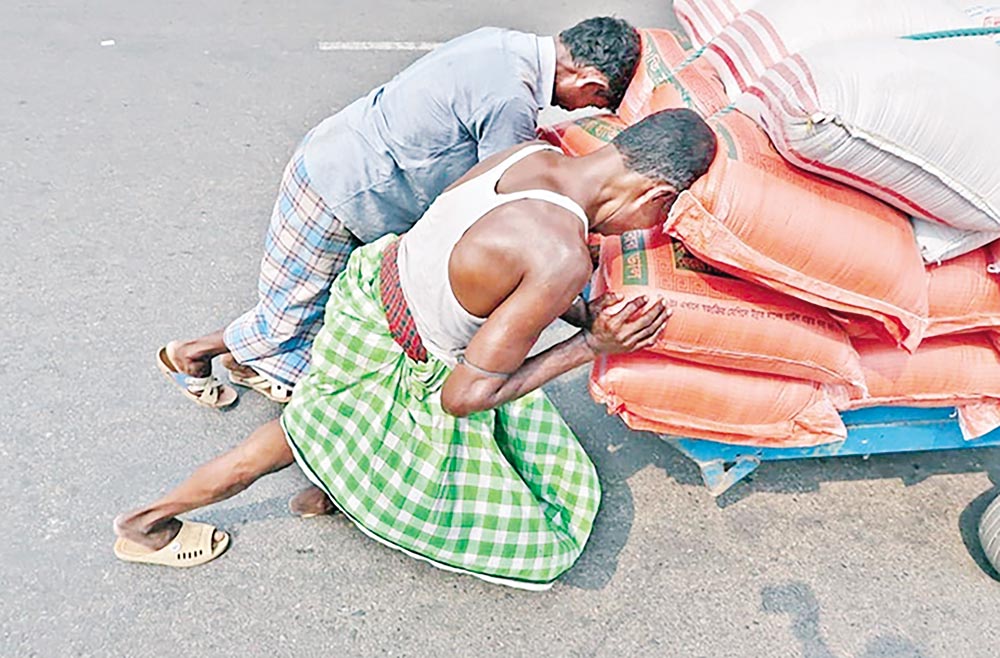 Bangladesh is squandering its demographic dividend, with around 58 million workers trapped in informal employment and university graduates increasingly struggling to find formal jobs, while the country has less than two decades to capitalise on its expanding working-age population.
The warning came from the World Bank on Tuesday as it unveiled a report titled “Demographic Change in South Asia: From Tailwinds to Headwinds for Development” at a hotel in the capital, urging Bangladesh to accelerate job creation, upgrade workforce skills and strengthen social protection before its demographic window begins to close.
The report found that around 84 per cent of Bangladesh's workforce, or approximately 58 million people, are employed in the informal sector. Even university graduates are struggling to secure formal jobs, with around 44 per cent working in informal employment.
The challenge is becoming increasingly urgent. Bangladesh's working-age population is projected to peak in 2045, giving the country nearly two decades to harness its demographic advantage before the proportion of working-age people starts declining.
By 2051, Bangladesh is expected to become an ageing society, intensifying pressure on healthcare, pensions and social protection systems.
Against this backdrop, the World Bank called for urgent structural reforms to generate productive employment, improve market-relevant skills and remove barriers to women's participation in the workforce.
The report also pointed to sluggish employment growth in formal enterprises, while smaller firms have reduced their average workforce in recent years, undermining the economy's capacity to absorb new entrants into the labour market.
Jean Pesme, World Bank Division Director for Bangladesh and Bhutan, said the country's ability to turn its demographic potential into economic prosperity would depend on the actions taken now.
He stressed the need to help businesses generate better-quality jobs, equip young people with market-relevant skills and remove barriers preventing women from entering the workforce.
At the same time, Bangladesh must strengthen healthcare services and financial security for older people, which will require greater domestic revenue mobilisation, he said.
The economic stakes are substantial. According to the report, the growing share of working-age people has contributed an additional 0.4 percentage points to South Asia's annual GDP growth since 2000, while labour productivity has increased by 1.1 per cent annually over the same period.
But this demographic tailwind is weakening rapidly. The contribution of demographic changes to annual GDP growth in South Asia is projected to decline from 0.4 percentage points to just 0.1 percentage points between 2024 and 2050.
Johannes Zutt, World Bank Vice President for South Asia, said countries across the region were ageing rapidly at relatively low levels of per capita income.
He underscored the urgency of adopting policies that generate better employment opportunities and developing the infrastructure needed to support an ageing population.
Creating opportunities for healthy older people to remain economically active could also help countries secure a second demographic dividend in the future, he said.
The report estimated that South Asia currently has around 1.17 billion working-age people. However, the region's working-age population is expected to peak and begin declining in less than a decade.
By 2049, South Asia is projected to become an ageing region, with people aged 65 and above accounting for 14 per cent of its population. Bangladesh is expected to reach this threshold in 2051.
The region's preparedness for this transition remains particularly weak. Only 17 per cent of the working-age population contribute to pension schemes, while just 10 per cent of older people receive some form of pension benefit, the lowest coverage rate in the world, according to the report.
To avert the looming demographic challenge, the World Bank recommended simultaneous action on two fronts.
First, countries must expand productive employment, improve access to finance for small and medium-sized enterprises, simplify business regulations and invest in healthcare, education and skills development. Removing barriers to women's employment is equally critical.
Second, governments must urgently strengthen healthcare, long-term care and pension systems for older people while encouraging savings and investment to raise productivity.
The World Bank warned that failure to implement these measures before the demographic window closes could undermine long-term economic growth and place an increasingly heavy burden on future generations.

Loading...
Loading...
Also read



Editor : Iqbal Sobhan Chowdhury
Published by the Editor on behalf of the Observer Ltd. from Globe Printers, 24/A, New Eskaton Road, Ramna, Dhaka.
Editorial, News and Commercial Offices : Aziz Bhaban (2nd floor), 93, Motijheel C/A, Dhaka-1000.
Phone: PABX- 41053001-06; Advertisement: 41053012; 01793317829, 01550707291, 01550707296
E-mail: [email protected], [email protected]. [email protected], [email protected], [email protected], [email protected], Online-email: [email protected]


