



| HEADLINE |

|

BNP marks Nov 7 with week-long tribute to Ziaur Rahman
Published : Saturday, 7 November, 2026 at 12:12 AM
Observer Online Report


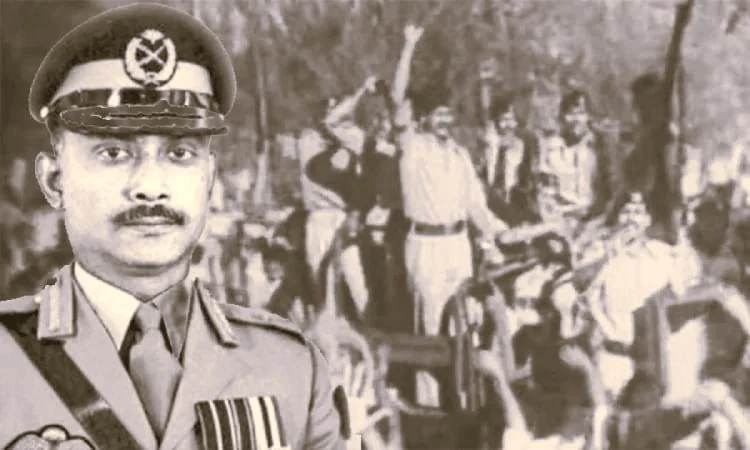
The party will honour its founder, highlight his contributions to Bangladesh and reaffirm its commitment to national unity and sovereignty
November 7 holds a special place in the political history of Bangladesh and the political heritage of the Bangladesh Nationalist Party (BNP). Marking the historic day, the party has announced a week-long programme to honour its founder, Shaheed President Ziaur Rahman, celebrate his political legacy and highlight the ideals of nationalism, national unity and sovereignty.
The BNP will observe the occasion, known as National Revolution and Solidarity Day, through a series of programmes from November 5 to 11, with tributes to Ziaur Rahman and a grand rally in the capital among the major highlights
Ziaur Rahman at the centre of November 7
The events of November 7, 1975, marked a significant turning point in Bangladesh's political and military history. Amid widespread instability following a series of political upheavals, then army chief Ziaur Rahman was freed from house arrest at Dhaka Cantonment through an uprising involving members of the armed forces and civilians.
For the BNP, the day represents national solidarity, independence and the protection of Bangladesh's sovereignty. It also reflects the political legacy of Ziaur Rahman, whose leadership subsequently played a defining role in shaping the country's political landscape.
Although the events of November 7 remain subject to different historical interpretations, the BNP continues to commemorate the day as an important chapter in the nation's history.
From the Liberation War to national leadership
Ziaur Rahman's contribution to the Liberation War remains a significant part of his political legacy. On March 27, 1971, then Major Ziaur Rahman broadcast the declaration of independence from Kalurghat Radio Station in Chattogram. He later served as a sector commander and commander of Z Force during the war, earning the Bir Uttam gallantry award for his contribution.
Following independence, he held several important military responsibilities before emerging as a central figure in national politics during the turbulent political developments of 1975.
He assumed the presidency on April 21, 1977, and introduced a series of initiatives focusing on agricultural production, rural development, irrigation, employment generation, manpower exports and private-sector growth.
His 19-point programme became a major component of his development-oriented political vision, with particular emphasis on self-reliance, rural progress and national development.
BNP's founding and the expansion of Bangladesh nationalism
On September 1, 1978, Ziaur Rahman founded the Bangladesh Nationalist Party, placing Bangladeshi nationalism at the centre of its political philosophy.
The party quickly emerged as a major political force, securing a decisive victory in the 1979 parliamentary election and establishing a strong nationwide political organisation.
Following Ziaur Rahman's assassination in 1981, Begum Khaleda Zia took over the party's leadership and carried forward its political legacy. Under her leadership, the BNP became one of the country's leading political forces, playing significant roles in both government and opposition.
Over the decades, the party's commitment to Bangladeshi nationalism, democratic politics and national sovereignty has remained central to its political identity.
Seven-day programme to honour the party founder
The BNP has announced a seven-day programme from November 5 to 11 to mark National Revolution and Solidarity Day in 2026.
According to the programme, national and party flags will be raised at 6am on November 7 at the party's central office in Nayapaltan and offices across the country.
At 11am, BNP Chairman and Prime Minister Tarique Rahman, accompanied by senior party leaders, will pay floral tributes at the graves of Shaheed President Ziaur Rahman and former Prime Minister Begum Khaleda Zia. The programme will also include prayers and recitation of Fateha.
A major highlight of the celebrations will be a colourful rally scheduled to begin at 3pm from in front of the BNP's central office in Nayapaltan, led by Prime Minister Tarique Rahman. Similar rallies will be organised in different districts and metropolitan areas across the country.
The party will also arrange programmes at the thana and upazila levels on November 8. Its affiliated and associate organisations will organise discussions, photographic exhibitions and cultural events as part of the week-long celebrations.
Preserving a political legacy for future generations
For the BNP, November 7 is more than an annual commemoration. It provides an opportunity to revisit the political journey of its founder, highlight his contribution to the country's independence and development, and present the ideals that shaped the party's identity.
Ziaur Rahman's journey from a Liberation War commander to head of state and founder of a major political party remains a defining part of the BNP's historical narrative.
Through this year's extensive programme, the party aims to bring his legacy, the spirit of national solidarity and the principles of Bangladeshi nationalism to the forefront of national political discourse.
As the BNP marks the occasion with nationwide activities, November 7 is set to serve as an important moment for the party to honour its founder and reconnect its political heritage with a new generation.

Loading...
Loading...
Also read





Editor : Iqbal Sobhan Chowdhury
Published by the Editor on behalf of the Observer Ltd. from Globe Printers, 24/A, New Eskaton Road, Ramna, Dhaka.
Editorial, News and Commercial Offices : Aziz Bhaban (2nd floor), 93, Motijheel C/A, Dhaka-1000.
Phone: PABX- 41053001-06; Advertisement: 41053012; 01793317829, 01550707291, 01550707296
E-mail: [email protected], [email protected]. [email protected], [email protected], [email protected], [email protected], Online-email: [email protected]


