



| HEADLINE |

|
Blurred futures: Tackling the growing threat of Myopia
Published : Friday, 2 January, 2026 at 12:00 AM
Nafew Sajed Joy


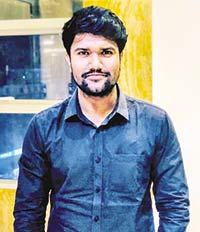 After finishing my annual exams, I spent the days doing almost nothing productive. I would sit at home all day reading books and watching series. Every evening, I would turn off the lights, hold my phone close to my eyes, and watch new movies for long hours. I followed this routine for about four to five months. During this period, I rarely went out in daylight, if I did go outside, it was only in the evening or at night.
After a long time, one afternoon, I had to go out for some errands. Suddenly, I noticed that the distant world, which I used to see clearly, had become blurry. Though this had happened occasionally before, rubbing my eyes would usually bring my vision back to normal. But this time, it didn't work. I immediately rushed to a government hospital, and after some tests, the doctor prescribed me glasses. I wasn't convinced, I felt like my eyes were actually fine and maybe the diagnosis wasn't accurate. Hoping for a different result, I visited another doctor, but the outcome was the same.
This is my story, but many others don't understand or acknowledge this problem. In many cases, people also can't afford proper treatment. The International Myopia Institute (IMI), a global research organization that works on myopia awareness and research, has reported that myopia is becoming one of the fastest-growing eye problems in the world. Their research shows that currently, about 30% of the global population is affected by myopia, and by 2050, nearly 50% (around 5 billion people) will be affected, among whom 1 billion will suffer from high myopia.
Similarly, a study published on PubMed states that by 2050, around 52% of the world population will be affected by myopia, with 10% suffering from high myopia. In 2010, the global prevalence was about 27%. Experts have warned that the rising rate of myopia is not just about needing glasses, high myopia significantly increases the risk of glaucoma, cataracts, and retinal detachment, which can lead to permanent vision loss.
According to the IMI report, East and Southeast Asia are the most high-risk regions. Among youth in countries like South Korea, Taiwan, Singapore, China, and Japan, the prevalence of myopia is between 80-90%. In contrast, countries like Paraguay and Uganda have a prevalence rate of just 1%. Among Western nations, around 15% of people in the UK, Ireland, and the US are nearsighted. However, in the US, this rate has nearly doubled over the past three decades, now affecting about 42% of the population.
An article published in The Lancet Regional Health - Europe reports that the overall average prevalence of myopia in Europe is 23.5%, which is significantly lower compared to many East Asian countries. However, this continental average masks major country-to-country variations, from as low as 11.9% in Finland to as high as 49.7% in Sweden. The study also emphasizes that the diagnostic method used plays a crucial role in determining prevalence. When researchers used cycloplegic refraction, a method that temporarily relaxes the eye's focusing muscles and is considered much more accurate, the prevalence was found to be only 18.9%. But using the less accurate non-cycloplegic method, the rate increased to 31.2%. This shows that different testing methods can lead to significant overestimation.
The study also found that the rate of myopia is closely linked to age. Reliable cycloplegic measurements showed that the prevalence among children aged 6-11 was 5.5%, which suddenly jumps to 25.2% among adolescents aged 12-17, and remains nearly the same24.3%, among young adults aged 18-39. However, No significant difference was found between males and females. While the prevalence of myopia in Europe has slowly increased over the past few decades, the trend is less dramatic than expected, and when accounting for age and diagnostic method, the situation appears much more stable compared to other regions.
So, what is myopia? Myopia, or nearsightedness, is a type of refractive error where close objects appear clear, but distant objects appear blurry. It usually begins during school years and progresses into early adulthood. Moderate to severe myopia increases the risk of developing glaucoma, cataracts, macular degeneration, and retinal detachment later in life. The back of the eye has a small central area in the retina called the macula, which allows us to see fine details clearly. It enables us to see distant objects such as writing on a board or the facial features of someone far away. If the macula is damaged, vision gradually becomes blurry, especially central vision, though peripheral vision typically remains intact.
Myopia cannot be reversed. But there's no reason to panic. With proper treatment, its progression can be slowed, even though it can't be undone. Often, the symptoms of myopia take time to become noticeable. Many children don't realize they have a vision problem, and in many cases, parents also fail to recognize its seriousness. Yet, if detected early and managed on time, it can make a big difference.
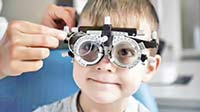
Myopia or nearsightedness is now becoming a serious public health issue, especially among children. Common symptoms include difficulty seeing distant objects, squinting, frequent headaches, and rubbing the eyes due to discomfort or fatigue. Although it is not curable, experts suggest that early detection and healthy habits can slow its progression. Spending at least two hours outside every day, reducing unnecessary screen time, studying in proper lighting, and maintaining an appropriate distance from books or devices are all effective preventive measures. Regular eye check-ups for school-going children are extremely important. Governments and educational institutions should arrange regular vision screenings and include outdoor activities in daily routines, while parents and teachers must stay aware of the risks and complications, such as glaucoma, cataracts, and retinal detachment, which, if neglected, can lead to permanent vision loss.
Future research and national action plans must emphasize prevention and early intervention. Community-based initiatives should promote outdoor activities and healthy visual habits. In concrete-filled cities, where green spaces are scarce and the sky is often hidden, the challenges are undoubtedly greater. But through awareness, early action, and proper habits, we can still protect our vision, and offer the gift of healthy sight to the next generation.
The writer is a researcher
Loading...
Loading...
Also read



Editor : Iqbal Sobhan Chowdhury
Published by the Editor on behalf of the Observer Ltd. from Globe Printers, 24/A, New Eskaton Road, Ramna, Dhaka.
Editorial, News and Commercial Offices : Aziz Bhaban (2nd floor), 93, Motijheel C/A, Dhaka-1000.
Phone: PABX- 41053001-06; Advertisement: 41053012; 01793317829, 01550707291, E-mail: [email protected], [email protected] Online: email: [email protected] 41053014; 01550707297 Advertisement: 01550707296
Published by the Editor on behalf of the Observer Ltd. from Globe Printers, 24/A, New Eskaton Road, Ramna, Dhaka.
Editorial, News and Commercial Offices : Aziz Bhaban (2nd floor), 93, Motijheel C/A, Dhaka-1000.
Phone: PABX- 41053001-06; Advertisement: 41053012; 01793317829, 01550707291, E-mail: [email protected], [email protected] Online: email: [email protected] 41053014; 01550707297 Advertisement: 01550707296


