



| HEADLINE |

|

How digital campaigns set to shape elections
Published : Saturday, 10 January, 2026 at 12:00 AM
Ashraful Alam Rony


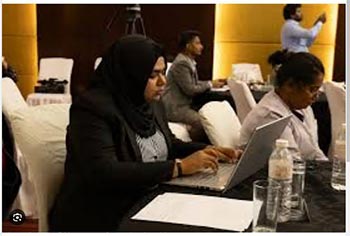 Electoral politics across the world is undergoing a digital transformation, and Bangladesh is no exception. The growing use of the internet, social media, and electronic communication has reshaped how candidates campaign, how voters receive information, and how political narratives are formed. Recent elections have demonstrated that digital presence can significantly enhance political visibility. The DUCSU election offers a clear illustration of this trend, where effective use of online platforms helped certain candidates reach a wider audience. If technology can influence a student election to such an extent, its impact on the upcoming 13th National Election is likely to be even more profound.
Today, the internet and technology are core parts of the electoral process. They influence campaigning, voter engagement, transparency, and accountability. They are set to become major game-changers in Bangladesh's next national election. Technology most clearly affects campaigning. Traditional campaigns in Bangladesh featured large rallies, door-to-door visits, and strong physical presence in constituencies. These methods still matter, but much activity has moved online, especially to social media.
Internet growth drives this shift. According to the Bangladesh Bureau of Statistics (BBS), excluding children under five, 48.9 percent of the population used the internet in the first three months of the 2025-26 fiscal year. With nearly half the population online, skipping digital platforms means missing many voters. Social media helps candidates reach people quickly, often, and at low cost.
Technology also includes digital billboards, electronic media, and TV talk shows. In cities like Dhaka, digital displays show campaign messages. Electronic media let candidates present their ideas and skills. Candidates who ignore digital tools risk falling behind. Online crowdfunding is a new trend in elections. It collects small donations from many citizens via banks and mobile services like bKash, Nagad, and Rocket. Though new in Bangladesh, it shows strong potential.
It gained traction after the July 2024 mass uprising, especially through the youth-led National Citizen Party (NCP), which relied on public funds. It drew wider attention from the late independent candidate Sharif Osman Hadi in Dhaka-18. He raised money directly from citizens and shared detailed accounts. In a live Facebook broadcast, Sharif Osman Hadi reported receiving, between 1 and 10 December, Tk 256,708 via Islami Bank, Tk 250,456 through bKash, Tk 47,801 via Nagad, Tk 8,565 through Rocket, and Tk 61,350 in cash-totaling Tk 624,880. He aimed for Tk 25 lakh but raised Tk 21,65,292 before his death. Similarly, Tasnim Zara in Dhaka-9 raised Tk 37 lakh in just 22 hours through online donations. Crowdfunding helps honest candidates with limited funds compete better. Citizens can show early support by donating. It is likely to grow in the 13th National Election.
Many Bangladeshi voters live abroad. Earlier, lack of systems stopped them from voting. For the 13th Parliamentary Election, the Election Commission introduced postal voting for expatriates. The Postal Vote BD app allows registration, ballot delivery by post, and return voting. This is a historic step for inclusion. Technology is vital for mobilizing diaspora voters. Social media is the main channel. Candidates who engage them well will gain an edge.
Technology has downsides. Propaganda, bot networks ("Bot Bahini"), harassment, and AI-made deepfake videos are serious threats. Deepfakes spread fast and mislead people. These risks are growing in Bangladesh. Coordinated campaigns flood social media with false stories, fake images, and doctored videos quickly. Bot accounts amplify divisive messages, reaching millions before fact-checks. Deepfakes can destroy reputations by showing candidates saying things they never said. Voters often fail to spot fakes, especially if they match existing beliefs.
The internet and technology are now powerful forces in Bangladesh's politics. They provide opportunities for better voter engagement, transparency, financing, diaspora participation, and inclusion. Yet challenges like misinformation, bots, deepfakes, and weak regulation remain.
In the 13th National Election, candidates who use digital tools responsibly-and institutions that regulate them well-will shape Bangladesh's democratic future. Technology is no longer just a helper; it is a true game-changer.
The writer is a member for Scholar's Uprising, University of Dhaka

Loading...
Loading...
Also read



Editor : Iqbal Sobhan Chowdhury
Published by the Editor on behalf of the Observer Ltd. from Globe Printers, 24/A, New Eskaton Road, Ramna, Dhaka.
Editorial, News and Commercial Offices : Aziz Bhaban (2nd floor), 93, Motijheel C/A, Dhaka-1000.
Phone: PABX- 41053001-06; Advertisement: 41053012; 01793317829, 01550707291, E-mail: [email protected], [email protected] Online: email: [email protected] 41053014; 01550707297 Advertisement: 01550707296
Published by the Editor on behalf of the Observer Ltd. from Globe Printers, 24/A, New Eskaton Road, Ramna, Dhaka.
Editorial, News and Commercial Offices : Aziz Bhaban (2nd floor), 93, Motijheel C/A, Dhaka-1000.
Phone: PABX- 41053001-06; Advertisement: 41053012; 01793317829, 01550707291, E-mail: [email protected], [email protected] Online: email: [email protected] 41053014; 01550707297 Advertisement: 01550707296


