



| HEADLINE |

|

Wild, migratory birds sold openly at Fakirhat
Published : Friday, 27 February, 2026 at 12:00 AM
Our Correspondent


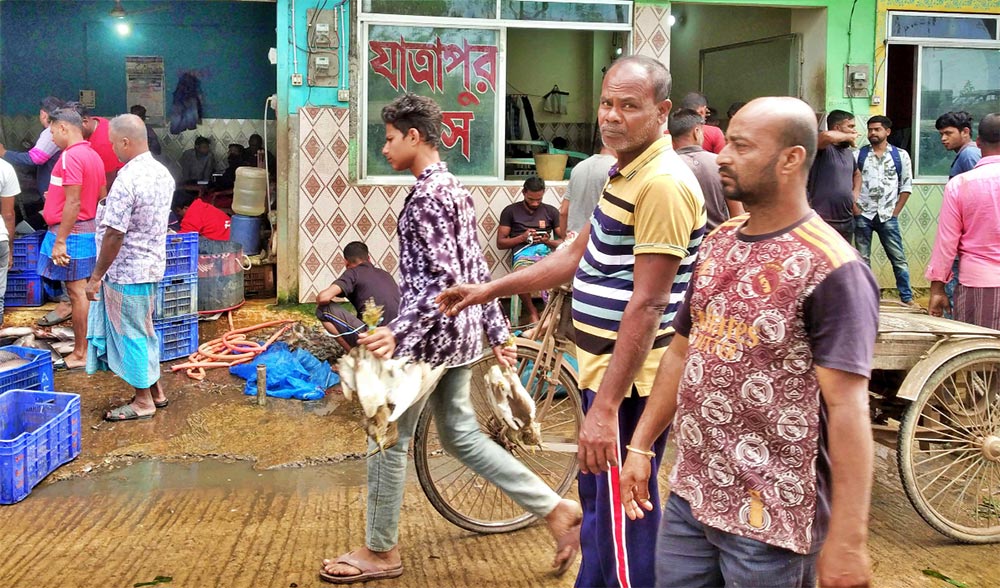 FAKIRHAT, BAGERHAT, Feb 26: Despite a nationwide ban, migratory and wild birds are being openly sold in several markets across Fakirhat Upazila of Bagerhat.
 Throughout the winter, hunting groups have been active in wetlands and beels, trapping birds that arrive in search of food and shelter.
Locals report that hunters target Baruidanga, Bogura, Kodla, Huchla, Dahar Maubhag, Mulghar, Faltita, Kakdanga, Kolkolia, and Kendua wetlands, among others. Once caught, the birds are sold in village markets-sometimes openly, sometimes discreetly in bags.
A pair of migratory birds fetch Tk 300 to Tk 1,000 depending on size, while local species are sold at Tk 150 to Tk 500. Networks of traders take phone orders and deliver birds to buyers, including members of the local elite.
On Sunday, at Faltita fish market, several sellers were seen offering birds. One teenager was bargaining with customers over 10-12 wild herons. As soon as journalists arrived, the sellers quickly dispersed.
Species on sale include night herons, golden plovers, snipes, wild ducks, storks, and cormorants, alongside local birds such as pond herons, egrets, doves, and moorhens.
Wildlife experts warn the practice is devastating. "Every winter, migratory birds arrive from Siberia, China, Mongolia, India, and Himalayan regions," said noted ornithologist Sharif Khan.
"Under the Wildlife Conservation Act, hunting or trading any bird is a punishable offence. Awareness campaigns are urgently needed."
Divisional Forest Officer Md. Rezaul Karim Chowdhury of Sundarban East Forest Division added: "We are committed to protecting biodiversity. With specific information, we will conduct drives with administrative support. Public cooperation is essential."
Nature lovers in Fokirhat have urged authorities to step up surveillance and take strict action against the illegal trade. They allege hunters frequently change locations and adopt new tactics to evade law enforcement.
The open sale of birds in Fakirhat's markets-including Fakirhat bazar, Faltita bazar, Mansa baazar, Town Nawapara haat, and Kolkolia-has sparked concern among conservationists. They fear the unchecked trade could severely impact biodiversity and disrupt the ecological balance of wetlands.
Loading...
Loading...
Also read



Editor : Iqbal Sobhan Chowdhury
Published by the Editor on behalf of the Observer Ltd. from Globe Printers, 24/A, New Eskaton Road, Ramna, Dhaka.
Editorial, News and Commercial Offices : Aziz Bhaban (2nd floor), 93, Motijheel C/A, Dhaka-1000.
Phone: PABX- 41053001-06; Advertisement: 41053012; 01793317829, 01550707291, E-mail: [email protected], [email protected] Online: email: [email protected] 41053014; 01550707297 Advertisement: 01550707296
Published by the Editor on behalf of the Observer Ltd. from Globe Printers, 24/A, New Eskaton Road, Ramna, Dhaka.
Editorial, News and Commercial Offices : Aziz Bhaban (2nd floor), 93, Motijheel C/A, Dhaka-1000.
Phone: PABX- 41053001-06; Advertisement: 41053012; 01793317829, 01550707291, E-mail: [email protected], [email protected] Online: email: [email protected] 41053014; 01550707297 Advertisement: 01550707296


