



| HEADLINE |

|

Dhaka severely lacks sanitation facilities
Published : Sunday, 12 April, 2026 at 12:00 AM
Nafew Sajed Joy


 Every morning, Mr. Farid Uddin wakes up and sets out for work. But on the way, an unavoidable problem often arises. Nature calls. Yet there is no usable public toilet anywhere along his route. As a result, even while dressed in formal office clothes, he is sometimes forced to relieve himself by the roadside. The situation is not only unpleasant to witness, it is deeply humiliating. For a citizen, this is not merely a physical need; it is closely tied to personal dignity. Although there are some public toilets in the city, their conditions are so unhygienic that using them becomes difficult. There are also allegations that politically connected syndicates profit from these facilities. Users are charged money, yet maintenance receives little attention. One can easily imagine how much worse this situation is for women.
In Dhaka, the number of public toilets is far below what is required. Serious questions remain about the quality of the ones that are operational. Many lack proper handwashing facilities. As a result, thousands of pedestrians, working women, laborers, and floating populations suffer every day. The shortage of usable toilets has become a daily struggle. In a city of nearly 25 million people, around 10 million move around outside each day. Yet public toilets are extremely scarce. By calculation, there is only one toilet for every 75,000 people.
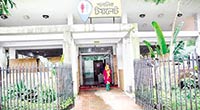
According to available information, Dhaka South City Corporation has 70 public toilets, of which at least 15 are closed. Dhaka North City Corporation has 116. Even the combined total of both cities is far below the need. Public toilets in the city are usually divided into separate sections for men and women, but cleanliness and basic hygiene facilities remain inconsistent. Many lack soap, handwash, or functioning basins; floors are wet, water supply is unreliable, and the environment is unhygienic. A notable exception is the Farmgate public toilet on Indira Road under WaterAid Bangladesh's "Pother Dabi" campaign. It is clean, well-maintained, and inclusive, with sanitary napkins, child- and disability-friendly access, handwashing stations, drinking water, and bathing facilities. Accessibility is a major concern. Along the corridor from Farmgate through Mohakhali Flyover to the airport, usable toilets are not located in pedestrian-friendly spots. Although mobile toilets once operated in Banani and facilities exist in Kurmitola and near the airport, these are not easily accessible to ordinary pedestrians.
Women are disproportionately affected. Because safe and hygienic facilities are scarce, many reduce water intake and hold urine for long periods, increasing health risks. Even where toilets exist, soap is often missing, handwashing arrangements are poor, and male attendants at entrances discourage use. In many busy areas such as Mirpur, Farmgate, Sadarghat, Victoria Park, Gulistan, and the airport zone, toilets are dirty, foul-smelling, poorly lit, with broken doors and wet floors. Some lack separate sections for women, while park toilets are frequently locked or used as storerooms, forcing women to return home. The disparity is clear: men can urinate in informal spaces, but women cannot. As a result, many people resort to urinating on walls, drains, and roadsides, polluting the environment and increasing the risk of waterborne diseases such as cholera, diarrhea, typhoid, dysentery, and hepatitis.
“Global experience shows that success in public toilet management depends not only on numbers, but on planned provision, regular maintenance, inclusive design, transparent governance, and sustainable financing”
User fees add another barrier. Although the official charge in some places is five taka, users are often forced to pay 15-20 taka. For low-income workers, this is unaffordable. Many leased toilets operate like small businesses, with water sold separately and shop activities occupying verandas. Prolonged urine retention stretches the bladder and reduces its ability to contract properly, raising the risk of infections, stones, and kidney damage. Public health concerns are growing, with increasing cases of urinary infections, kidney complications, and digestive illnesses. In densely populated Dhaka, there should be at least one toilet every 400 meters. The city needs a total of 600 to 700 public toilets. In a city that has a metro rail system, the absence of adequate public toilets is unacceptable.
When placed in an international context, the gap becomes even clearer. Experiences from developed countries and neighboring Asian nations show that success depends not only on building toilets, but also on planned supply, regular maintenance, inclusive design, and accountable management.
Global experience shows that success in public toilet management depends not only on numbers, but on planned provision, regular maintenance, inclusive design, transparent governance, and sustainable financing. For Bangladesh, shifting from a fragmented, fee-dependent system to a planned, governance-based, and public health-focused sanitation infrastructure is now a necessity to protect citizens' dignity, health, and quality of urban life.
The writer is a researcher

Loading...
Loading...
Also read



Editor : Iqbal Sobhan Chowdhury
Published by the Editor on behalf of the Observer Ltd. from Globe Printers, 24/A, New Eskaton Road, Ramna, Dhaka.
Editorial, News and Commercial Offices : Aziz Bhaban (2nd floor), 93, Motijheel C/A, Dhaka-1000.
Phone: PABX- 41053001-06; Advertisement: 41053012; 01793317829, 01550707291, E-mail: [email protected], [email protected] Online: email: [email protected] 41053014; 01550707297 Advertisement: 01550707296
Published by the Editor on behalf of the Observer Ltd. from Globe Printers, 24/A, New Eskaton Road, Ramna, Dhaka.
Editorial, News and Commercial Offices : Aziz Bhaban (2nd floor), 93, Motijheel C/A, Dhaka-1000.
Phone: PABX- 41053001-06; Advertisement: 41053012; 01793317829, 01550707291, E-mail: [email protected], [email protected] Online: email: [email protected] 41053014; 01550707297 Advertisement: 01550707296


