



| HEADLINE |

|

Nation celebrates Pahela Baishakh today
Published : Tuesday, 14 April, 2026 at 12:00 AM
Staff Correspondent


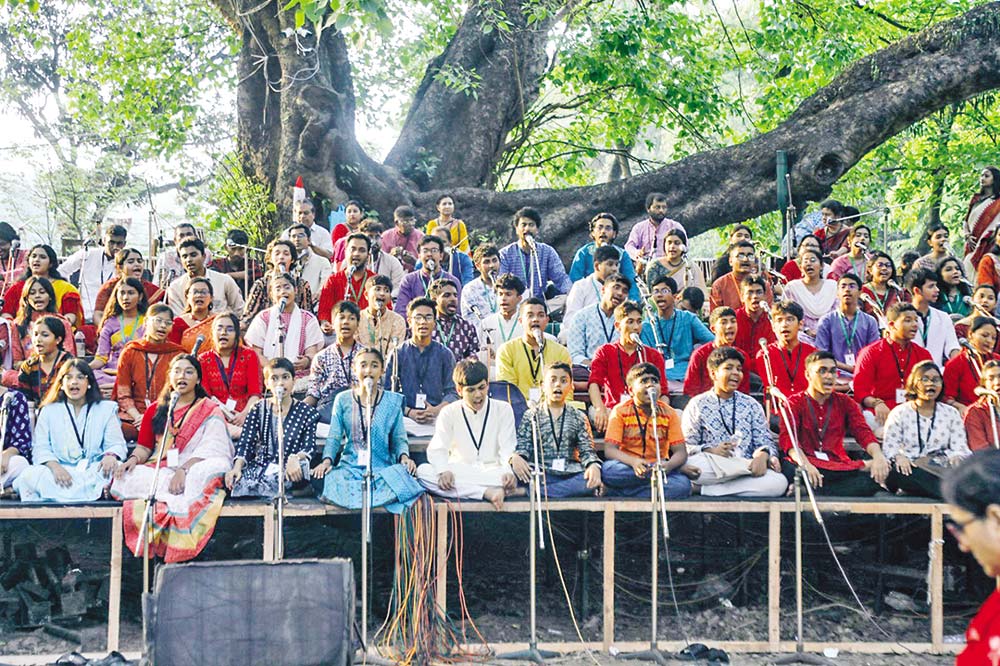 Pahela Baishakh, marking the first day of the Bengali New Year 1433, will be celebrated across the country today (Tuesday) with widespread festivities, cultural programmes and official observances, reaffirming its status as a major national cultural event.
The day will be a public holiday.
The day follows Chaitra Sankranti observed on Monday, which marked the final day of the Bengali year 1432. With the advent of the new year, people from all walks of life have joined celebrations, reflecting a shared cultural identity that transcends social, religious and economic divisions.
In separate messages, President Md Shahabuddin and Prime Minister Tarique Rahman extended greetings to Bengali speaking people at home and abroad.
The President said the Bangla New Year is "a universal festival of our lives" and "a shining example of unity, harmony and a non communal spirit," adding that it inspires people to "leave behind sorrow, pain and failures and move forward with renewed enthusiasm and conviction."
The Prime Minister said, "For centuries, this day has returned to our lives every year with the call for the new. The arrival of the new year provides inspiration to leave the old wear and tear and move forward."
A comprehensive programme has been undertaken by the government to observe the day at the national level, which has been declared a public holiday. Cultural organisations, educational institutions and public bodies have organised events including music, dance, recitation and traditional fairs across the capital and other parts of the country.
At Ramna Batamul, cultural organisation Chhayanaut began its traditional programme at dawn, featuring songs including "Eso He Baishakh, Esho Esho." The Faculty of Fine Arts of Dhaka University has arranged the "Baishakhi Shobhajatra" with the theme "Nababarsher Oikatan, Gonotontrer Punorutthan (New Year's Harmony, Resurgence of Democracy)," showcasing motifs such as rooster, elephant, pigeon, dotara and horse.
Meanwhile, Barshabaran Parshan, a cultural body brings out the "Mangal Shobhajatra" with the theme "Jagao Pothike, O She Ghuma Ocheton (Wake the traveler, he is unconscious in his sleep)". Parallel processions and celebrations are also being held in educational institutions nationwide. The traditional "Mangal Shobhajatra", which evolved from similar processions in the 1980s, received UNESCO recognition as intangible cultural heritage in 2016.
Bangladesh Shilpakala Academy has organised day long programmes, while special meals are being served in prisons, hospitals and orphanages as part of state efforts.
Authorities said the initiative to celebrate the New Year in an inclusive manner reflects the broader cultural ethos of the nation. The festival continues to serve as a platform for promoting social cohesion and cultural continuity.
Historically, Pahela Baishakh has its origins in the Mughal era during the reign of Emperor Akbar, when the Bangla calendar was introduced to facilitate agricultural taxation based on harvest cycles. Over time, it evolved from an agrarian observance into a wider social and cultural festival.
Traditional practices such as Halkhata, where traders close old account and open new ledgers, continue to be observed, particularly in business communities. Baisakhi fairs are being held in various regions, offering local handicrafts, textiles and traditional food, contributing to rural economic activity.
The day is also marked by traditional attire and cuisine. Men are seen wearing Punjabi and pyjama, while women dress in red and white sarees. Popular food items include panta bhat, hilsa, pitha and sweets.

Loading...
Loading...



Editor : Iqbal Sobhan Chowdhury
Published by the Editor on behalf of the Observer Ltd. from Globe Printers, 24/A, New Eskaton Road, Ramna, Dhaka.
Editorial, News and Commercial Offices : Aziz Bhaban (2nd floor), 93, Motijheel C/A, Dhaka-1000.
Phone: PABX- 41053001-06; Advertisement: 41053012; 01793317829, 01550707291, E-mail: [email protected], [email protected] Online: email: [email protected] 41053014; 01550707297 Advertisement: 01550707296
Published by the Editor on behalf of the Observer Ltd. from Globe Printers, 24/A, New Eskaton Road, Ramna, Dhaka.
Editorial, News and Commercial Offices : Aziz Bhaban (2nd floor), 93, Motijheel C/A, Dhaka-1000.
Phone: PABX- 41053001-06; Advertisement: 41053012; 01793317829, 01550707291, E-mail: [email protected], [email protected] Online: email: [email protected] 41053014; 01550707297 Advertisement: 01550707296


