



| HEADLINE |

|

Is the US Dollar Losing Its Safe-Haven Status?
Published : Sunday, 19 April, 2026 at 12:00 AM
Faruk Ahmed


 The supremacy of the US dollar-long regarded as the world's ultimate financial sanctuary-is facing a rare and intensifying moment of doubt. From the battlefields of geopolitics to the corridors of central banking, a single question is reverberating across global markets: is the dollar's safe-haven crown beginning to slip?
Recent market tremors suggest a shift in tone, if not yet a change in order. The greenback, once the automatic refuge in times of crisis, has shown an uncharacteristic fragility. As tensions in the Middle East eased and Iran signalled the reopening of the Strait of Hormuz, the dollar retreated sharply and slid to a seven-week low, marking a notable unwinding of the geopolitical premium that had briefly propelled it higher.
This was no ordinary fluctuation. Within two weeks, the dollar shed more than 2 per cent-its steepest decline since January-underscoring how swiftly sentiment can turn. The message from markets was stark: the dollar's haven status is no longer reflexive; it is conditional.
During the escalation of the US-Iran conflict, investors rushed into dollar-denominated assets, reaffirming its traditional role as a shield against uncertainty. Yet the speed with which those gains evaporated once diplomatic prospects emerged signals a subtle but significant transformation. Unlike past crises-where dollar rallies were prolonged and decisive-today's movements are more fleeting, more contested, and increasingly shaped by shifting expectations rather than entrenched fear.
This evolving behaviour reflects a deeper recalibration. Many currency experts say the dollar's safe-haven appeal now hinges on a complex interplay of interest rate trajectories, geopolitical clarity and global risk appetite. In short, the dollar still leads-but it no longer commands unquestioned loyalty.
Yet beneath the surface volatility lies an enduring reality: the structural foundations of dollar dominance remain formidable. The United States continues to anchor the global financial system, with its currency dominating reserves, trade invoicing and capital markets. Nowhere is this dominance more stark than in South Asia, where currencies remain persistently weak against the greenback.
 The Bangladeshi taka, Indian rupee and Pakistani rupee continue to trade at historically depressed levels, reflecting deep-seated economic vulnerabilities. Exchange rates hovering around Tk 120-125, ?90-95 and PKR 270-280 per dollar are not merely numerical markers-they are symptoms of structural fragility. Persistent inflation, heavy reliance on energy imports and chronic external imbalances continue to weigh on these economies.
By contrast, the United States enjoys an unparalleled advantage: deep, liquid financial markets, institutional credibility and relentless global demand for its assets. This is most evident in the sustained appetite for US Treasuries. Despite rising fiscal deficits and mounting debt concerns, foreign holdings of American government securities continue to climb, underscoring enduring trust in the dollar's safety and liquidity.
Interest rate differentials further cement this advantage. Even amid expectations of monetary easing, US yields remain comparatively attractive, drawing capital from across the globe. This yield premium acts as a powerful buffer, preventing sharper dollar declines and reinforcing its gravitational pull in global finance.
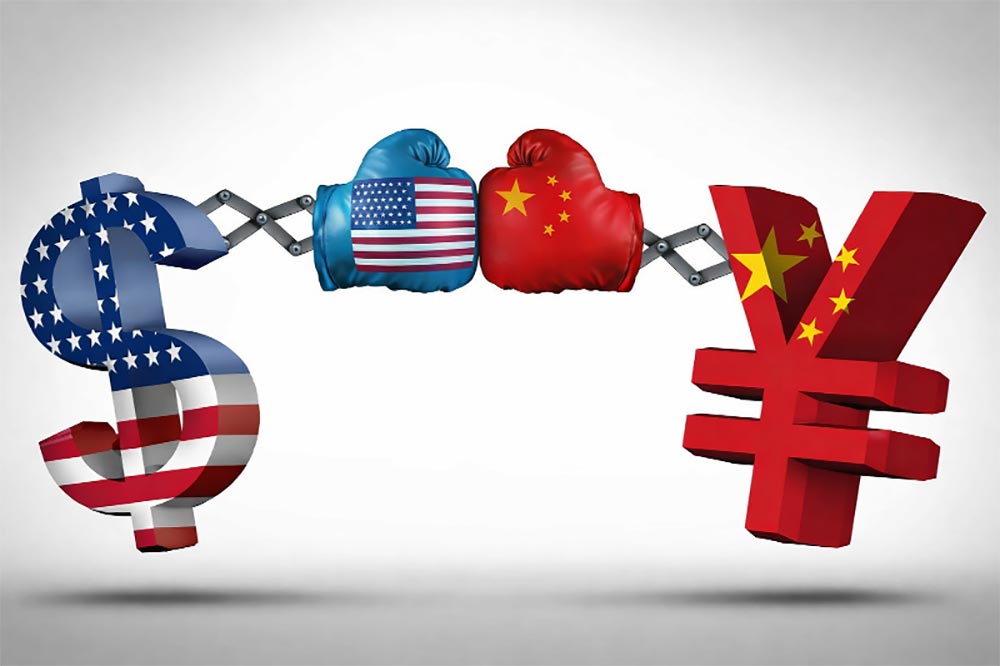
However, the dollar's dominance is no longer operating in a vacuum. Structural shifts are slowly, but unmistakably, reshaping the global monetary landscape. Chief among these is the rise of China's renminbi, particularly in the strategically critical energy market.
The concept of a "petroyuan"-once dismissed as aspirational-is gaining renewed attention. Geopolitical tensions and the weaponisation of financial systems have prompted several nations to explore alternatives to dollar-denominated trade. Recent increases in yuan-based oil transactions and record volumes through China's cross-border payment systems signal a deliberate push towards currency diversification.
For emerging economies wary of sanctions or geopolitical exposure, the appeal is clear. Reducing reliance on the dollar is no longer a theoretical ambition-it is becoming a strategic priority.
Yet, the road to displacement remains steep. The renminbi, for all its growing influence, lacks the essential attributes of a true global reserve currency. It is not fully convertible, China's capital account remains tightly controlled, and its financial markets lack the transparency and depth that global investors demand. Moreover, the inertia of the existing system-built on decades of dollar dominance-creates powerful barriers to change.
History offers a sobering perspective. Currency transitions are measured in decades, not years. Even as Britain's economic dominance waned in the early 20th century, sterling retained its global primacy for decades before yielding to the dollar. Today's shift, if it unfolds, will be equally gradual.
Indeed, even the most forward-looking projections suggest only a modest rebalancing. The dollar's share in global transactions may decline incrementally, while the renminbi's role expands-but not to the extent of overturning the existing order. Diversification is underway; disruption is not.
Complicating the narrative further is the growing politicisation of economic policy in the United States. Trade disputes, sanctions and tensions surrounding central bank independence have introduced new layers of uncertainty. For some investors, these developments raise questions about the long-term credibility of US institutions-questions that would have been unthinkable a decade ago.
In response, central banks worldwide are cautiously diversifying their reserves. Gold purchases have surged, and alternative currencies are gaining marginal traction. Yet this is not a wholesale retreat from the dollar. Rather, it is a hedging strategy-an acknowledgement of emerging risks without a loss of faith in the system's core.
Crucially, the dollar's resilience today is anchored less in perception and more in structural reality. The United States' position as a leading energy producer, its technological dominance and the sheer scale of its financial markets continue to attract capital flows on a global scale. These are not easily replicated advantages.
What is unfolding, therefore, is that the dollar remains the axis of the global system, but its movements are more nuanced, its dominance more contested and its future more complex.
For emerging markets, including those in South Asia, this evolution offers both opportunity and warning. A less predictably strong dollar may provide temporary breathing space, easing exchange rate pressures. But it does not resolve the underlying structural weaknesses that continue to undermine their currencies. Without deep reforms-targeting inflation, export competitiveness and fiscal discipline-the gap will persist.

Loading...
Loading...
Also read



Editor : Iqbal Sobhan Chowdhury
Published by the Editor on behalf of the Observer Ltd. from Globe Printers, 24/A, New Eskaton Road, Ramna, Dhaka.
Editorial, News and Commercial Offices : Aziz Bhaban (2nd floor), 93, Motijheel C/A, Dhaka-1000.
Phone: PABX- 41053001-06; Advertisement: 41053012; 01793317829, 01550707291, E-mail: [email protected], [email protected] Online: email: [email protected] 41053014; 01550707297 Advertisement: 01550707296
Published by the Editor on behalf of the Observer Ltd. from Globe Printers, 24/A, New Eskaton Road, Ramna, Dhaka.
Editorial, News and Commercial Offices : Aziz Bhaban (2nd floor), 93, Motijheel C/A, Dhaka-1000.
Phone: PABX- 41053001-06; Advertisement: 41053012; 01793317829, 01550707291, E-mail: [email protected], [email protected] Online: email: [email protected] 41053014; 01550707297 Advertisement: 01550707296


