



| HEADLINE |

|
Global partnerships needed to modernise our education
Published : Wednesday, 22 April, 2026 at 12:00 AM
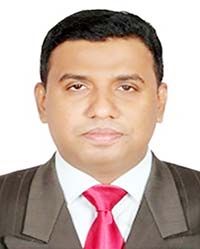
Md Mehedi Hasan


 Bangladesh’s greatest strength is its young population. A large youth demographic, rapid digital transformation, and a development-oriented economy have created extraordinary opportunities for the country. Yet potential becomes real progress only when education, skills development, and international cooperation move forward together. In today’s world, certificate-based learning alone is no longer enough. What is needed is an education system that prepares learners for global realities, encourages innovation, and equips them with internationally relevant skills.
Over the past decade, Bangladesh has made notable progress in expanding access to education. Infrastructure has improved, the use of digital devices has increased, and female participation in education has advanced significantly. These achievements deserve recognition. At the same time, we must acknowledge that important gaps remain in educational quality, research culture, practical skills, employability, and international exposure. In particular, stronger global partnerships are now essential in secondary education, teacher development, technical learning, and youth leadership.
Many countries already view cross-border learning exchange as an important pillar of national development. Students, teachers, researchers, and youth workers are gaining opportunities to learn from one another across borders. Such exchange is not merely about travel. It is a bridge of knowledge, culture, innovation, and mutual understanding. If Bangladesh wants to prepare its young generation for the competitive future, international learning partnerships must become a strategic priority.
Bangladesh has thousands of talented students who want to conduct research, learn new technologies, and contribute to solving social challenges. Yet many of them lack mentorship, funding, international networks, or practical collaboration opportunities. As a result, talent often remains underdeveloped. Well-designed international exchange programmes can help bridge this gap.
One of the most promising areas for such cooperation is high school education partnership. It is during the secondary level that students begin to shape their thinking, leadership ability, communication skills, and future ambitions. If meaningful international connections are introduced at this stage, young people can grow with a broader worldview from an early age.
Consider a Bangladeshi teacher working on inclusive classroom management. If that teacher can observe effective practices abroad, participate in training, or collaborate on lesson design, the benefits can later reach hundreds of students back home. Likewise, if a youth worker learns about mental health support, community leadership, digital citizenship, or climate action through international collaboration, the impact can spread throughout local communities.
Bangladesh has thousands of talented students who want to conduct research, learn new technologies, and contribute to solving social challenges. Yet many of them lack mentorship, funding, international networks, or practical collaboration opportunities. As a result, talent often remains underdeveloped. Well-designed international exchange programmes can help bridge this gap.
Partnerships between schools can take many practical forms: joint online classes, student pen-pal programmes, cultural exchange, science fair collaboration, climate projects, debate forums, teacher training, and leadership camps. In the digital age, such cooperation is more achievable than ever. What is needed most is planning, commitment, and vision.
An important point must also be recognised: international cooperation does not automatically mean brain drain. With the right policies, it can become brain gain. When individuals gain new skills, fresh perspectives, and wider networks, then return or contribute to their communities, they become valuable national assets. Such opportunities should therefore be viewed as long-term investments in human capital.
Youth unemployment remains a major challenge in Bangladesh. Every year, many young people complete their education without acquiring the skills demanded by the labour market. Global partnerships can help reduce this mismatch through industry-linked training, entrepreneurship exchange, digital skills programmes, green jobs orientation, and vocational collaboration.
At the same time, the importance of soft skills is growing rapidly. Communication, teamwork, intercultural competence, problem solving, adaptability, and leadership cannot be fully learned from textbooks alone. They are best developed through real experience, diverse environments, and collaborative engagement. This is why exchange programmes offer more than academic benefits; they help shape complete global citizens.
The media, civil society, educational institutions, and policymakers in Bangladesh should encourage more constructive discussion around youth mobility and international collaboration. Countries that invested early in student exchange and global partnerships are now stronger in research, innovation, and economic competitiveness.
Bangladesh’s young people are hardworking, adaptable, and ambitious. Given the right opportunities, they are capable of performing at a world-class level. Across the country, many youth are already pursuing research, social initiatives, technological learning, language development, and volunteer work despite limited resources. Connecting them to international platforms can help build a new generation of leadership.
Inclusion must remain central to this agenda. International learning opportunities should not be limited to urban or privileged groups. Rural schools, girls, and disadvantaged communities must also be included. With targeted outreach, language support, preparatory training, and inclusive funding models, more young people can benefit. Development is sustainable only when it is open to all.
Moreover, global challenges such as climate change, public health, migration, technology ethics, and food security do not stop at national borders. Future leaders therefore need a global mindset. If Bangladesh integrates an international learning dimension more strongly into its youth and education policies, the long-term national benefits will be significant.
Too often, international opportunities are viewed only as scholarships. In reality, their value is much broader. They build networks, create collaboration, strengthen confidence, improve employability, and nurture civic leadership. A participant does not only transform their own life; they often inspire positive change within families, institutions, and communities.
What is needed now is coordinated action. Secondary schools should be connected to international partnership programmes. Universities should strengthen global partnership offices. NGOs and youth organisations should expand community learning projects. Government should support these efforts through enabling policies, recognition frameworks, and strategic diplomacy. The media should continue highlighting successful examples.
Bangladesh has already reached new milestones in its development journey. The next step is to advance toward a knowledge-based economy. In that journey, the country’s greatest asset will be a skilled, confident, and globally connected young generation.
Investing in youth skills, global learning, and educational exchange is therefore not a luxury; it is a necessity. If Bangladesh takes bold steps today, its position on the world stage will be stronger tomorrow. Give young people the opportunity, and they will transform not only their own future, but the future of Bangladesh itself.
The writer is a development professional with expertise in public sector programmes, currently working with a United Nations Agency
Loading...
Loading...
Also read



Editor : Iqbal Sobhan Chowdhury
Published by the Editor on behalf of the Observer Ltd. from Globe Printers, 24/A, New Eskaton Road, Ramna, Dhaka.
Editorial, News and Commercial Offices : Aziz Bhaban (2nd floor), 93, Motijheel C/A, Dhaka-1000.
Phone: PABX- 41053001-06; Advertisement: 41053012; 01793317829, 01550707291, E-mail: [email protected], [email protected] Online: email: [email protected] 41053014; 01550707297 Advertisement: 01550707296
Published by the Editor on behalf of the Observer Ltd. from Globe Printers, 24/A, New Eskaton Road, Ramna, Dhaka.
Editorial, News and Commercial Offices : Aziz Bhaban (2nd floor), 93, Motijheel C/A, Dhaka-1000.
Phone: PABX- 41053001-06; Advertisement: 41053012; 01793317829, 01550707291, E-mail: [email protected], [email protected] Online: email: [email protected] 41053014; 01550707297 Advertisement: 01550707296


