



| HEADLINE |

|
Uphold teachers’ dignity to ensure better education


 In recent years, Bangladesh has made remarkable progress in expanding access to modern education. Classrooms are now equipped with digital tools, curricula are updated to match global standards, and students are more connected to the world than ever before. Yet beneath this visible progress lies a troubling moral crisis: a steady erosion of respect for teachers and elders. The dignity, safety, and security of teachers�"once unquestioned pillars of society�"are increasingly under threat. If this trend continues, the nation risks producing educated minds without moral grounding, a development far more dangerous than illiteracy.
The current generation�"often referred to as Gen-Z and the emerging Gen-Alpha�"has grown up in a digital ecosystem vastly different from that of previous generations. They are more informed, more expressive, and more aware of their rights. However, when not balanced by moral guidance, they can morph into arrogance and disrespect. In schools, some students openly challenge teachers in ways that go beyond healthy academic debate. In colleges and universities, professors are sometimes subjected to ridicule on social media platforms. Anonymous posts, edited videos, and meme culture frequently target educators, damaging reputations within hours. The virtual world has made it easier to insult, threaten, and shame without immediate consequences.
Social media platforms reward outrage and sensationalism. A minor classroom dispute can quickly become viral content. The culture of online bullying encourages students to see teachers not as mentors but as adversaries. Moreover, the democratization of information has created an illusion among some youths that access to Google equals wisdom. When students believe they can fact-check or challenge everything instantly, they may lose appreciation for the deeper role of teachers as guides, mentors, and moral anchors. Questioning authority is not inherently wrong as critical and constructive thinking is essential. However, criticism without civility and dissent without discipline erode the very fabric of education as well as the society.
Historically, teaching has been regarded as one of the noblest professions. A teacher shapes not only careers but character. Doctors heal bodies, engineers build bridges, but teachers build human beings. However, the dignity of the profession must also be upheld by teachers themselves. In some cases, public perception of teachers has been damaged by allegations of corruption, private coaching rackets, favoritism, or involvement in political power struggles. When teachers are seen aligning themselves with partisan interests or chasing administrative influence, students may begin to view them as political actors or dishonest influences rather than moral guides.
Education is not merely the transmission of information; it is the cultivation of values. Without moral education, knowledge can become a tool for selfishness or even harm. A society that produces highly skilled but morally indifferent individuals cannot sustain harmony. Respect for elders, especially teachers, has deep roots in South Asian culture. The teacher-student relationship was once seen as sacred. While times have changed, the underlying principle remains valid: gratitude toward those who guide us. Youth must be taught that disagreement does not justify humiliation, and frustration does not justify violence.
“Historically, teaching has been regarded as one of the noblest professions. A teacher shapes not only careers but character. Doctors heal bodies, engineers build bridges, but teachers build human beings. However, the dignity of the profession must also be upheld by teachers themselves. In some cases, public perception of teachers has been damaged by allegations of corruption, private coaching rackets, favoritism, or involvement in political power struggles. When teachers are seen aligning themselves with partisan interests or chasing administrative influence, students may begin to view them as political actors or dishonest influences rather than moral guides”
Family plays a foundational role in this process. Children who grow up witnessing their parents speak respectfully about teachers are more likely to adopt similar attitudes. When parents publicly criticize teachers in front of their children or encourage confrontation over minor academic disputes, they unintentionally legitimize disrespect. Communities also bear responsibility. School management committees and guardians must act as protectors, not aggressors. If a dispute arises, there should be established channels for dialogue and investigation rather than mob action. Religious and cultural institutions can reinforce moral teachings about respect, humility, and gratitude. Media organizations should avoid sensationalizing conflicts between teachers and students and instead promote narratives that highlight positive examples of mentorship.
The youth for Bangladesh is a powerful asset. But demographic advantage can quickly turn into social instability if moral foundations weaken. Ensuring dignity, safety, and security for teachers is not merely about protecting a profession�"it is about safeguarding civilization itself. Modern classrooms and digital tools cannot substitute for respect, empathy, and discipline. Protecting teachers is not an optional reform; it is an urgent necessity. By restoring honor to teachers and elders, and embedding moral education in homes, schools, and communities, Bangladesh can nurture a generation that is not only skilled but also wise.
Though our youth has great potential, we cannot achieve our desired progress as a nation if that youth is morally decayed. Hence, we hope Bangladesh will have a wise, respectful, moral, modest and progressive youth, who will provide utmost respect to their teachers and elders. Only then, we can put our trust on our next generations to take this nation to new heights.
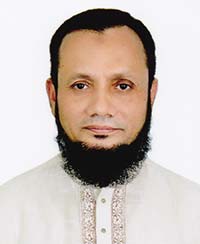
The writer is Chief Editor at Mohammadi News Agency (MNA) and Editor at Kishore Bangla
Loading...
Loading...
Also read



Editor : Iqbal Sobhan Chowdhury
Published by the Editor on behalf of the Observer Ltd. from Globe Printers, 24/A, New Eskaton Road, Ramna, Dhaka.
Editorial, News and Commercial Offices : Aziz Bhaban (2nd floor), 93, Motijheel C/A, Dhaka-1000.
Phone: PABX- 41053001-06; Advertisement: 41053012; 01793317829, 01550707291, E-mail: [email protected], [email protected] Online: email: [email protected] 41053014; 01550707297 Advertisement: 01550707296
Published by the Editor on behalf of the Observer Ltd. from Globe Printers, 24/A, New Eskaton Road, Ramna, Dhaka.
Editorial, News and Commercial Offices : Aziz Bhaban (2nd floor), 93, Motijheel C/A, Dhaka-1000.
Phone: PABX- 41053001-06; Advertisement: 41053012; 01793317829, 01550707291, E-mail: [email protected], [email protected] Online: email: [email protected] 41053014; 01550707297 Advertisement: 01550707296


