



| HEADLINE |

|
Remittance inflows jump 56% to $1.44b in early May
Published : Tuesday, 12 May, 2026 at 8:57 PM
Observer Online Report


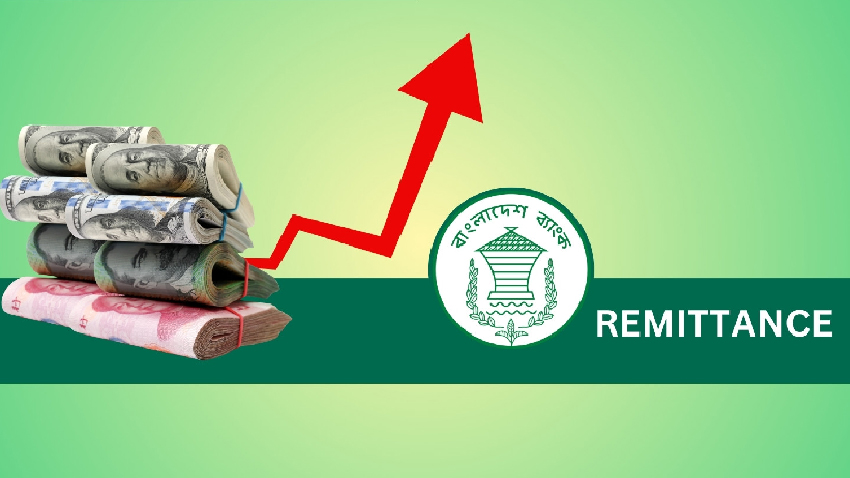
Remittance earnings in Bangladesh rose sharply in the first 11 days of May, climbing 56.4 percent year on year to reach 1.44 billion US dollars, according to the latest data from Bangladesh Bank.
During the same period last year, expatriate Bangladeshis sent home 922 million dollars. The strong growth provides a boost to the country’s foreign exchange reserves and reinforces an upward trend in the current fiscal year 2025 to 2026.
On May 11 alone, inward remittances totalled 251 million dollars, reflecting a continued shift by migrant workers toward formal banking channels.
Cumulative figures also show sustained momentum. From July 2025 to May 11, 2026, total remittance inflows stood at 30.77 billion dollars, marking a 20.9 percent increase compared with 25.45 billion dollars received during the corresponding period of the previous fiscal year.
Central bank officials and analysts attribute the growth to a combination of policy measures and enforcement efforts. A crackdown on illegal hundi networks has redirected more funds into official channels, while the government’s 2.5 percent cash incentive scheme has been supplemented by additional bonuses from several private commercial banks.
The expansion of mobile financial services and faster digital transfer systems has also made it easier for overseas workers to remit money securely and quickly.
Economists say the surge comes at a crucial time for Bangladesh’s economy, as higher remittance inflows help ease pressure on the balance of payments and support the stability of the taka against the US dollar.
A senior official at Bangladesh Bank described the nearly 21 percent year on year rise in cumulative inflows as evidence of both migrant workers’ resilience and the effectiveness of recent policy interventions.
If the current pace continues through June, fiscal year 2026 could set a new record for annual remittance earnings, further strengthening the country’s capacity to finance imports and maintain macroeconomic stability.
During the same period last year, expatriate Bangladeshis sent home 922 million dollars. The strong growth provides a boost to the country’s foreign exchange reserves and reinforces an upward trend in the current fiscal year 2025 to 2026.
On May 11 alone, inward remittances totalled 251 million dollars, reflecting a continued shift by migrant workers toward formal banking channels.
Cumulative figures also show sustained momentum. From July 2025 to May 11, 2026, total remittance inflows stood at 30.77 billion dollars, marking a 20.9 percent increase compared with 25.45 billion dollars received during the corresponding period of the previous fiscal year.
Central bank officials and analysts attribute the growth to a combination of policy measures and enforcement efforts. A crackdown on illegal hundi networks has redirected more funds into official channels, while the government’s 2.5 percent cash incentive scheme has been supplemented by additional bonuses from several private commercial banks.
The expansion of mobile financial services and faster digital transfer systems has also made it easier for overseas workers to remit money securely and quickly.
Economists say the surge comes at a crucial time for Bangladesh’s economy, as higher remittance inflows help ease pressure on the balance of payments and support the stability of the taka against the US dollar.
A senior official at Bangladesh Bank described the nearly 21 percent year on year rise in cumulative inflows as evidence of both migrant workers’ resilience and the effectiveness of recent policy interventions.
If the current pace continues through June, fiscal year 2026 could set a new record for annual remittance earnings, further strengthening the country’s capacity to finance imports and maintain macroeconomic stability.
Loading...
Loading...
Also read









Editor : Iqbal Sobhan Chowdhury
Published by the Editor on behalf of the Observer Ltd. from Globe Printers, 24/A, New Eskaton Road, Ramna, Dhaka.
Editorial, News and Commercial Offices : Aziz Bhaban (2nd floor), 93, Motijheel C/A, Dhaka-1000.
Phone: PABX- 41053001-06; Advertisement: 41053012; 01793317829, 01550707291, E-mail: [email protected], [email protected] Online: email: [email protected] 41053014; 01550707297 Advertisement: 01550707296
Published by the Editor on behalf of the Observer Ltd. from Globe Printers, 24/A, New Eskaton Road, Ramna, Dhaka.
Editorial, News and Commercial Offices : Aziz Bhaban (2nd floor), 93, Motijheel C/A, Dhaka-1000.
Phone: PABX- 41053001-06; Advertisement: 41053012; 01793317829, 01550707291, E-mail: [email protected], [email protected] Online: email: [email protected] 41053014; 01550707297 Advertisement: 01550707296


