



| HEADLINE |

|

Rare 'Blue Moon' to light up the country's sky 'tonight'
Published : Sunday, 31 May, 2026 at 10:05 PM
Observer Online Desk


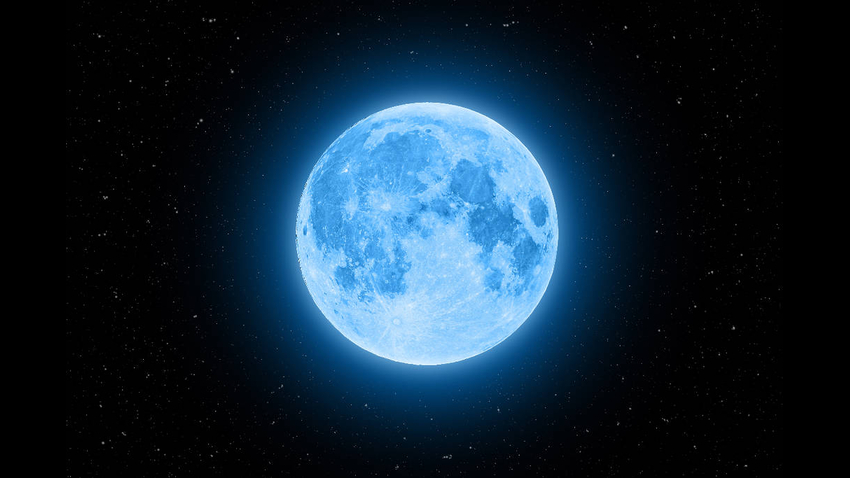
Collected Photo
Skywatchers in the country will be able to witness a rare astronomical event known as a “Blue Moon” in the night sky on Sunday, offering a striking full moon display that carries special calendar significance.
Astronomers say the phenomenon occurs when two full moons appear within the same calendar month. As the first full moon of May occurred on May 1, the second full moon on May 31 is being classified as a Blue Moon.
Despite its name, the Blue Moon has no relation to colour. Scientists confirm that the Moon will appear in its usual silvery-white or golden hue, depending on atmospheric conditions near the horizon.
Experts explain that the event is the result of a mismatch between the lunar cycle and the Gregorian calendar. A full lunar cycle takes approximately 29.5 days, meaning most months contain only one full moon.
However, because the lunar year does not perfectly align with the solar calendar, an extra full moon can occasionally occur, resulting in 13 full moons in a year instead of the usual 12.
According to astronomers, such occurrences happen roughly once every two to three years.
In addition to being a Blue Moon, the event is also notable for its positioning in the sky. The Moon is expected to rise in the eastern horizon and appear relatively lower in the sky. It will be located near the constellation Virgo during peak visibility.
Due to its position, the Moon may appear slightly larger and more orange or golden when viewed close to the horizon, an effect caused by atmospheric scattering.
Astronomy sources note that while a full moon typically occurs once per month, the timing variation between lunar cycles and calendar months is what creates this rare double full moon phenomenon.
The Blue Moon is expected to be visible with the naked eye under clear skies and does not require any specialised equipment.
Scientists added that no other Blue Moon event is expected before December 2028, making tonight’s celestial alignment a relatively rare viewing opportunity for astronomy enthusiasts worldwide.

Loading...
Loading...
Also read









Editor : Iqbal Sobhan Chowdhury
Published by the Editor on behalf of the Observer Ltd. from Globe Printers, 24/A, New Eskaton Road, Ramna, Dhaka.
Editorial, News and Commercial Offices : Aziz Bhaban (2nd floor), 93, Motijheel C/A, Dhaka-1000.
Phone: PABX- 41053001-06; Advertisement: 41053012; 01793317829, 01550707291, 01550707296
E-mail: [email protected], [email protected]. [email protected], [email protected], [email protected], [email protected], Online-email: [email protected]
Published by the Editor on behalf of the Observer Ltd. from Globe Printers, 24/A, New Eskaton Road, Ramna, Dhaka.
Editorial, News and Commercial Offices : Aziz Bhaban (2nd floor), 93, Motijheel C/A, Dhaka-1000.
Phone: PABX- 41053001-06; Advertisement: 41053012; 01793317829, 01550707291, 01550707296
E-mail: [email protected], [email protected]. [email protected], [email protected], [email protected], [email protected], Online-email: [email protected]


