



| HEADLINE |

|
A sustainable future demands responsible e-waste management


 In the modern world, people's lives have become much easier and more dynamic than ever before. Mobile phones, computers, laptops, televisions, refrigerators, air conditioners, smart watches, various agricultural machinery and digital sensors are now an integral part of our daily lives. But with this rapid advancement in technology, another terrible problem is growing, e-waste or electronic waste (E-waste).New models of electronic products are constantly coming to the market, and old products are quickly becoming unnecessary. If these are not properly managed and discarded, various types of toxic materials spread into the environment. This pollution not only harms nature, but also poses a serious threat to agricultural production, food security, biodiversity and human health. Therefore, e-waste is now not just an environmental problem; it is an important global challenge in economic, social and public health.
E-waste refers to all electrical and electronic products that have become unusable or have been discarded after use. For example, old mobile phones and smartphones, computers and laptops, televisions and monitors, refrigerators and air conditioners, washing machines, batteries and chargers, circuit boards and electrical wires, printers, scanners and various digital devices, sensors used in agricultural technology, GPS devices and smart control units. Due to rapid changes in technology, consumers' interest in new products and the short lifespan of equipment, the amount of e-waste is increasing rapidly around the world.
The most dangerous aspect of e-waste is the various heavy metals and chemicals it contains. Notable among these are lead, mercury, cadmium, arsenic, chromium, nickel, brominated flame retardants, various toxic plastics and polymers. These components remain in the soil for a long time and destroy soil fertility. Sometimes they enter crops through plant roots and accumulate in the bodies of humans and animals through the food chain. As a result, the risk of various complex diseases gradually increases.
The harmful effects of e-waste are very worrying in an agriculture-dependent country like Bangladesh. Soil pollution: Heavy metals released from e-waste accumulate in agricultural land and disrupt the normal biological activities of the soil. Beneficial microorganisms are destroyed and soil fertility decreases. As a result, crop productivity decreases.
Chemical components of e-waste penetrate deep into the soil with rainwater and contaminate groundwater. These substances reach rivers, canals and ponds and disrupt the balance of the aquatic environment. In many places, copper or other metals are collected by burning e-waste. This releases dioxin, furan and other toxic gases into the air, which enter the human body through inhalation. The presence of heavy metals may increase in crops, vegetables and fruits grown in contaminated soil. Similarly, using contaminated water also causes toxic substances to accumulate in fish and other aquatic animals. As a result, food safety is seriously threatened.
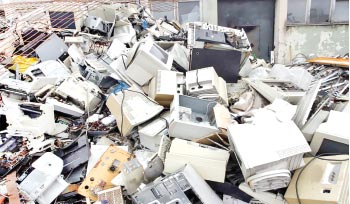 The use of digital technology is increasing rapidly in Bangladesh. The spread of smartphones, computers, internet-based devices and modern technology in agriculture is also increasing the amount of e-waste. However, in most cases, safe collection, segregation and recycling systems are still not sufficient. Many old electronic products are thrown away with general waste or burned in open areas. This is creating a major risk to public health as well as environmental pollution.
Currently, various types of digital technologies are being used in smart agricultural systems. For example, soil sensors, NPK sensors, weather monitoring devices, drone technology, GPS-based agricultural equipment, automatic irrigation control systems. These devices eventually become obsolete and become e-waste. Therefore, along with increasing the use of technology in agriculture, it is important to ensure the safe collection and re-management of old equipment.
Many people still do not know that old batteries, chargers, mobile phones or electrical appliances should not be thrown away with general waste. As a result, they accumulate in garbage heaps and cause environmental pollution. Families, educational institutions, local governments, media and social organizations must work together to increase awareness.
A coordinated effort by individuals, society, industries and the government is needed to address the e-waste problem. The purchase of unnecessary electronic products should be reduced. The use of long-lasting and quality products should be encouraged. Repair and use old equipment. Hand over to others for their needs. Donate to educational institutions or social organizations. Submitting e-waste to approved recycling institutions. Recovering precious metals through modern technology. Developing environmentally friendly waste management. In addition, there is a need for effective national e-waste management policies, strict implementation of laws, environmentally friendly industrial policies, increasing the responsibility of manufacturing companies, and strengthening environmental education in schools, colleges and universities.
Environment, agriculture and human health are deeply related to each other. If e-waste is not managed properly, it will gradually poison our soil, water, air and food system. Its impact will have to be borne by the current generation as well as future generations. E-waste is not ordinary garbage; it is a kind of silent poison, which is invisibly damaging the environment and human civilization. Therefore, while taking advantage of technology, we must also be equally aware of its harmful aspects. If every citizen behaves responsibly, stores e-waste separately, submits it to authorized institutions and participates in recycling, then this crisis can be controlled to a large extent.Now is the time to take coordinated initiatives at the family, society and state levels. Because a safe environment means safe agriculture, safe food, healthy people and a sustainable future. Today's conscious decisions are the foundation for building a green world tomorrow.GIVE A HEADLINE WITHOUT COLON
The writer is an Agriculture and Environment Specialist
Loading...
Loading...
Also read



Editor : Iqbal Sobhan Chowdhury
Published by the Editor on behalf of the Observer Ltd. from Globe Printers, 24/A, New Eskaton Road, Ramna, Dhaka.
Editorial, News and Commercial Offices : Aziz Bhaban (2nd floor), 93, Motijheel C/A, Dhaka-1000.
Phone: PABX- 41053001-06; Advertisement: 41053012; 01793317829, 01550707291, E-mail: [email protected], [email protected] Online: email: [email protected] 41053014; 01550707297 Advertisement: 01550707296
Published by the Editor on behalf of the Observer Ltd. from Globe Printers, 24/A, New Eskaton Road, Ramna, Dhaka.
Editorial, News and Commercial Offices : Aziz Bhaban (2nd floor), 93, Motijheel C/A, Dhaka-1000.
Phone: PABX- 41053001-06; Advertisement: 41053012; 01793317829, 01550707291, E-mail: [email protected], [email protected] Online: email: [email protected] 41053014; 01550707297 Advertisement: 01550707296


