



| HEADLINE |

|
Budget brings fear to taxpayers due to high revenue target
Published : Monday, 22 June, 2026 at 12:00 AM
Shah Jalal


 Despite the country's ongoing economic challenges, the proposed budget for FY 2026-27 has been increased to Tk. 9,38,000 crore from the previous allocation of Tk. 7,90,000 crore, later revised to Tk. 7,88,000 crore. The revenue target from the NBR has been set at Tk. 6,95,000 crore, while the budget deficit is estimated at Tk. 2,43,000 crore. Of this deficit, Tk. 1,12,000 crore is expected to be financed through the banking sector. The government has also projected a nominal GDP of Tk. 68,30,024 crore. These targets are highly ambitious and may prove difficult to achieve under the current economic conditions.
The banking sector has been experiencing prolonged instability. Several banks also have struggled to meet depositors’ withdrawal demands, other than Sammili to Islami Bank PLC. Apart from this, Bangladesh Bank (BB) undertook a “surgical intervention” by merging five troubled banks with exceptionally high levels of defaulted loans into Sammilito Islami Bank PLC. The objective was to prevent a catastrophic collapse of the country’s Shariah-based financial sector. At the same time, Islami Bank Bangladesh PLC has also been facing challenges in maintaining stability. Under these circumstances, relying heavily on the banking sector to finance a substantial portion of the budget deficit may place additional pressure on an already vulnerable industry.
Excessive pressure on revenue authorities to meet collection targets may ultimately result in greater scrutiny and increased burdens on taxpayers. Nevertheless, the budget contains several positive tax-related reforms. For example, minimum tax paid in previous years will now be treated as advance tax, and penalties for non-deduction of tax at source will no longer result in the full disallowance of related expenses. These measures are welcome and may reduce opportunities for harassment and discretionary actions by tax officials.
However, the requirement for citizens to provide a Taxpayer Identification Number (TIN) to open a bank account and for businesspersons to obtain a Business Identification Number (BIN) to open a business bank account may create dissatisfaction among the public. Such requirements could discourage some individuals from entering the formal banking system and encourage greater reliance on cash transactions. Although these measures may increase the number of registered taxpayers, many newly registered individuals may have incomes below the taxable threshold.
Excessive pressure on revenue authorities to meet collection targets may ultimately result in greater scrutiny and increased burdens on taxpayers. Nevertheless, the budget contains several positive tax-related reforms. For example, minimum tax paid in previous years will now be treated as advance tax, and penalties for non-deduction of tax at source will no longer result in the full disallowance of related expenses
The National Board of Revenue (NBR) is currently undergoing digitalization, but the process has not yet reached full automation. The government should move towards complete automation to eliminate paper-based procedures and reduce direct interaction between taxpayers and tax officials. The budget, however, does not provide clear directives to ensure that tax officials refrain from creating unnecessary complications for taxpayers.
For instance, an individual such as a driver may obtain an e-TIN solely for the purpose of opening a bank account and subsequently file a tax return. If that return is selected for audit, there is often a tendency among tax assessors to artificially inflate the reported income and impose additional tax liabilities, even where no additional income exists. Such arbitrary powers should be curtailed. In practice, there are no cases in which assessments result in a reduction of taxable income, even when taxpayers have paid more tax than necessary. Instead, assessments frequently lead to increased tax demands. This remains one of the primary reasons taxpayers fear tax authorities. Unfortunately, the proposed budget contains no measures to address this longstanding concern.
If citizens are required to comply with strict tax registration and filing obligations, tax officials must be held similarly accountable for arbitrary adjustments. Another concern is that although audit selection has become automated, tax returns can still be subjected to reassessment by different departments under shifting provisions of the Income Tax Act 2023. In many cases, a single return is subjected to multiple assessments in accordance with the provisions of Income Tax Act 2023, each resulting in higher tax liabilities than the previous one. This creates uncertainty and undermines taxpayer confidence. No effective measures have been proposed to address this issue.
Taxpayers should ideally be subjected to only one comprehensive assessment if any errors or inconsistencies are found. Furthermore, if a reassessment is subsequently found to be incorrect, the officials responsible for the earlier assessment should be held accountable. Such reforms would strengthen transparency and fairness within the tax administration system.
The budget also fails to provide an attractive mechanism for disclosing undisclosed money. There are many reasons why funds may remain undisclosed, and such circumstances are not always associated with illegal activities. Under the current proposal, individuals seeking to disclose undisclosed assets may be required to pay higher tax than regular taxpayers. This approach may discourage investment and potentially contribute to increased capital flight and money laundering.
At the same time, the budget introduces several innovative initiatives that could significantly benefit Bangladesh. These include the One Child, One Tree Program; One Teacher, One Tab Program; One Citizen, One ID; One Digital Wallet; Brain Drain to Brain Circulation; the 3R Strategy (Recovery & Stabilization, Restoration, Reconstruction for Acceleration); the 3R Policy (Reduce, Reuse and Recycle); Employment Exchange; Smart Skill Bank; Foreign Language E-Learning Centre; Migration Market Research Institute; Bangladesh Support Centers; Pink Bus Service; BanglaBiz; Startup Fund; Research to Market (R2M); Innovate to Market (I2M); Neo-Normal; Tree Monitoring App; Circular Future Model; Bangladesh Innovation Fair; National Fibre Bank; Digital Public Infrastructure (DPI); General Caregiver Program; Mother and Child Assistance Program; Quick Response Team; Vulnerable Women Benefit (VWB); etc.
These initiatives are among the most innovative and forward-looking proposals ever included in a national budget. However, the budget provides little information regarding implementation strategies, institutional capacity, infrastructure requirements, funding mechanisms, or the government agencies responsible for execution. While the ideas themselves are visionary, their practical implementation remains uncertain.
Overall, the proposed budget contains several citizen-friendly measures and promising policy initiatives. Nevertheless, ambitious revenue and GDP targets, heavy reliance on the banking sector for deficit financing, inadequate taxpayer protections, and uncertainty regarding implementation remain significant concerns. The success of this budget will ultimately depend not on the vision it presents, but on the government's ability to translate that vision into effective and accountable action.
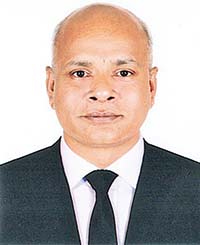
The writer is a member of Dhaka Taxes Bar Association
Loading...
Loading...
Also read



Editor : Iqbal Sobhan Chowdhury
Published by the Editor on behalf of the Observer Ltd. from Globe Printers, 24/A, New Eskaton Road, Ramna, Dhaka.
Editorial, News and Commercial Offices : Aziz Bhaban (2nd floor), 93, Motijheel C/A, Dhaka-1000.
Phone: PABX- 41053001-06; Advertisement: 41053012; 01793317829, 01550707291, E-mail: [email protected], [email protected] Online: email: [email protected] 41053014; 01550707297 Advertisement: 01550707296
Published by the Editor on behalf of the Observer Ltd. from Globe Printers, 24/A, New Eskaton Road, Ramna, Dhaka.
Editorial, News and Commercial Offices : Aziz Bhaban (2nd floor), 93, Motijheel C/A, Dhaka-1000.
Phone: PABX- 41053001-06; Advertisement: 41053012; 01793317829, 01550707291, E-mail: [email protected], [email protected] Online: email: [email protected] 41053014; 01550707297 Advertisement: 01550707296


